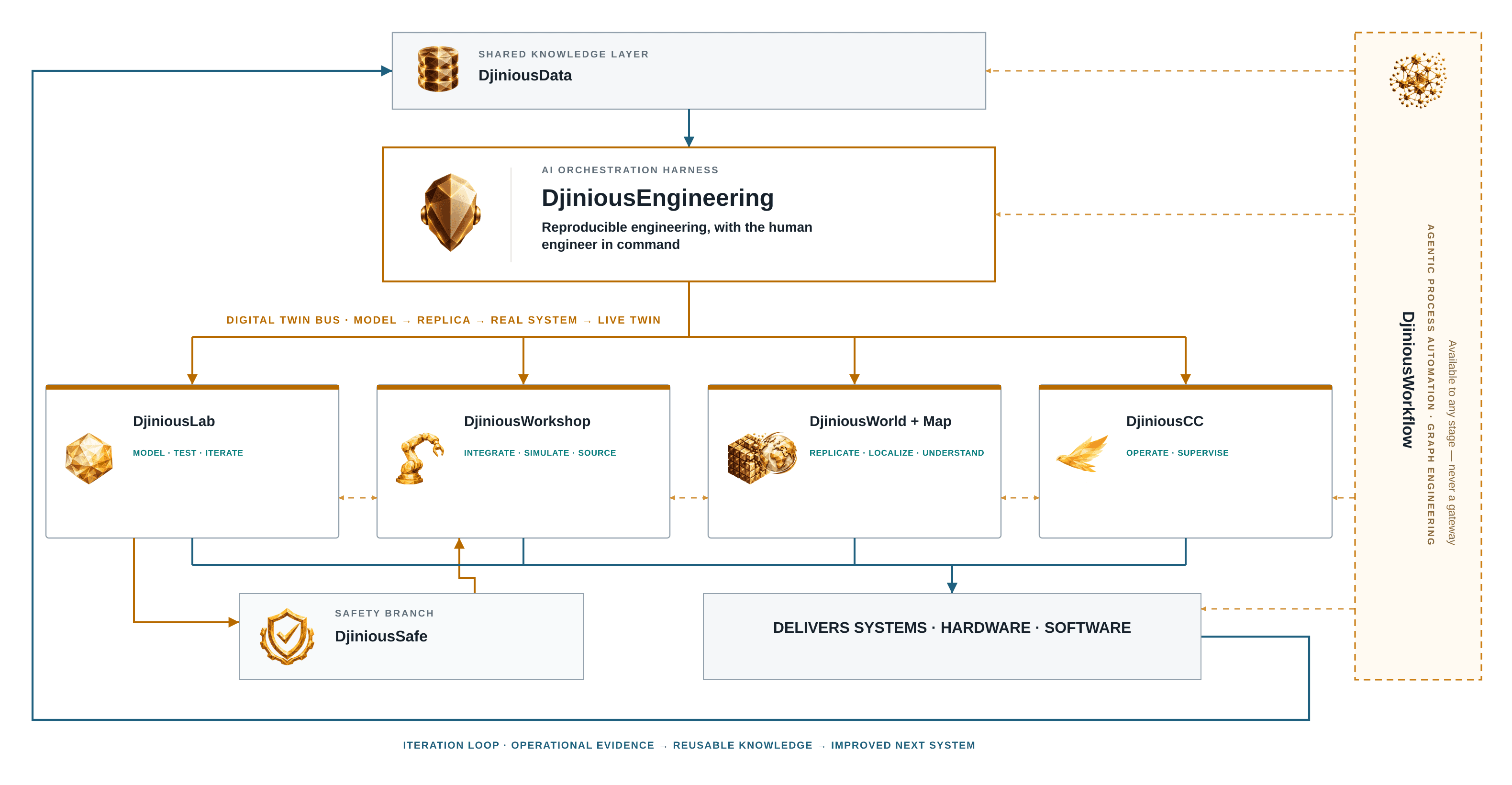
Assign the project. AI engineers deliver the system.
A team of specialised AI engineers carries a unique need from requirements and simulation through integration, safety and manufacturing preparation—in mass-production timeframes.
A proven-code toolchain for IEC 61508 SIL 4: from Lean 4 specifications and kernel-checked proofs to restricted embedded Rust and per-build certification evidence.
Lean 4 safety DSL and kernel-checked proofs
Dual-channel diverse code generation
no_std, zero-heap, panic-free Rust
Machine-checked traceability and evidence bundles
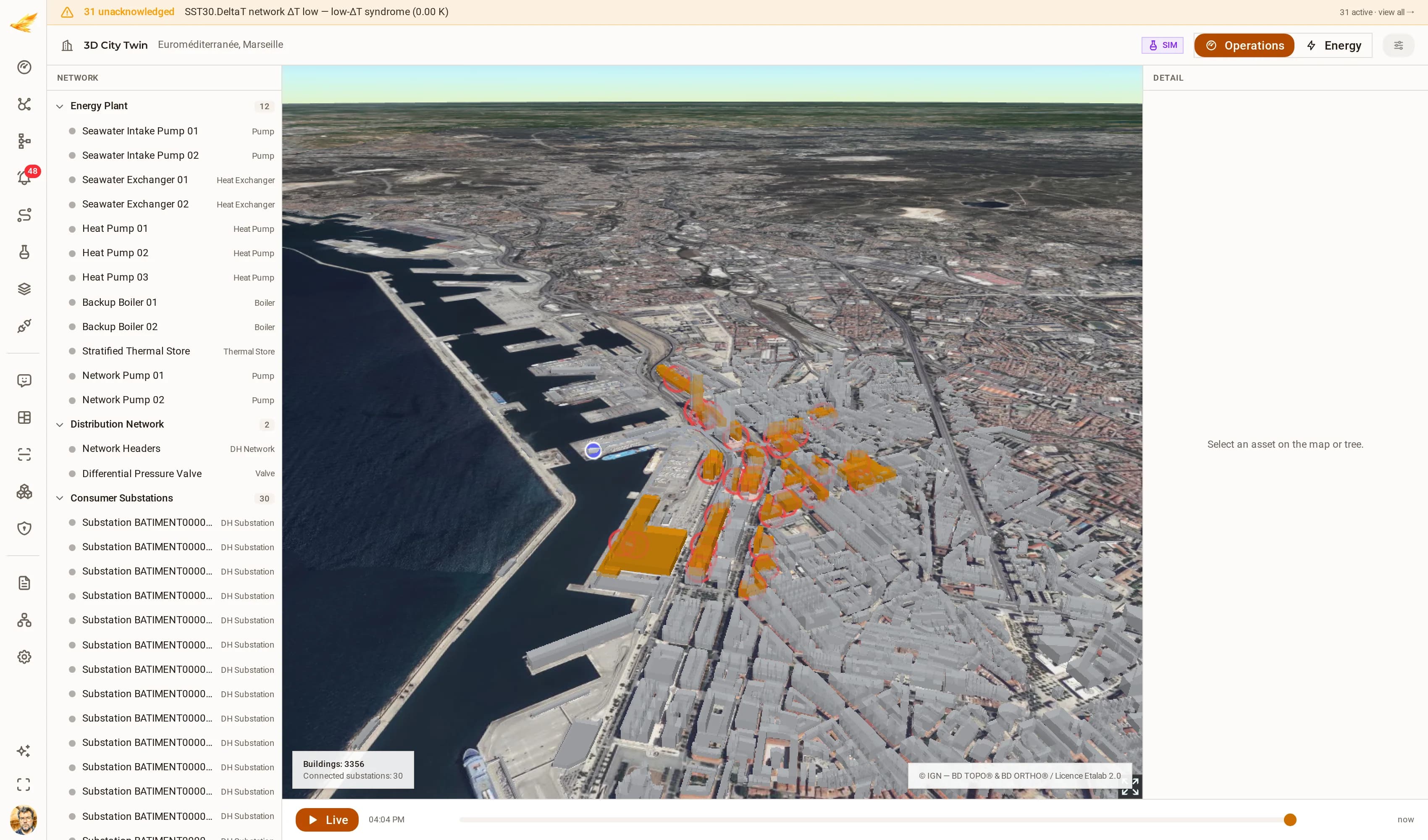
DjiniousCC
SCADA, control centre and operational digital twins for supervising real systems after deployment.
Graph automation running alongside the suite, not inside it. Any stage can call on it to turn a process into something you can run, watch and audit—and no stage has to.
08
DjiniousWorkflow
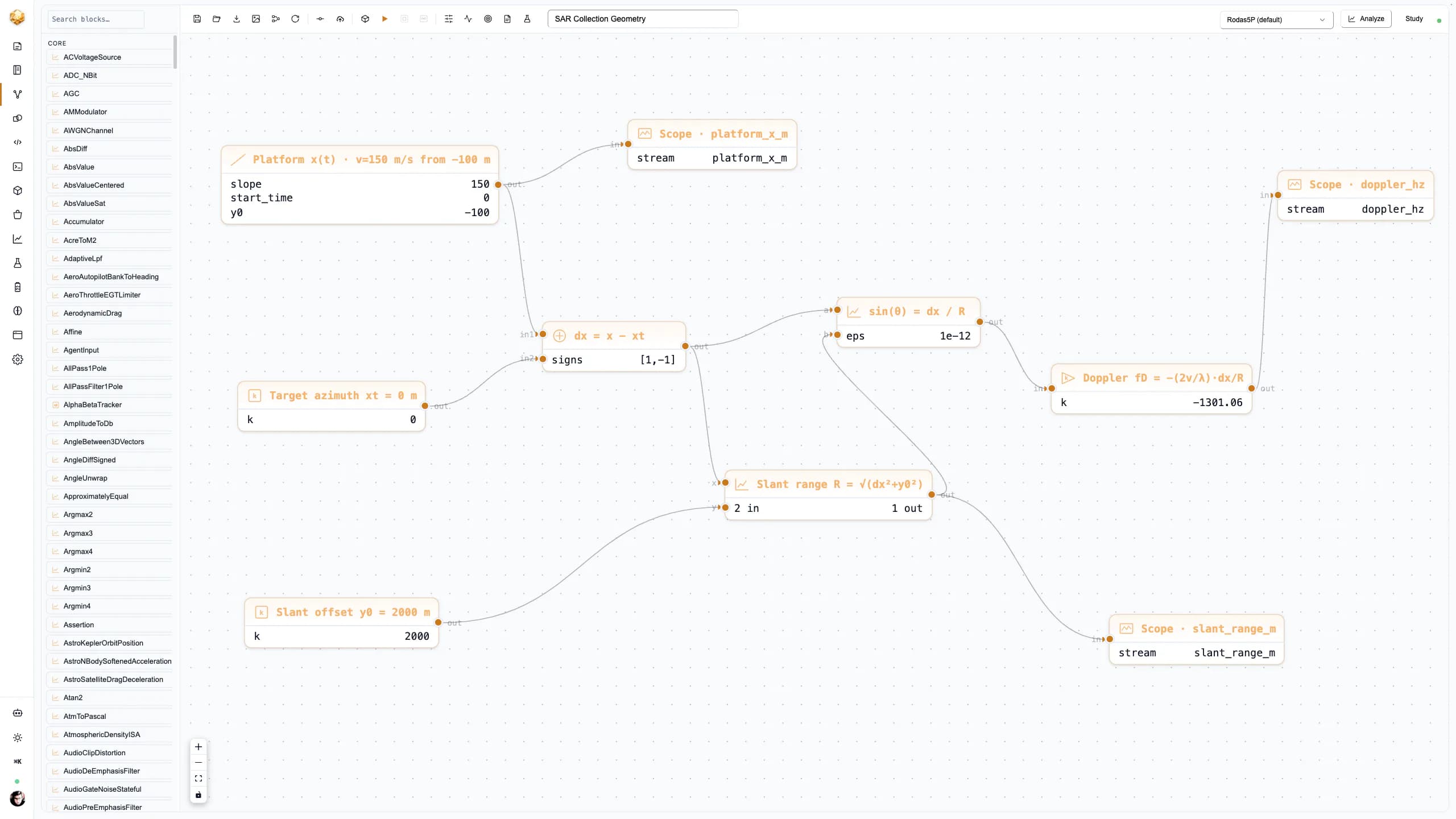
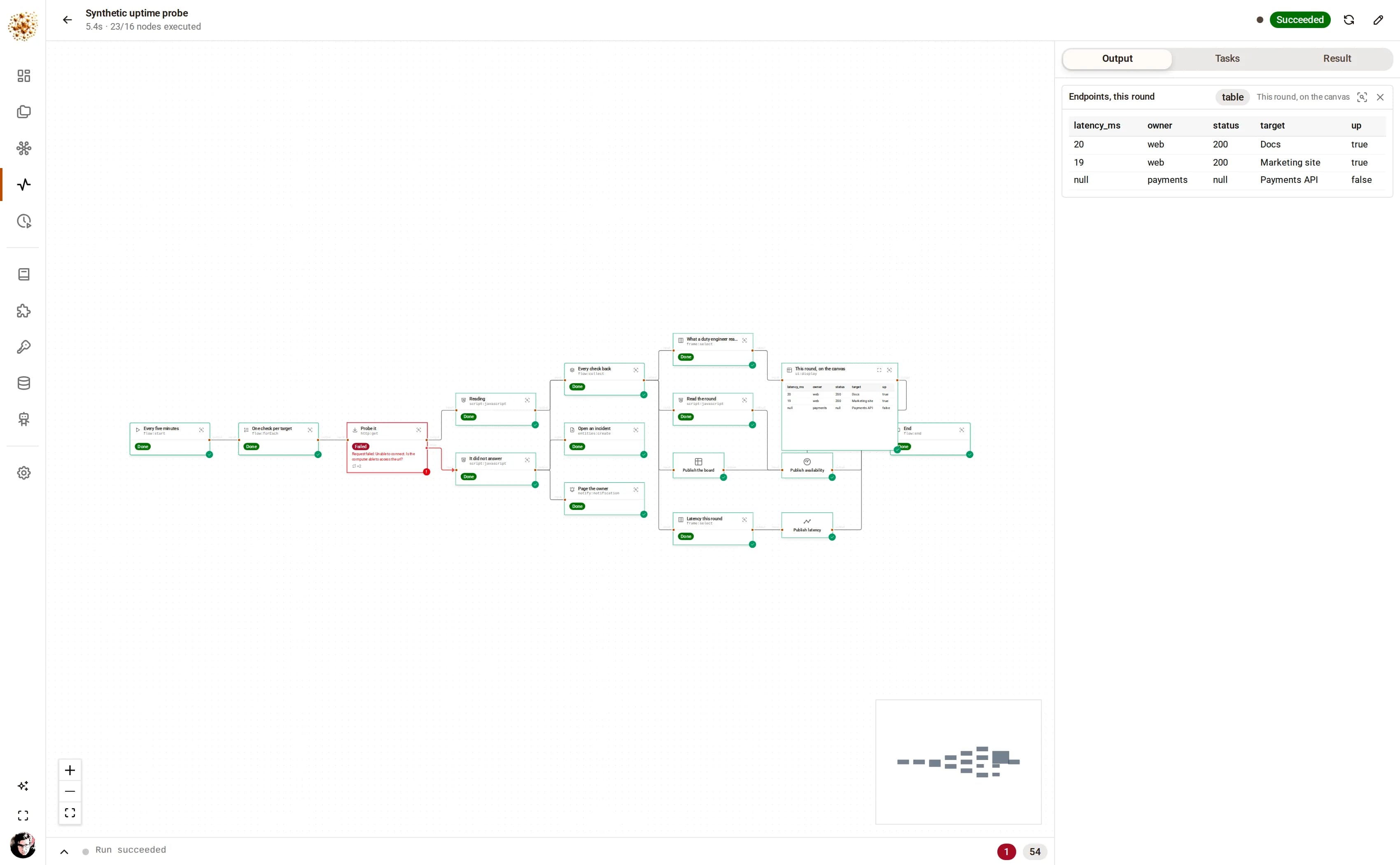
Graph engineering for the work itself: build the process on a canvas, fire it on a schedule, a webhook or an agent, watch every node execute, and leave a page behind that traces back to the run.
330 nodes across 19 tools, on one canvas
Branches, loops, joins, sub-workflows and human approval
AI nodes and agents, each with a deterministic fallback
Run state held in the database, so a run survives any restart
Reaches any stage and any tool, through REST, MCP or a schedule
The flagship of the suite: it engineers the entire system with AI agents—receiving the assignment, coordinating specialised disciplines and approvals, and keeping delivery moving across every platform.
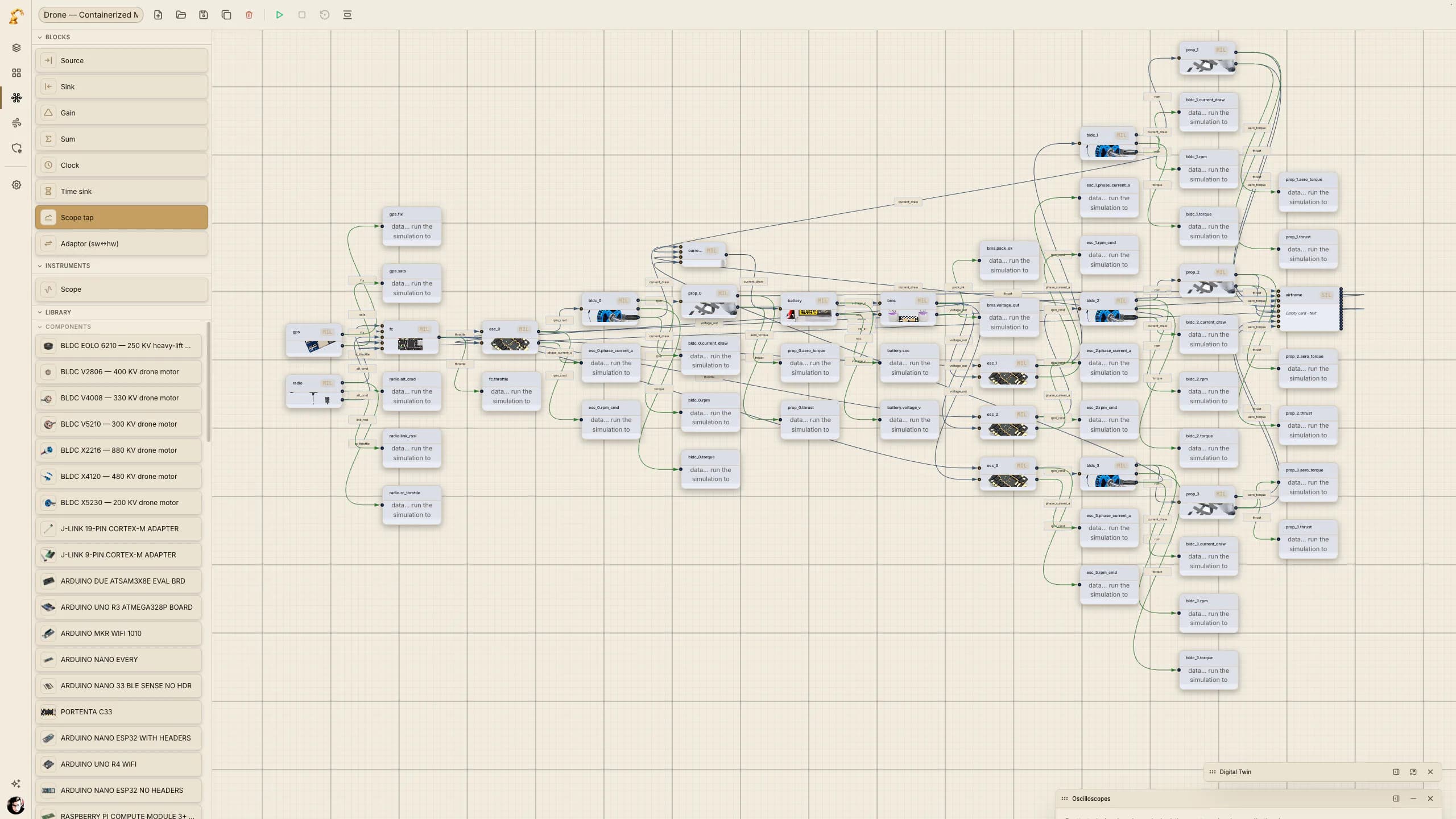
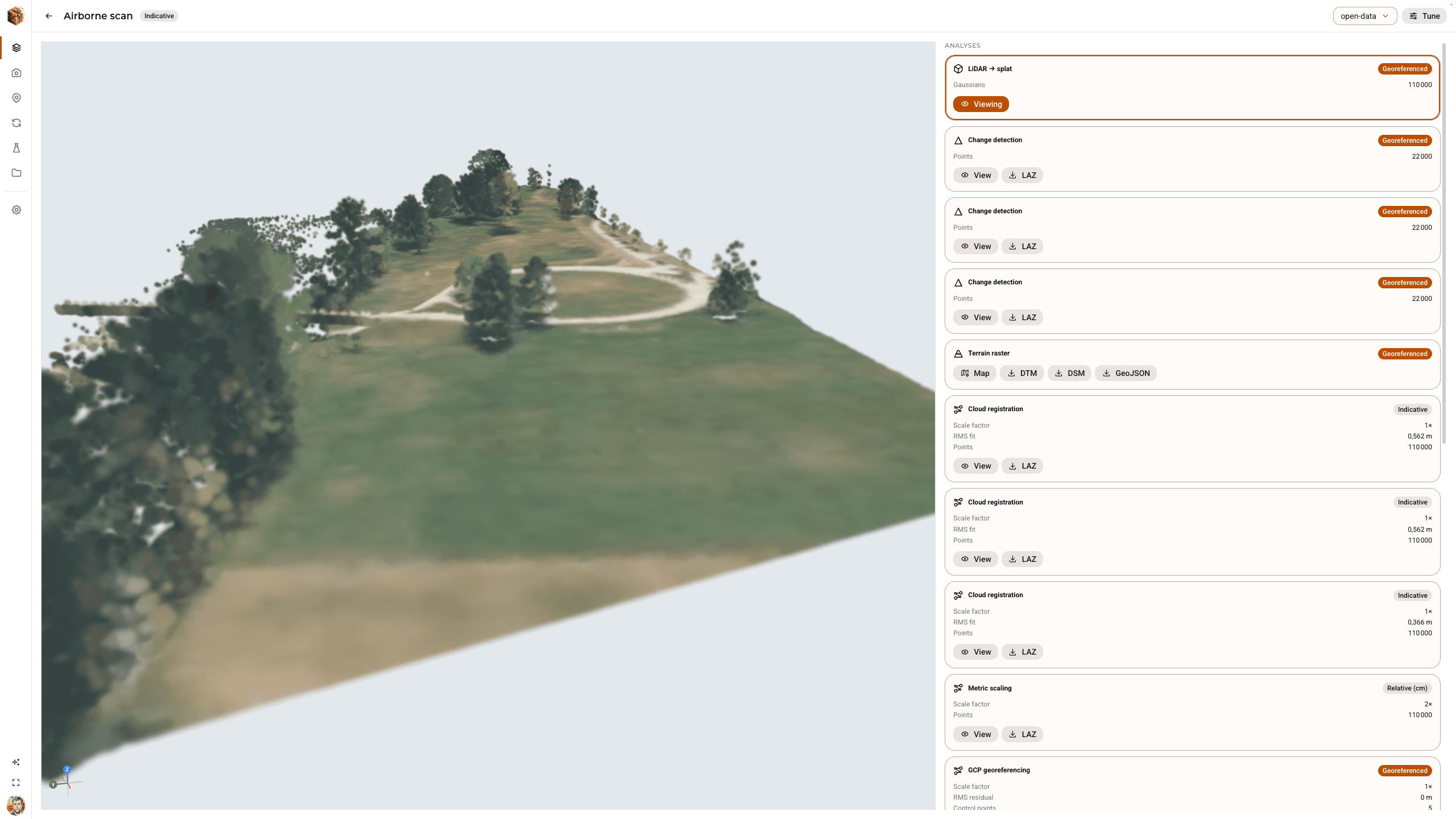
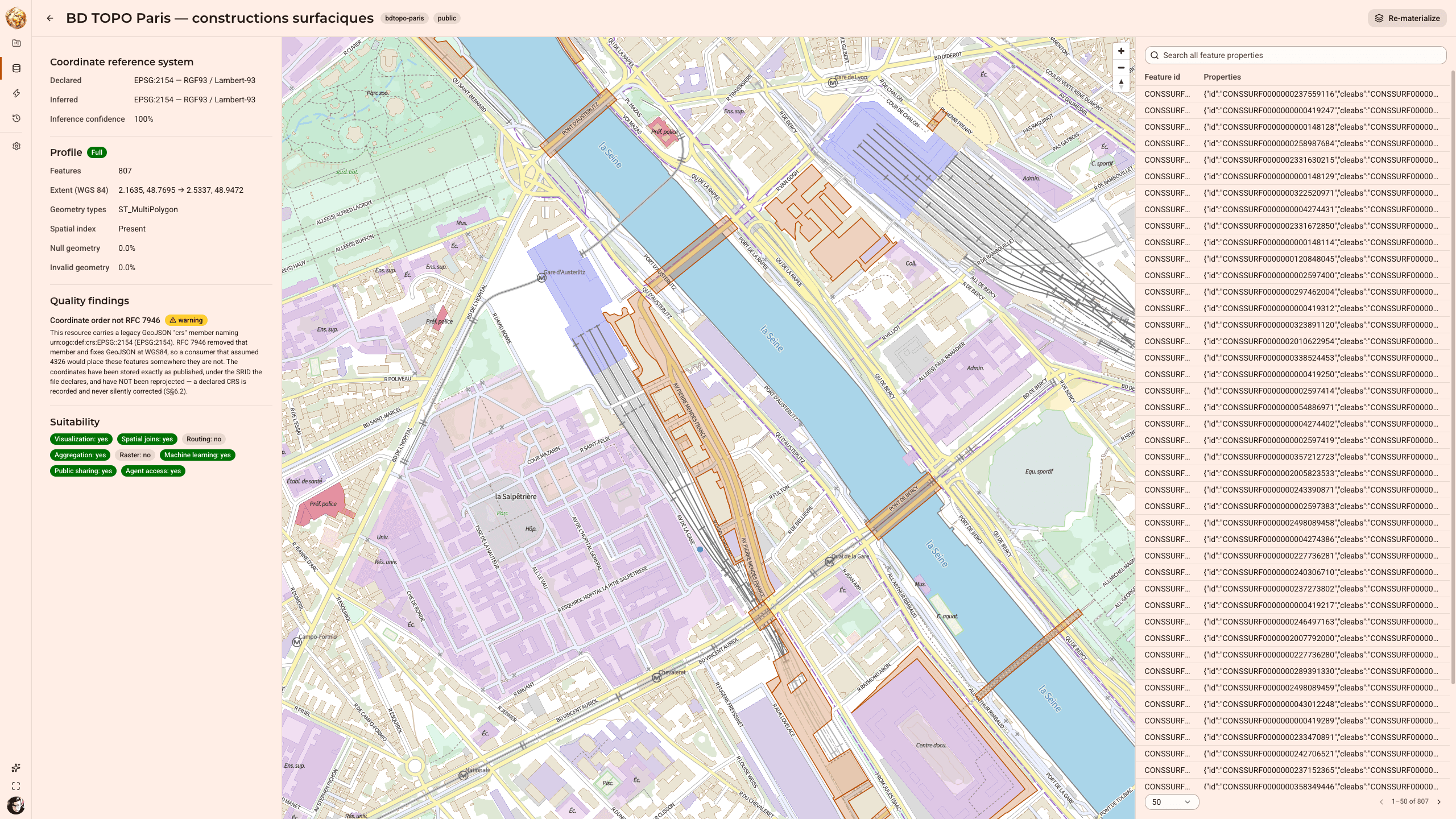
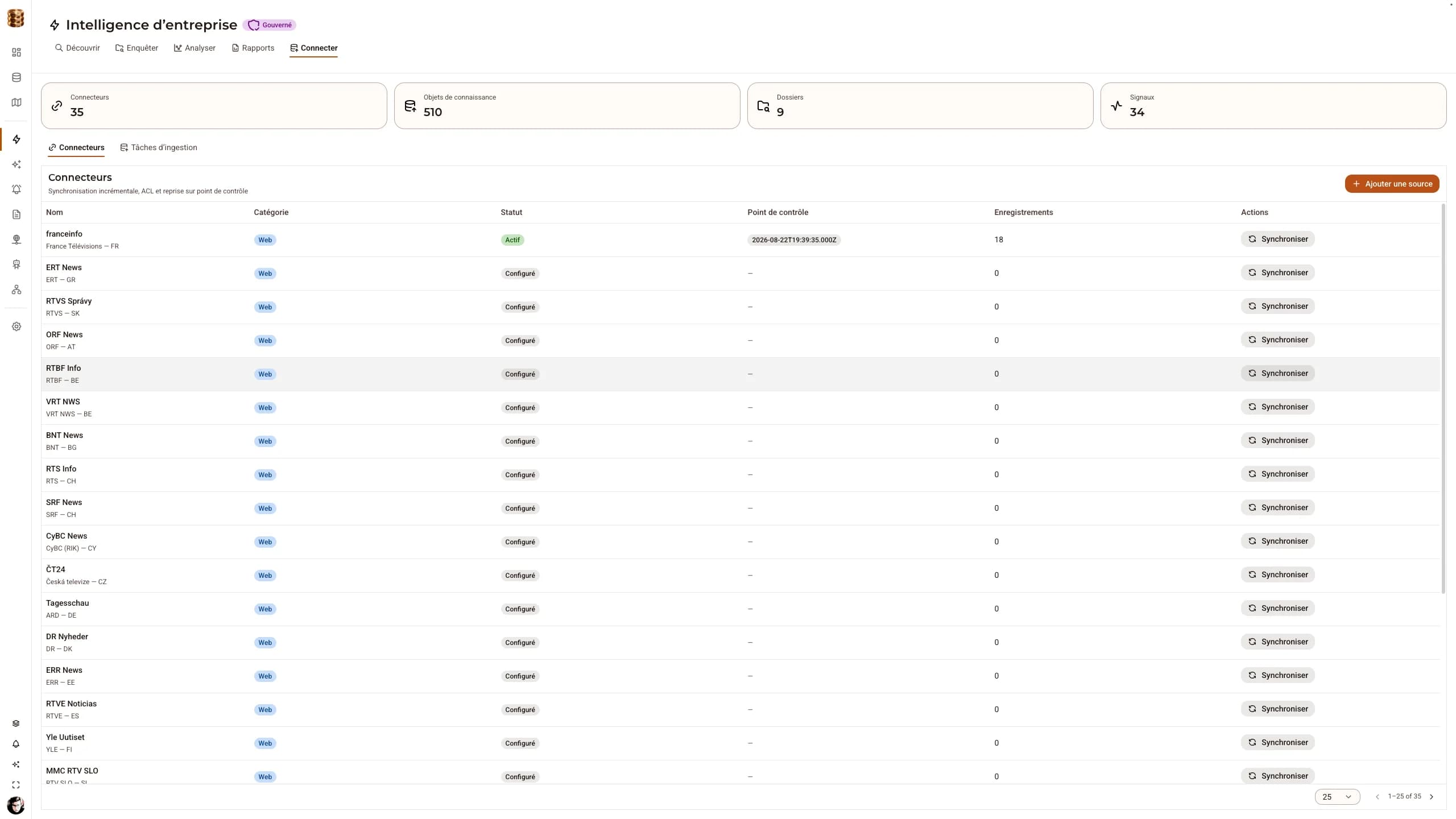
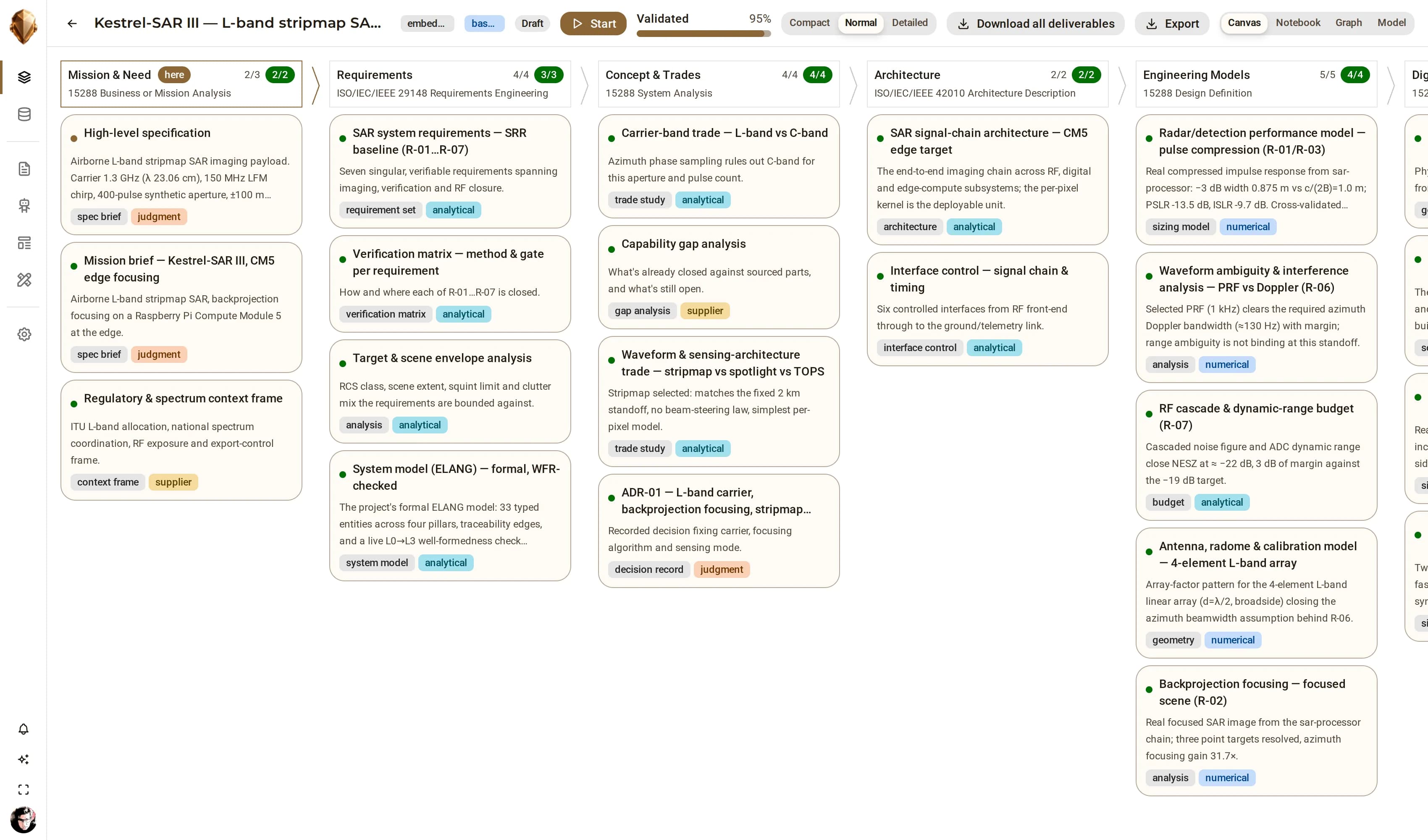
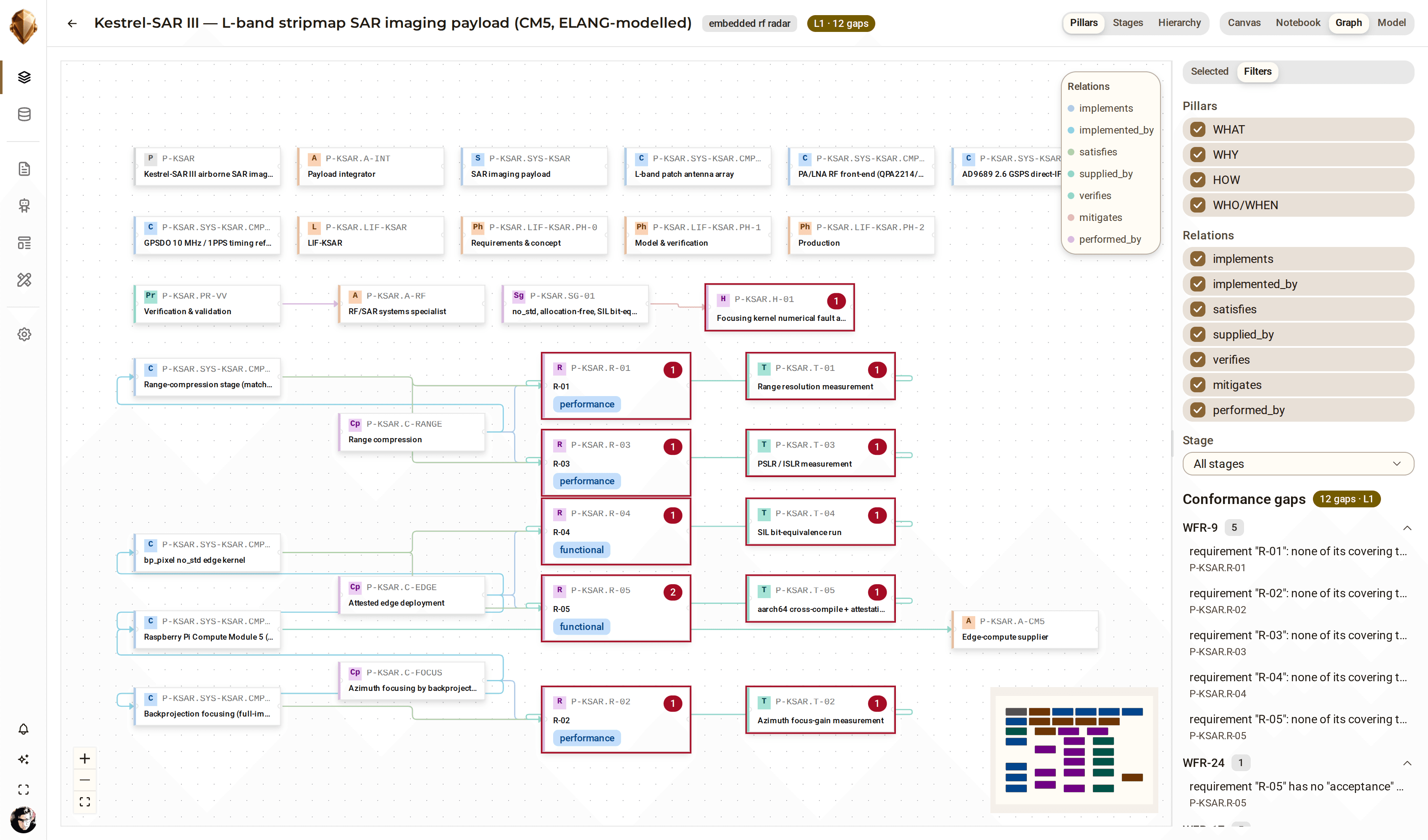
The work happens on a live System Ledger—every requirement, model, verification and gate as typed, traceable items across the ISO 15288 lifecycle. Each capture below is the running platform.
System Ledger canvasEleven ISO 15288 lifecycle stages—each item carrying its artifact type, evidence class and validation state, with review gates set between the stages.ELANG traceability graphRequirements, components, verifications and hazards connected by traceability edges, with a live conformance-gap panel.
A system worth assigning work to.
⌘
Shared context —
Requirements, models, proofs and operational evidence stay connected.
⌁
Specialised agents —
Each engineering discipline is handled through its own governed tools.
□
Evidence first —
Every handoff carries simulation results, decisions and traceability.
✣
One delivery loop —
The team works from assignment through manufacturing preparation and operations.
Engineering notes from the field.
Lessons from building and verifying an AI-defined, safety-critical ERTMS/ETCS system.
AI-Developed ETCS/ERTMS: 60 Hours, One Engineer, A Complete System
A candid engineering account of directing AI agents to build a complete railway signalling system at extraordinary speed—and the verification lessons that followed.
 Djinious