Harvested catalogue
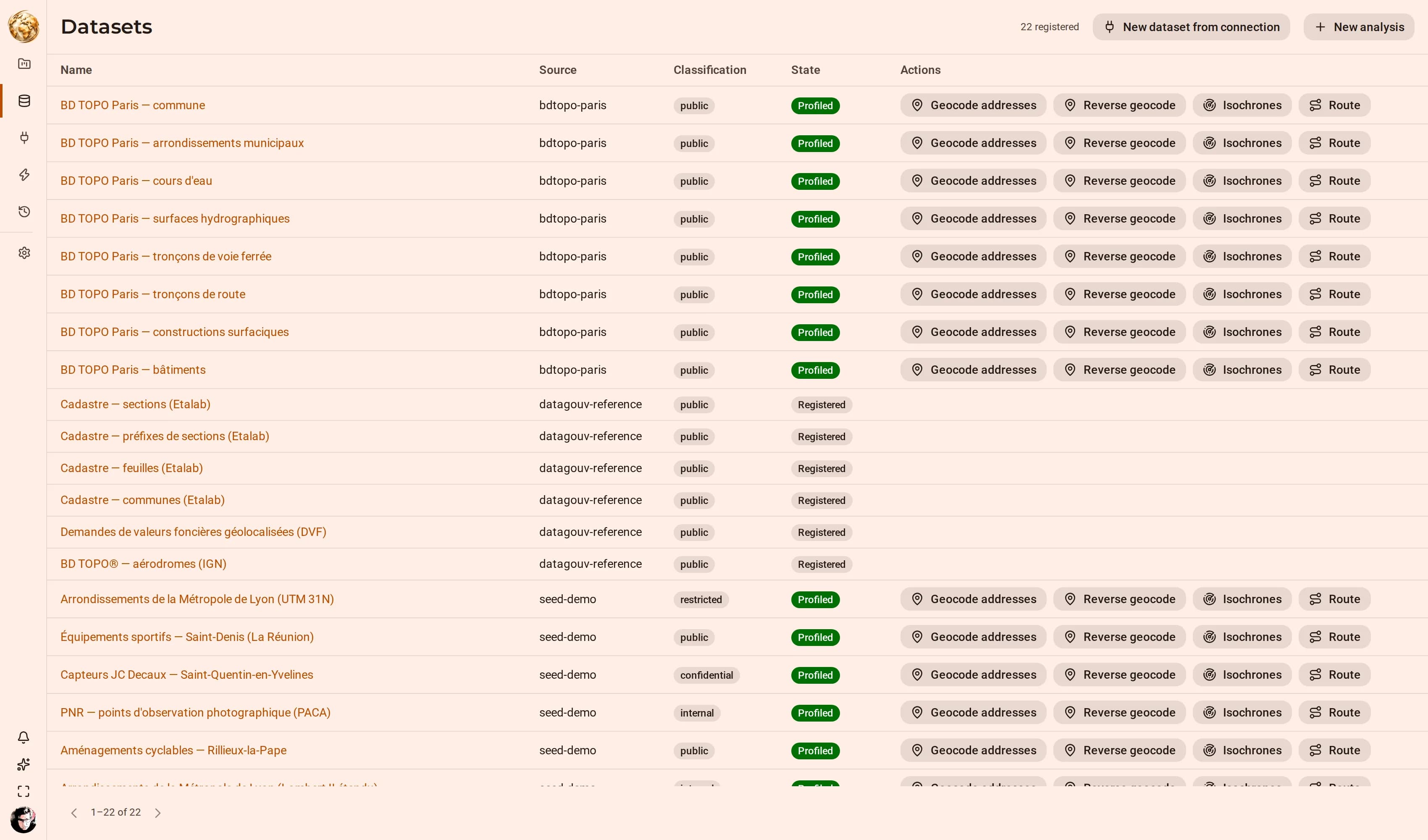
A harvester pulls public datasets and registers them with their source URL, licence and classification. Registered is not the same as present: nothing is copied into the platform until you materialize it, and the catalogue says plainly which is which.
data.gouv.fr · your own sourcesCRS inference
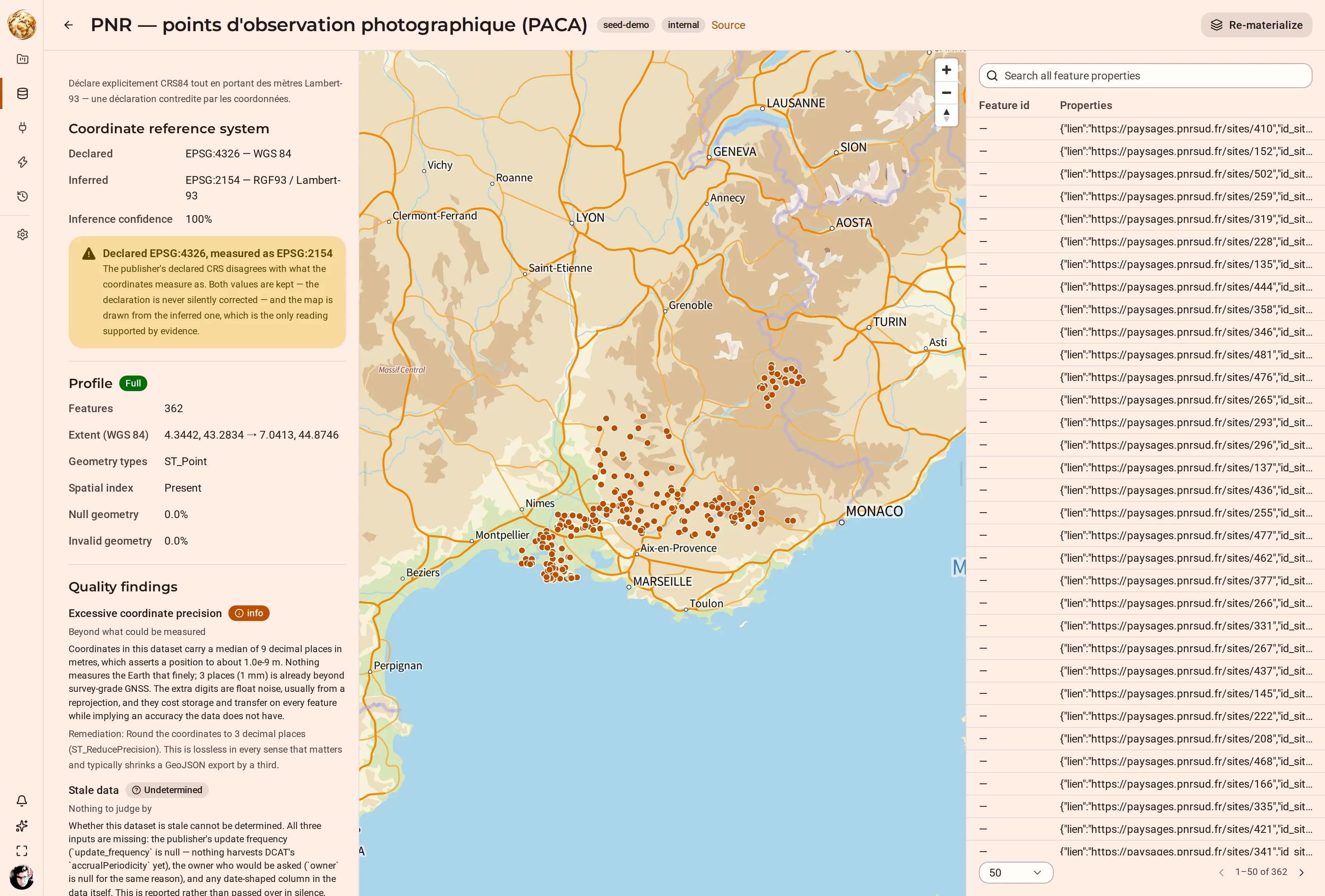
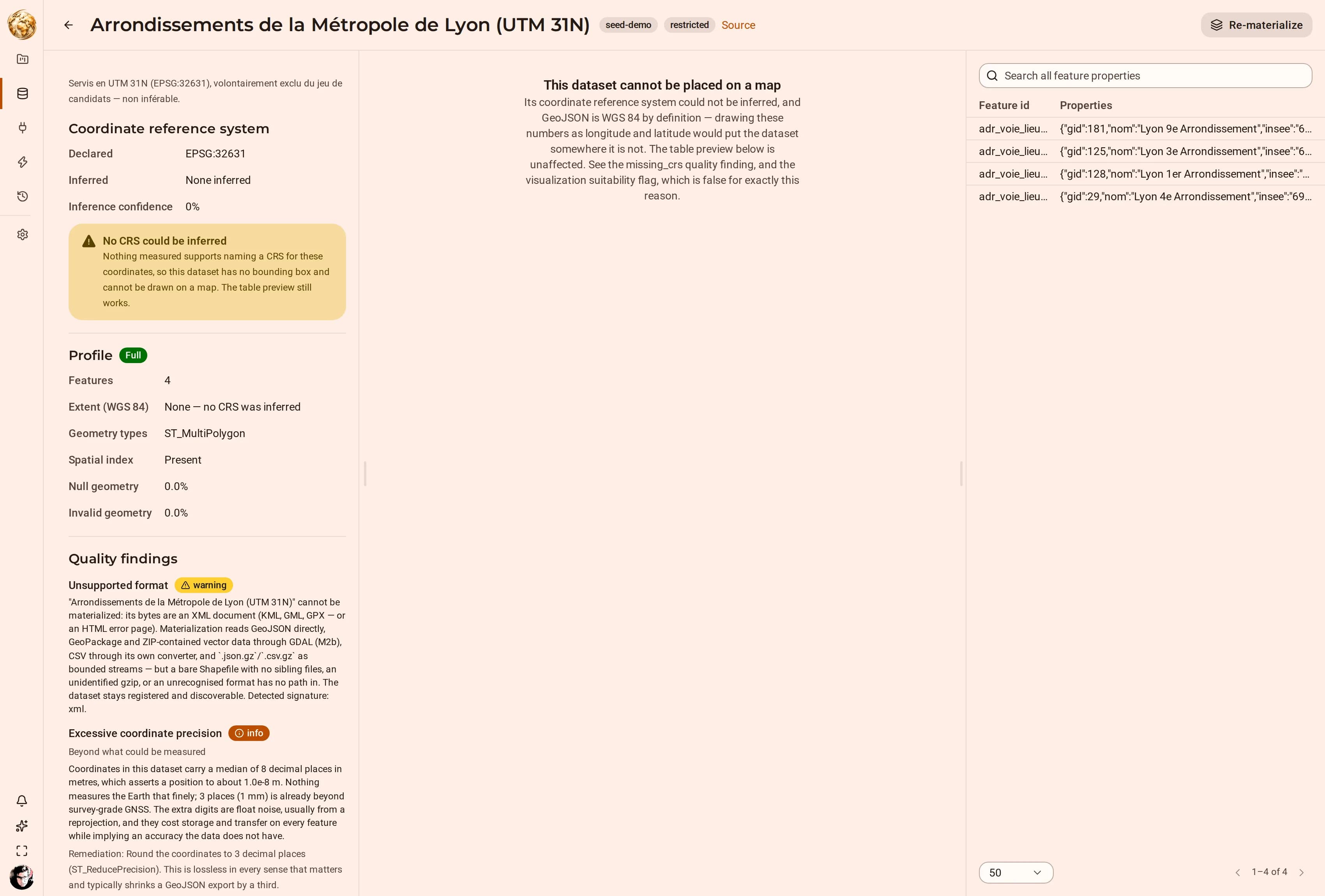
The publisher’s declared coordinate reference system is treated as a claim. The platform measures the coordinates, names the CRS they are actually in, and reports its confidence. When the two disagree, both are kept and the disagreement is shown.
EPSG · declared vs measuredQuality findings
Excess coordinate precision, stale data, invalid or null geometry — each finding explains what was measured, why it matters, and what to do. When there is nothing to judge by, the verdict is Undetermined rather than a guess dressed as a result.
with remediation, and with “undetermined”Map studio
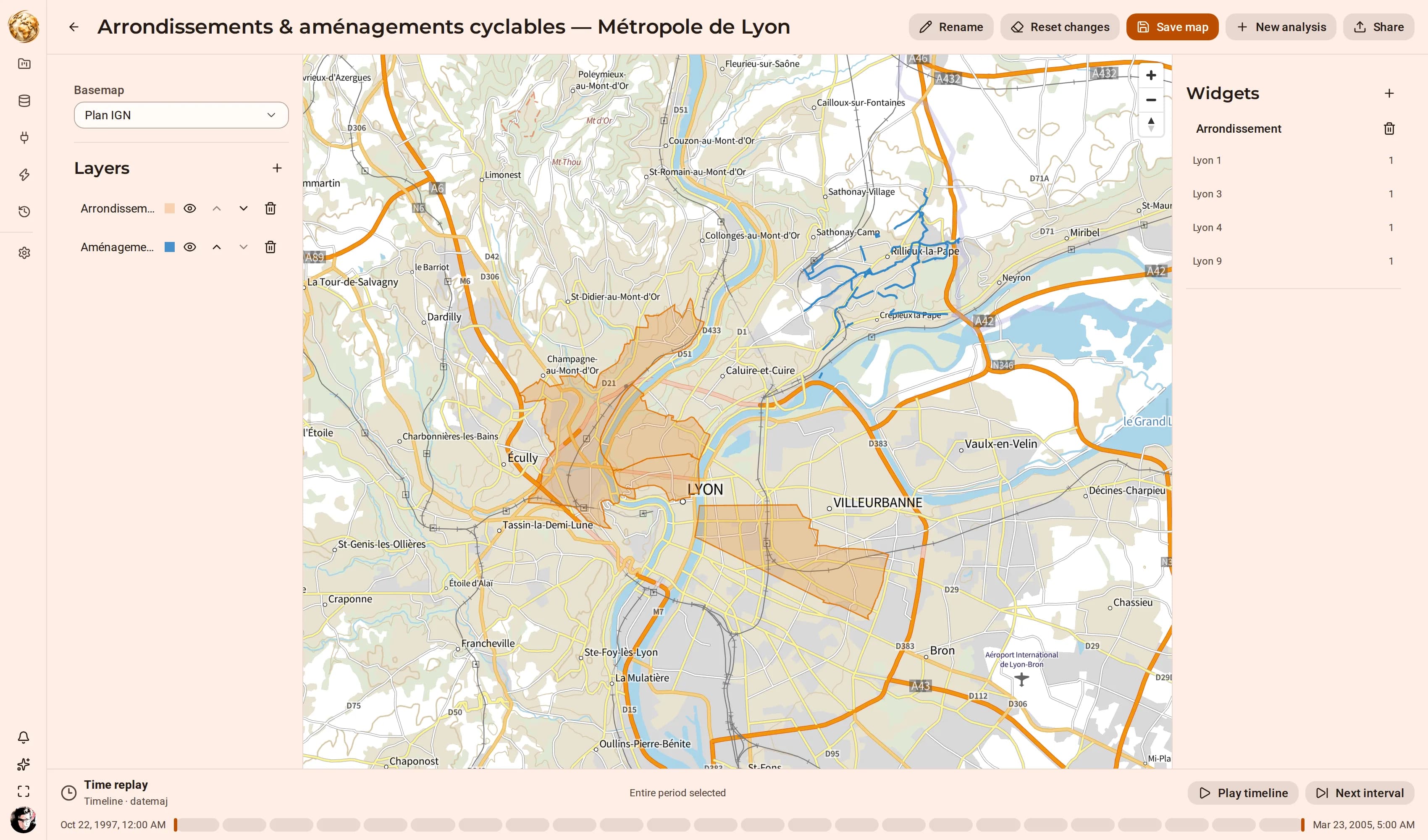
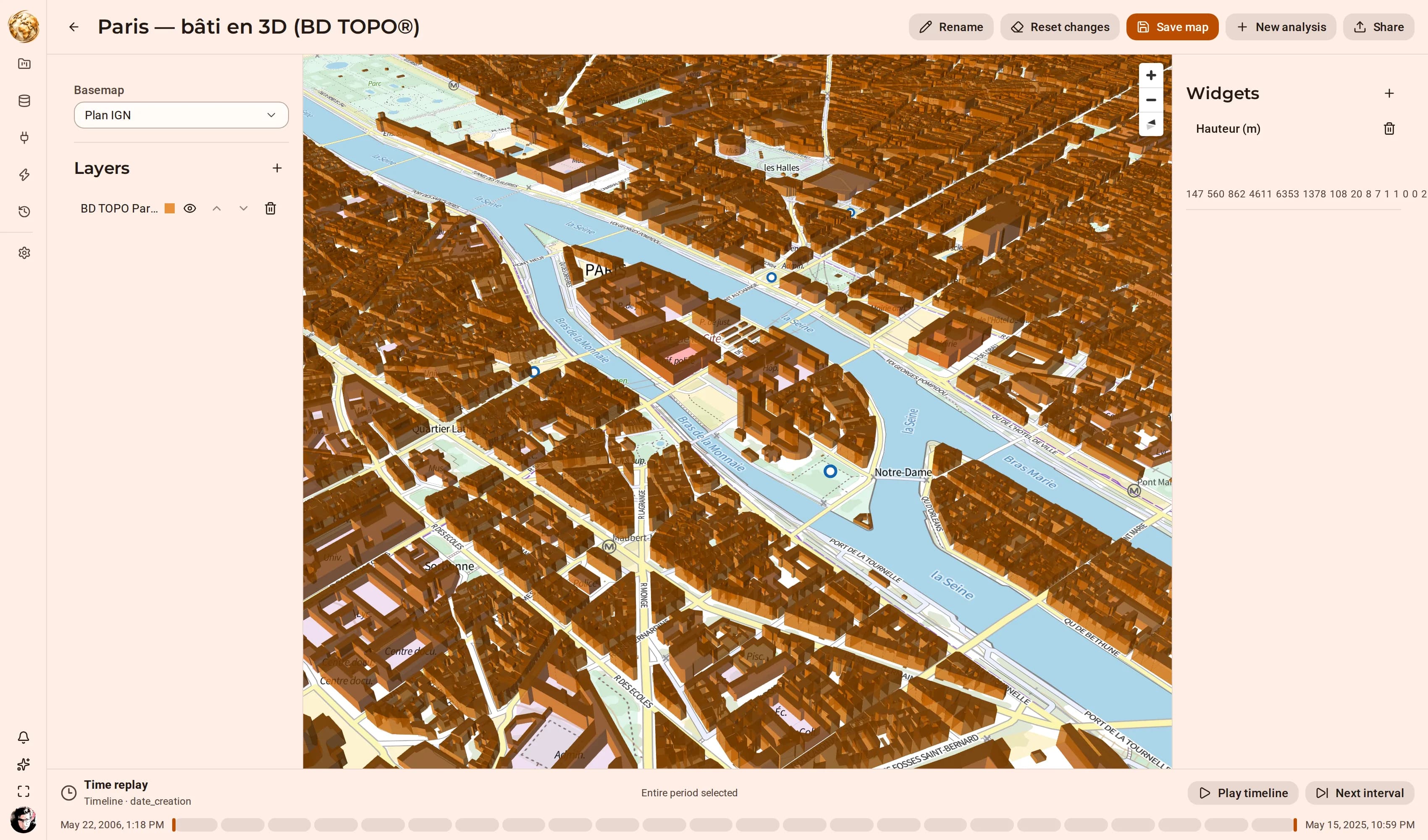
Compose materialized datasets into layers, style them, filter them, and add category, histogram, formula or time-series widgets that cross-filter the map. A map is a versioned asset, so a view can be published, shared and rolled back.
deck.gl · IGN basemapsSpatial analysis
Run isochrones, routes, forward and reverse geocoding, and spatial joins against materialized layers. Results land back in the catalogue as datasets of their own, so an analysis output is a first-class input to the next one.
isochrones · routing · geocodingWorkflows and automation
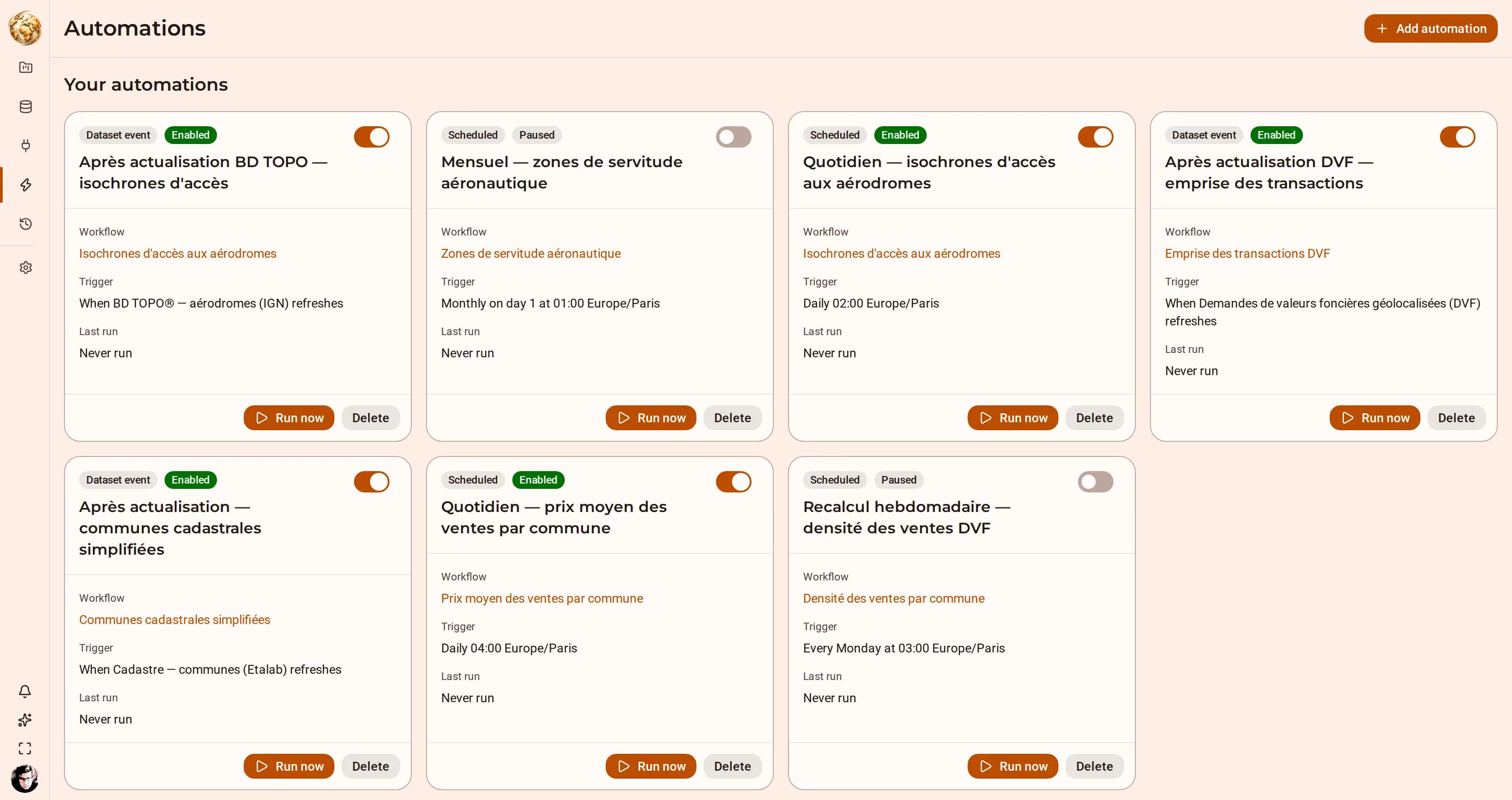
Author a pipeline on a canvas, publish it as a versioned asset, and trigger it on a schedule or on an event — dataset.refreshed, for instance. Runs execute on a leased job queue and stream their progress live.
event and schedule triggers Djinious