 Djinious
One stream
A project is one conversation. Messages, operations, results, approvals, questions and decisions land in order — whether they come from the agent, a person or a script. It is the project’s record.
The platform
Each application does one part of the work — and hands its evidence to the next. Use them together, or one at a time.
Platform overviewSee how the loop runs DjiniousEngineeringOrchestration
 DjiniousLabModelling & simulation
 DjiniousWorkshopSystem integration
 DjiniousSafeCertifiable code
 DjiniousWorld3D replicas
 DjiniousMapAgent GIS
 DjiniousCCOperations & SCADA
 DjiniousDataKnowledge base
 DjiniousWorkflowAgent automation
 Djinious FactoryThe integrated edition of DjiniousComing soon
In developmentDjinious Factory is not available yet. The nine Djinious applications are — each on its own, or together as one platform.
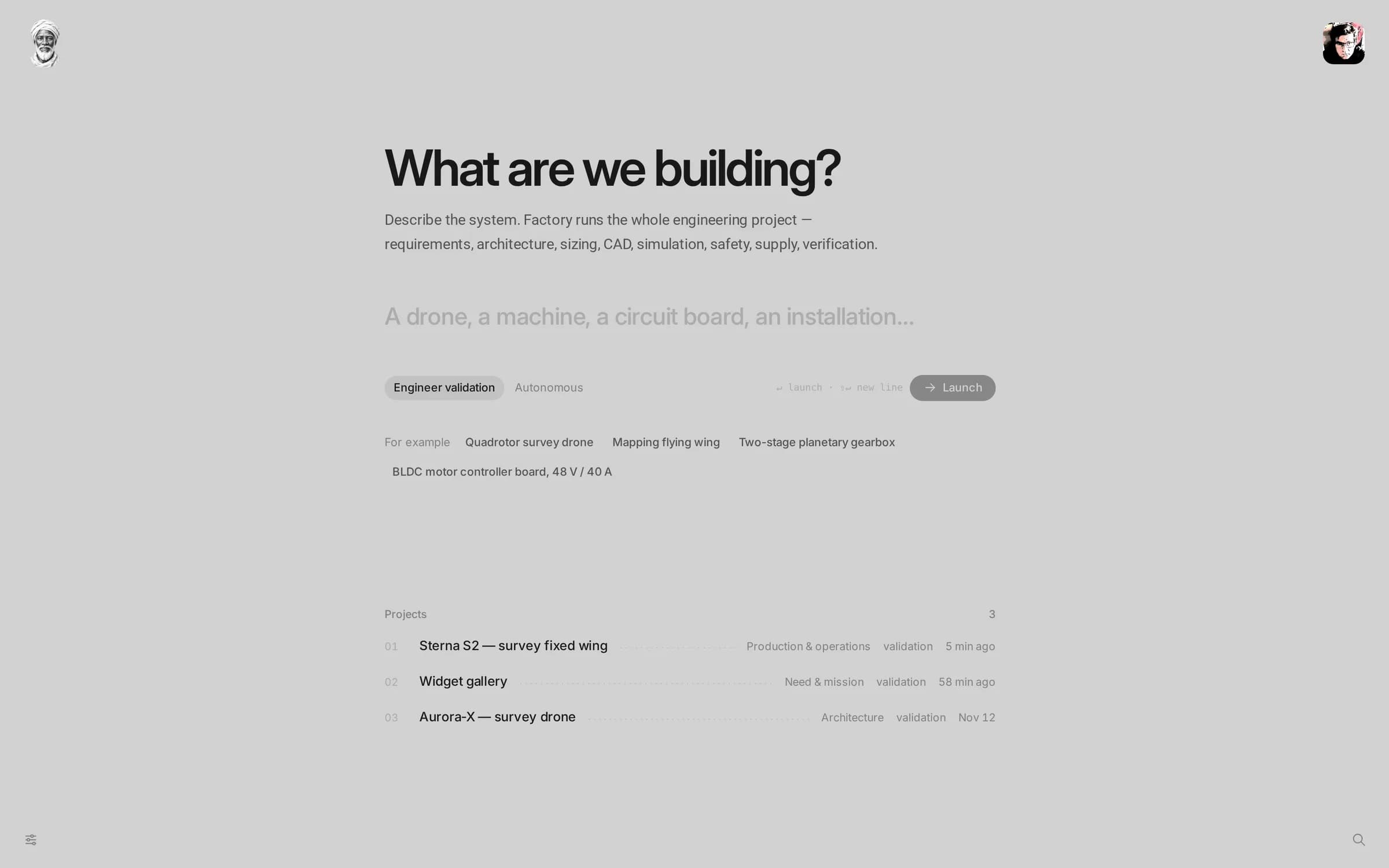
Djinious Factory brings the nine applications together into one system: one cockpit, one API, one agent. Describe what you want to build in one prompt — Factory carries the project from requirements to release in a single conversation, and an engineer validates every step that matters.
 Djinious Factory
What it is
In Factory there are no separate applications any more, only functions grouped by engineering domain over one data model: one organisation, one project, one file store, one job queue. What DjiniousEngineering orchestrates across the suite today, Factory does in one place.
A project is one conversation. Messages, operations, results, approvals, questions and decisions land in order — whether they come from the agent, a person or a script. It is the project’s record.
Beside the stream, the reference: the results that must stay in sight, pinned and grouped by lifecycle stage. A pin can stay live, refreshed while someone is looking.
Autonomous: the agent chains its turns until the plan is done. Engineer validation: every write or calculation waits for an engineer, who approves it, refuses it or edits its input.
Only someone with the right to validate validates an item. Every result carries its provenance, and its evidence is capped at what actually produced it.
Inside the cockpit
A real project in a development build: Sterna S2, an electric survey fixed wing, taken from its mission to a flown survey.
01 · The stream
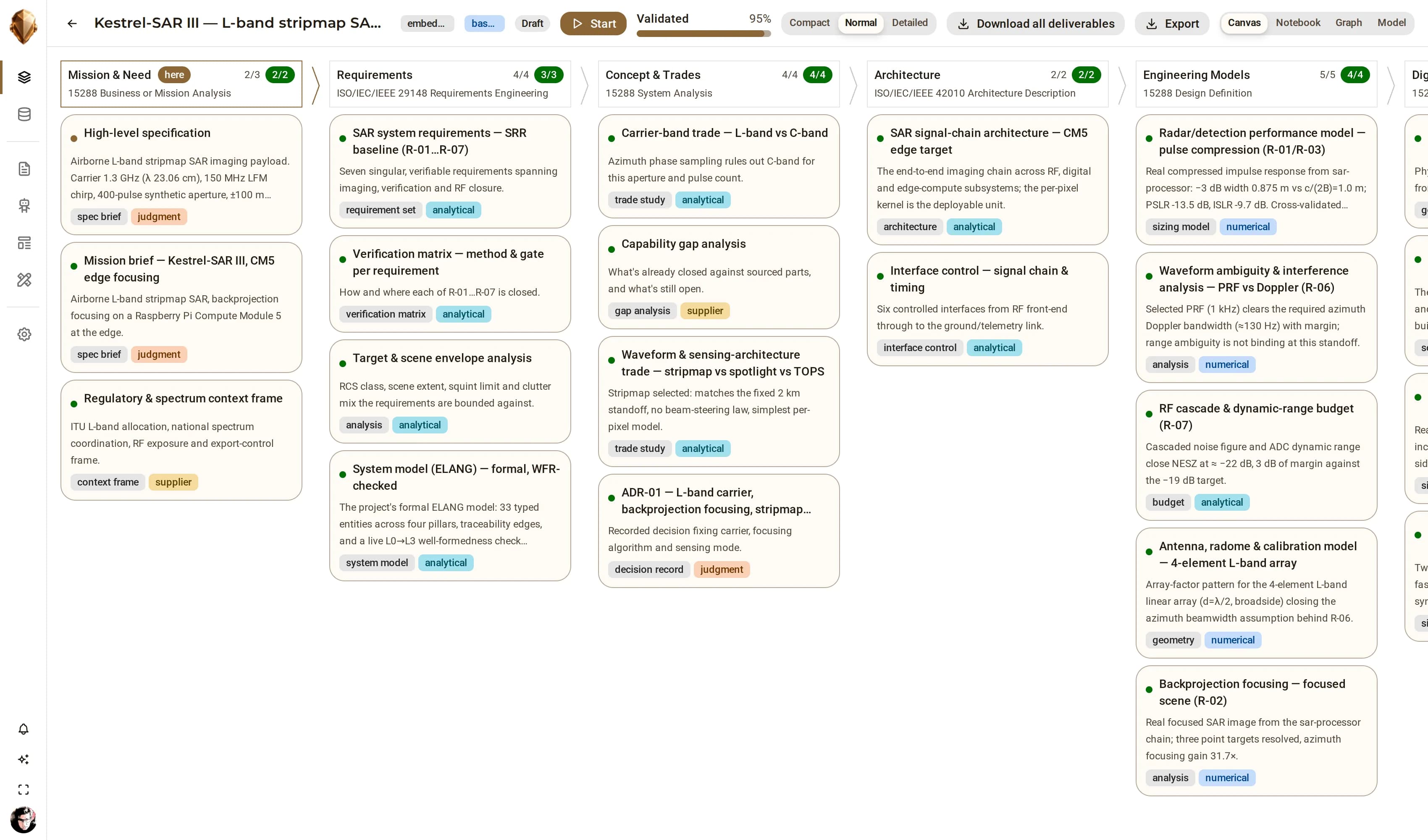
The project opens on the brief, in plain words. Each chapter — mission, requirements, concept, architecture… — folds away once done, keeping its results, operations and answers one click away.
Djinious Factory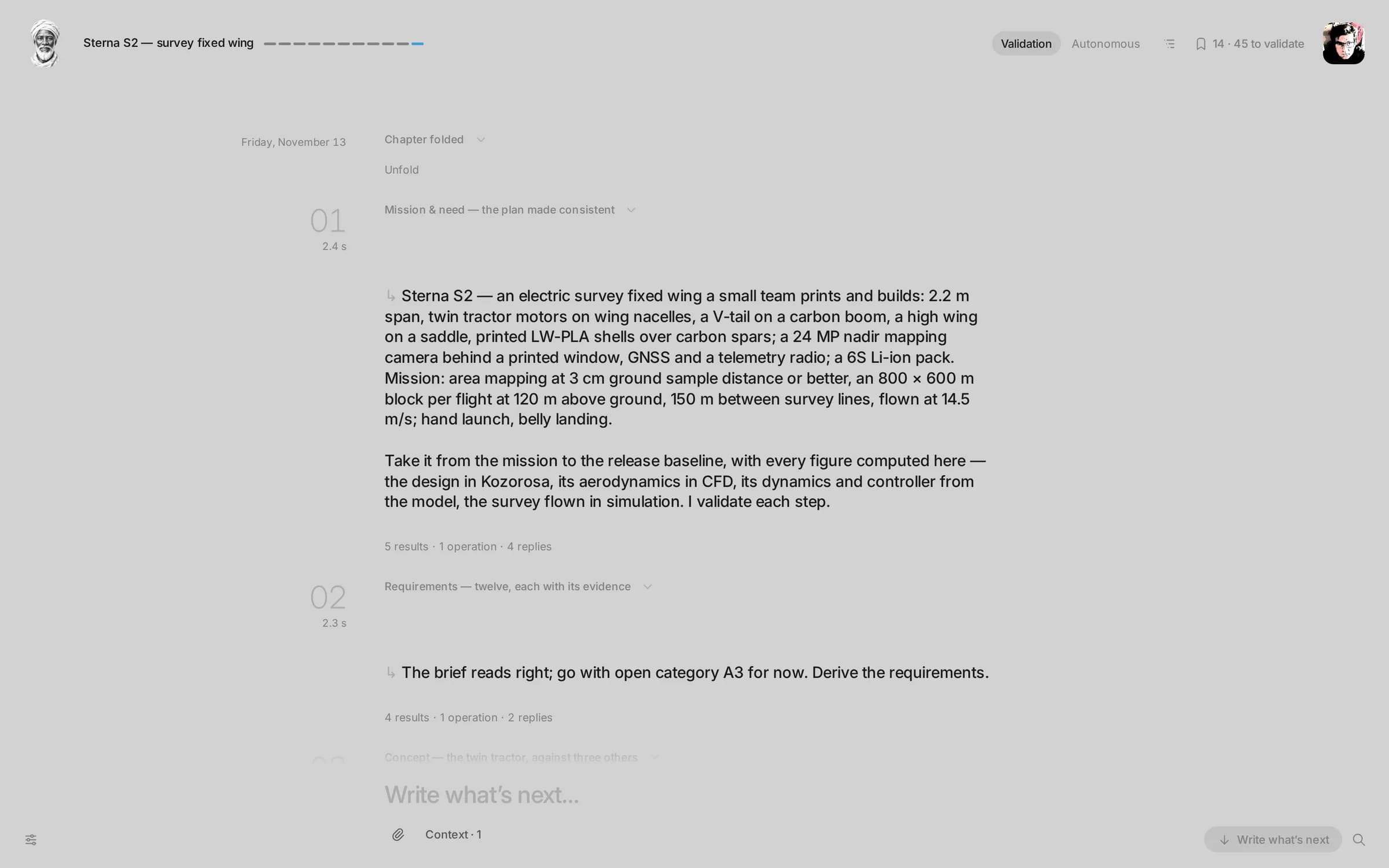
02 · Stream and reference
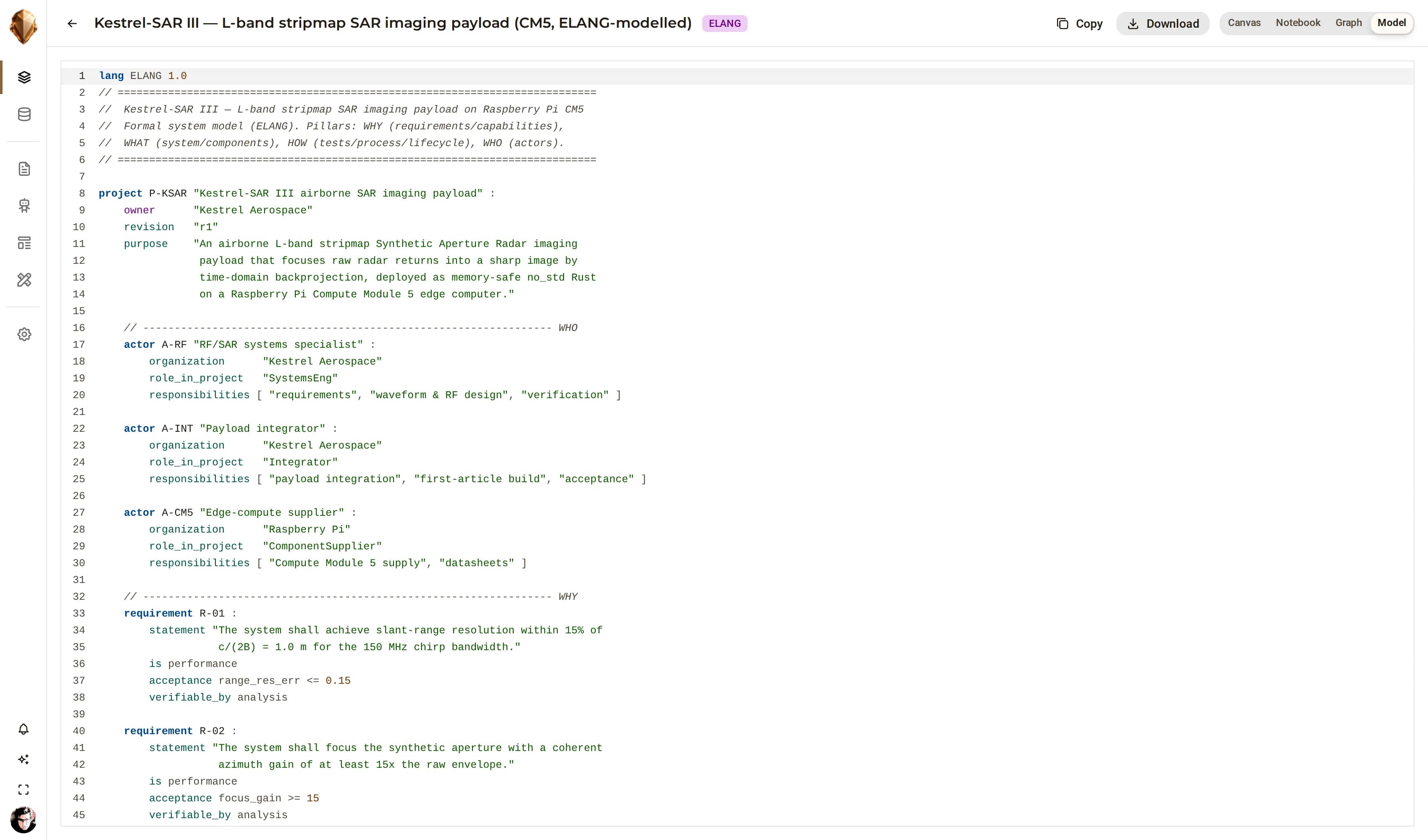
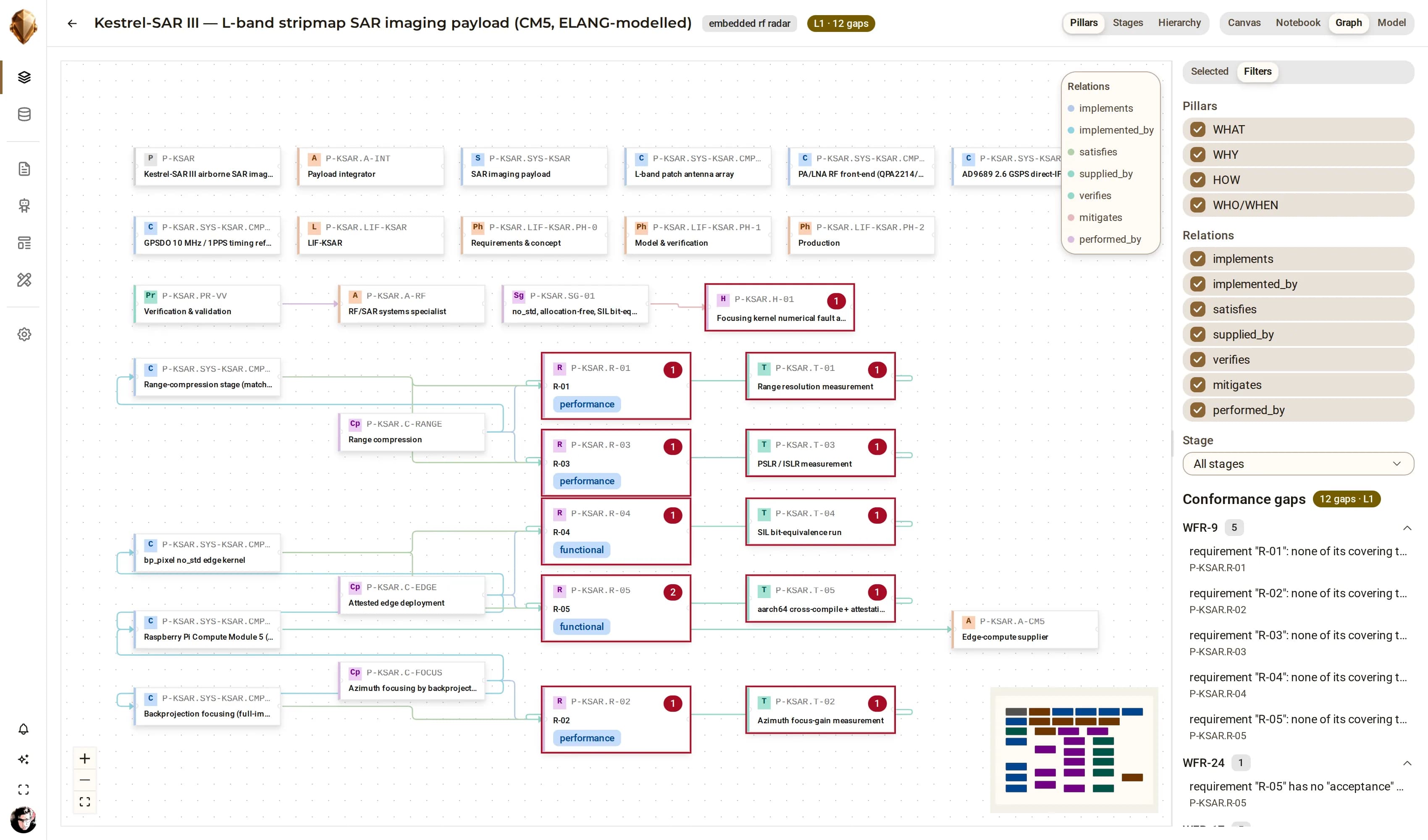
Open the reference beside the stream: the mission, the requirements, the concept and every later stage, each item with its revision, its kind of evidence and its status. Validate or reject it where you read it.
Djinious Factory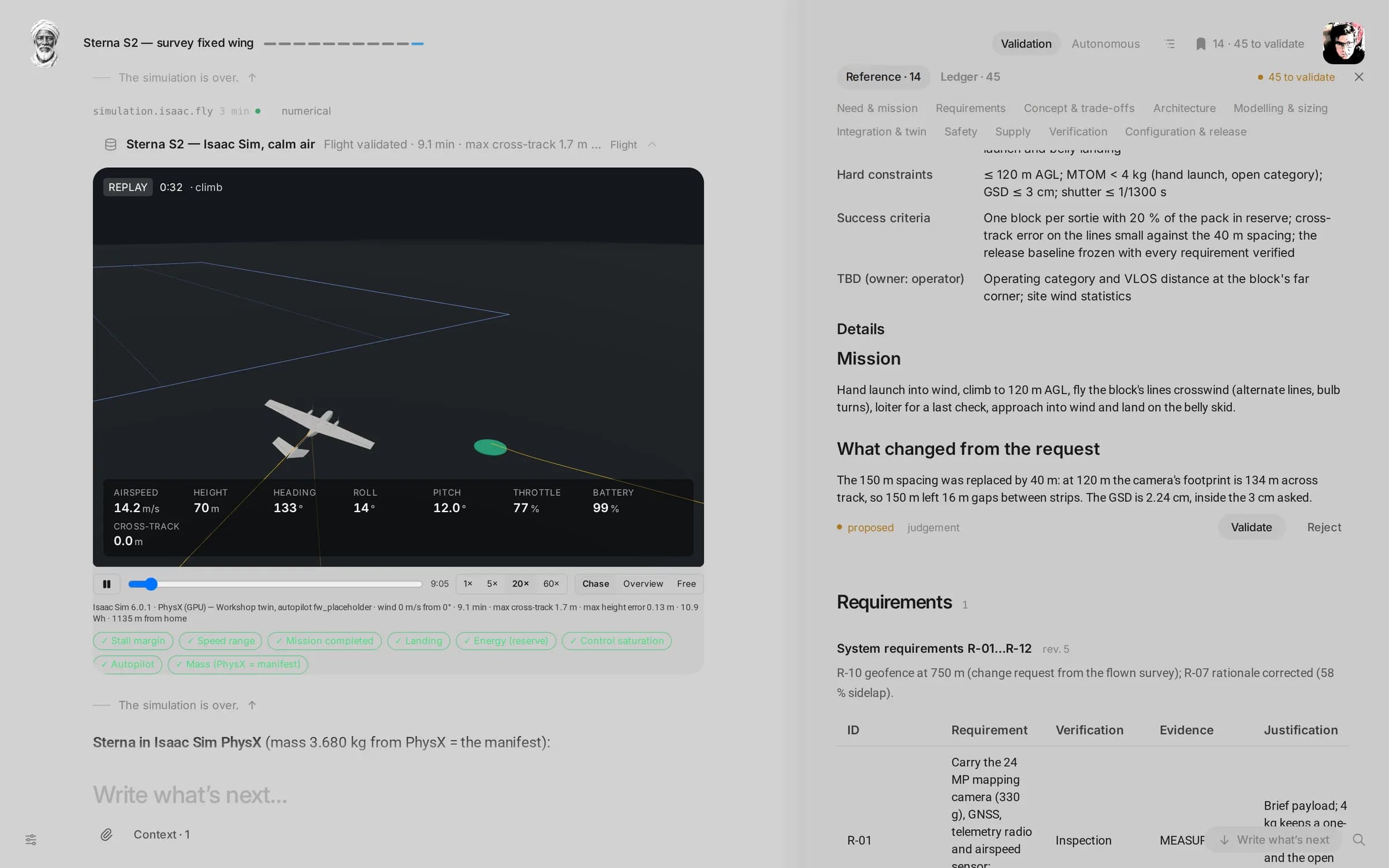
03 · Simulation in the stream
Simulations land in the conversation as live widgets. Here Sterna flies its survey block in Isaac Sim, on the physics of its digital twin, and every check is shown with its verdict: stall margin, speed range, landing, energy reserve, control saturation.
Djinious Factory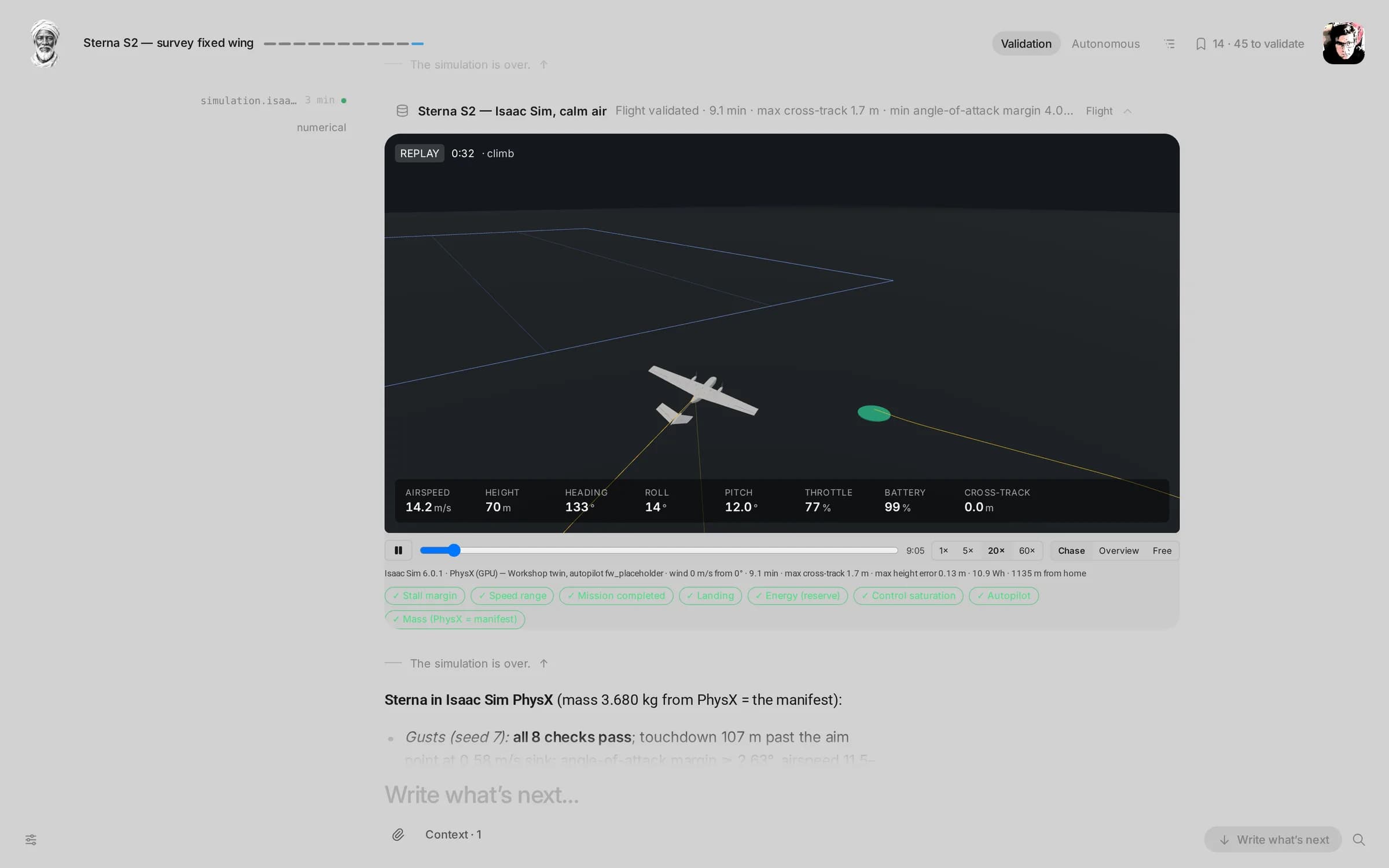
Captures from a development build, in the Fumée palette.
End to end
Factory runs the whole engineering project from a single conversation.
One platform underneath
Everything the cockpit does goes through the same public API that scripts and external agents use.
The cockpit uses only the public API. A script or an external agent reaches the same functions, through REST or MCP.
REST · MCPThe agent speaks a neutral model: dozens of providers built in, or your own OpenAI- or Anthropic-compatible model server.
Cloud · on-premisesInside the stack there are no tokens: every call to an engine is signed for the real caller and lives one minute.
Signed assertionsNo state that only one process knows. The API and the runners scale freely; the engines answer signed calls only.
Docker SwarmFactory is built from the engines of the nine applications: the most complete implementation of each capability was kept, the duplicates removed. The applications remain the way to adopt Djinious today — one at a time, or as a platform. Explore the platform today
Coming soon
Tell us about the system you want to build. We will open early access to Djinious Factory with a small number of engineering teams.