 Djinious
Bridge reachability
ping → ok.
The platform
Each application does one part of the work — and hands its evidence to the next. Use them together, or one at a time.
Platform overviewSee how the loop runs DjiniousEngineeringOrchestration
 DjiniousLabModelling & simulation
 DjiniousWorkshopSystem integration
 DjiniousSafeCertifiable code
 DjiniousWorld3D replicas
 DjiniousMapAgent GIS
 DjiniousCCOperations & SCADA
 DjiniousDataKnowledge base
 DjiniousWorkflowAgent automation
A complete quadcopter wired from library parts into one co-simulation, its flight controller closing the loop around NVIDIA Isaac Sim rigid-body physics — and a real take-off, hover, climb, descent and landing recorded from that loop.
 DjiniousWorkshop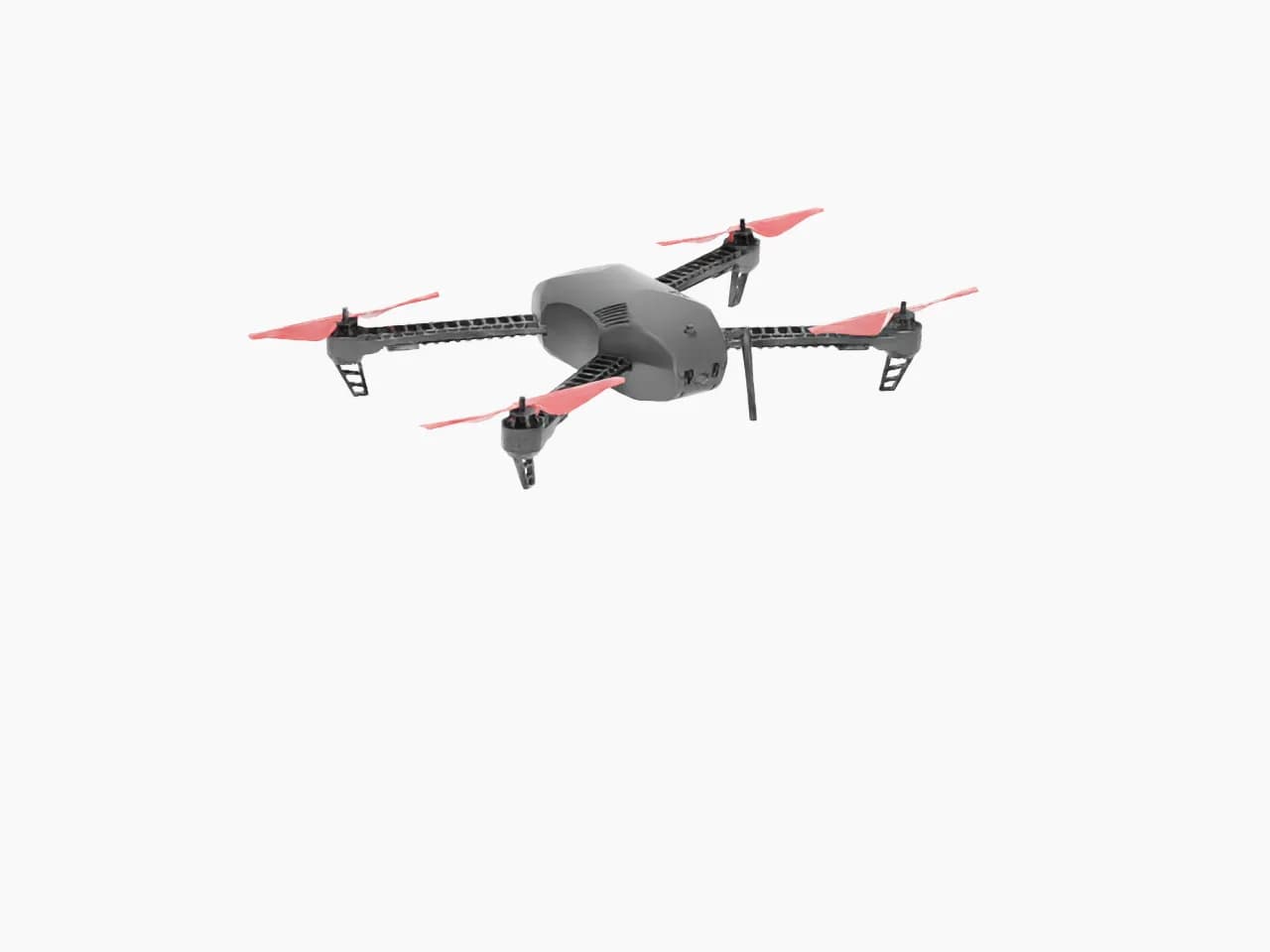
Real dynamics usually only appear on the bench, after the parts have been bought and the airframe built. Here the drone is a system of functional models from the start: radio, flight controller, ESCs, motors, propellers, battery and airframe, each a real component record with its model attached.
The airframe block hands off to NVIDIA Isaac Sim. Per-rotor thrust and torque from the functional models drive a 6-DOF PhysX rigid body on the GPU, and pose, IMU and GPS stream straight back into the running system.
The drone wired on the system canvas, every block a functional model exchanging real signals.
DjiniousWorkshop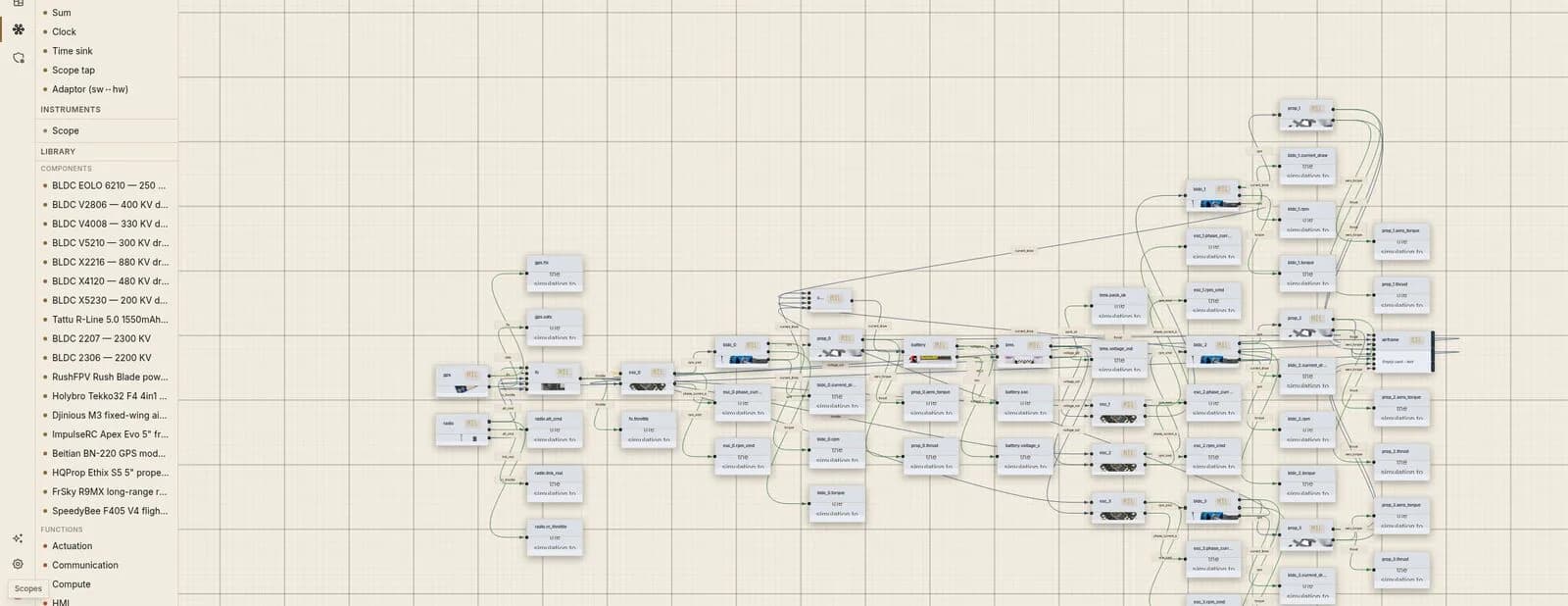
A closed-loop mission recorded from the co-simulation: an FMU flight controller (radio → FC → ESC → motors → props) around rigid-body physics from Isaac Sim, captured with exact sim-time stamps. No keyframes.
The radio sends an altitude command; the motors spin up and the PhysX body leaves the ground.
The first hold, with a small honest lateral drift left in the data.
A second altitude command; the airframe follows it and holds.
The drone comes down under control and lands; the recording then shows it at rest.
Live scopes read the signals streamed back from Isaac Sim across the whole mission — thrust, motor rpm, battery voltage and state of charge, altitude command and airframe position.
DjiniousWorkshop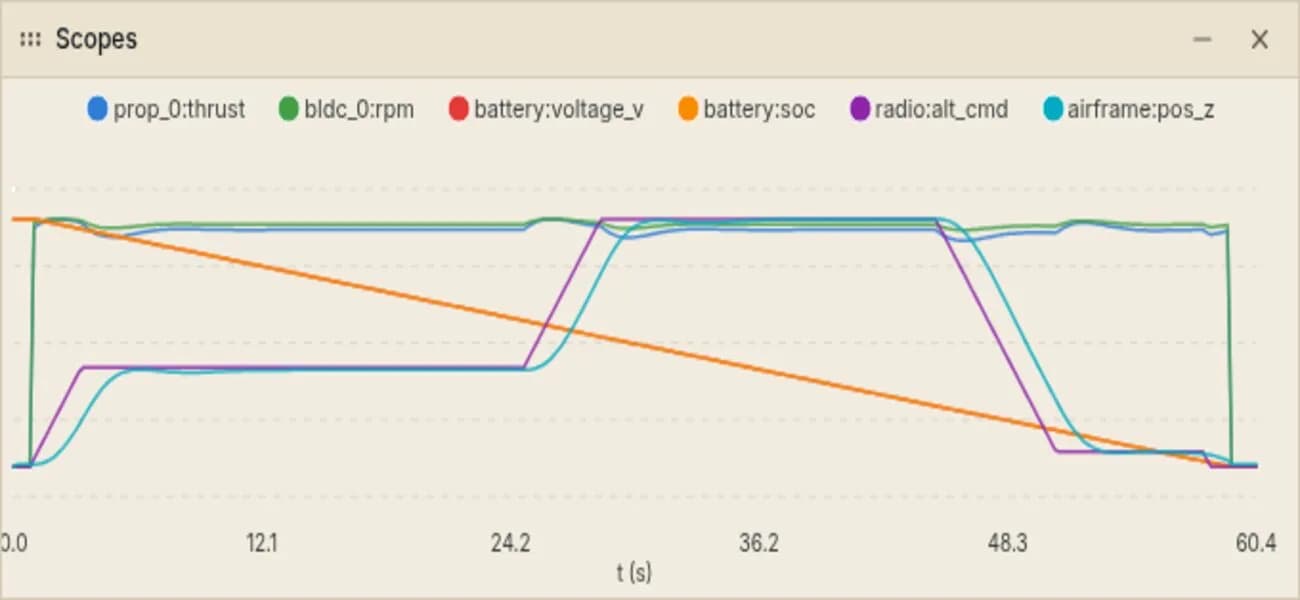
Every merge to the airframe bridge runs a GPU-gated end-to-end suite against Isaac Sim on NVIDIA DGX Spark · GB10 before it ships.
ping → ok.
imu_az = 9.81 m/s².
Δ < 0.5 m over hover against a deterministic 6-DOF analytic model.
RGBA frame rendered on GB10.
Keep exploring
 Subsea autonomyMarlin-XR Seabed Survey AUVAn autonomous underwater vehicle surveying the export-cable corridor of the Dogger Bank offshore wind farm. The bundled demo ledger: forty items seeded across all eleven lifecycle stages, from the mission brief to the deployment procedure.
 DjiniousEngineering
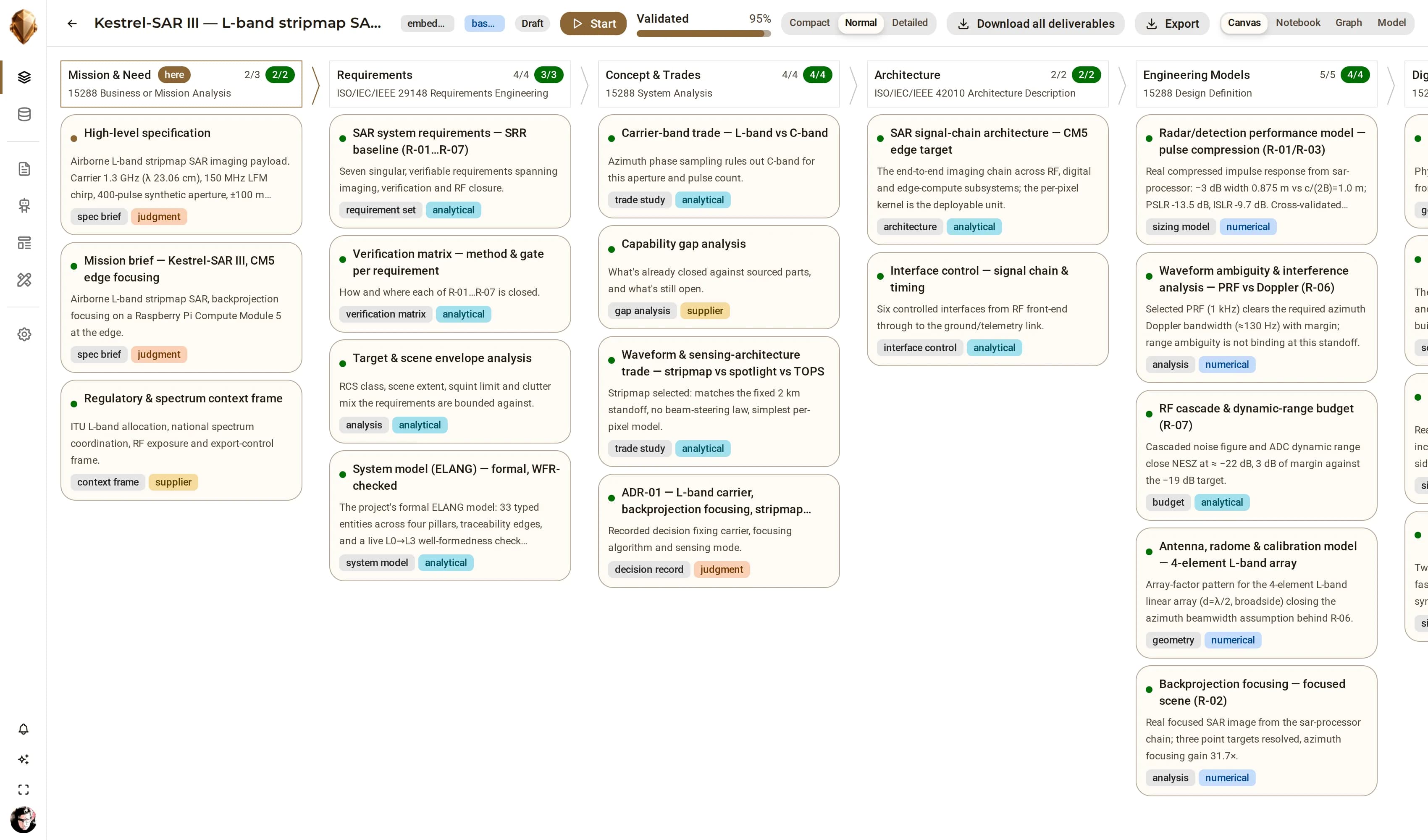
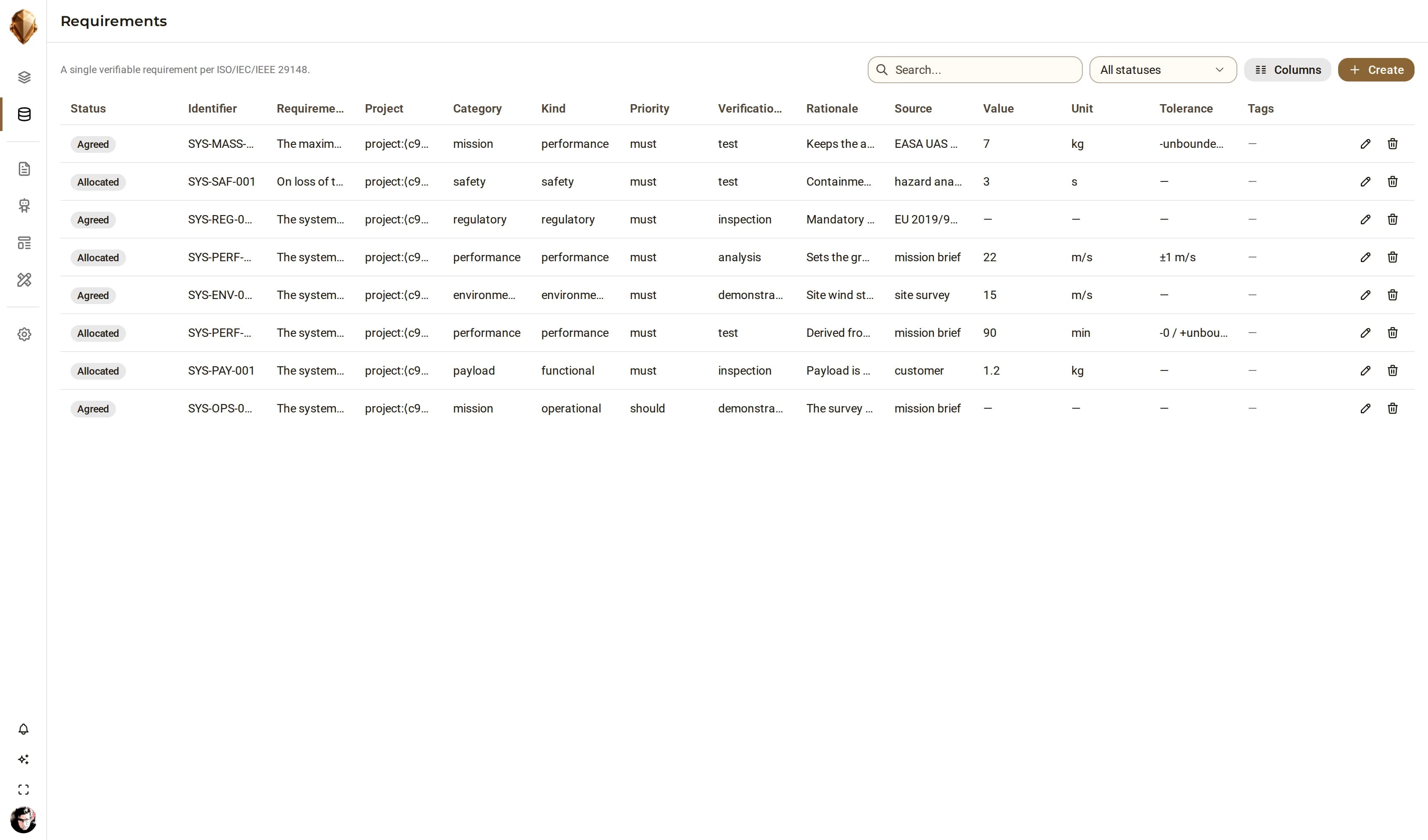 Uncrewed aircraftKestrel-1 Survey UAVA fixed-wing survey UAV, seeded as a worked example: eight requirements, six components, four suppliers and four verifications, wired into a traceability graph, with a real ELANG system_model and an inline Technical Data Package.DjiniousEngineering
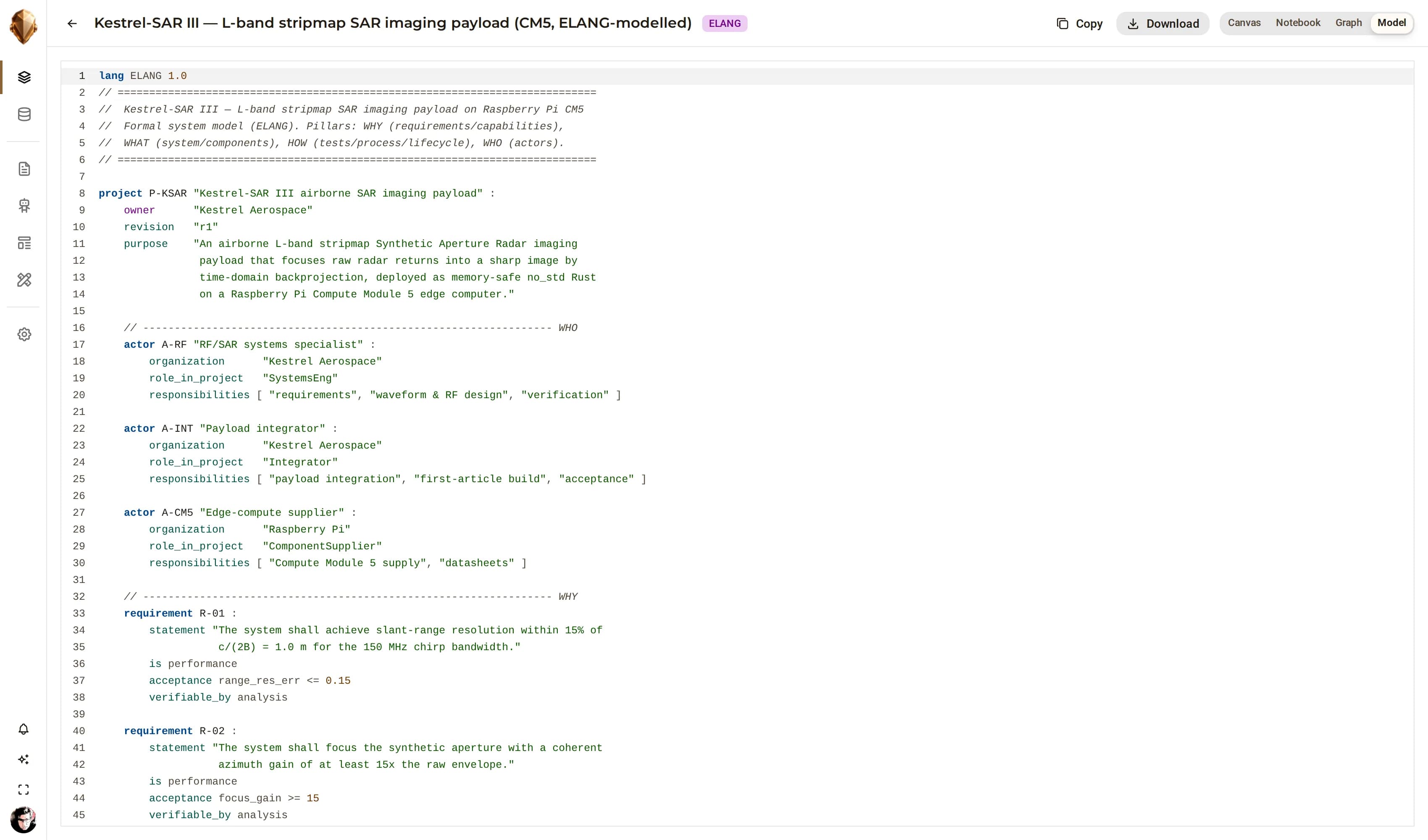 RF & radar sensingEmbedded Radar Sensing ModuleAn embedded radar sensing module — the system class the RF/radar recipe covers: a mixed-signal board where spectrum, EMC, environmental and fabrication standards constrain the design as hard as the sensing requirement does.DjiniousEngineering