 Djinious


Agent-assisted catalogue review
Put the question to an agent that can read every profile, and get an answer with the tool calls that produced it.
 DjiniousMap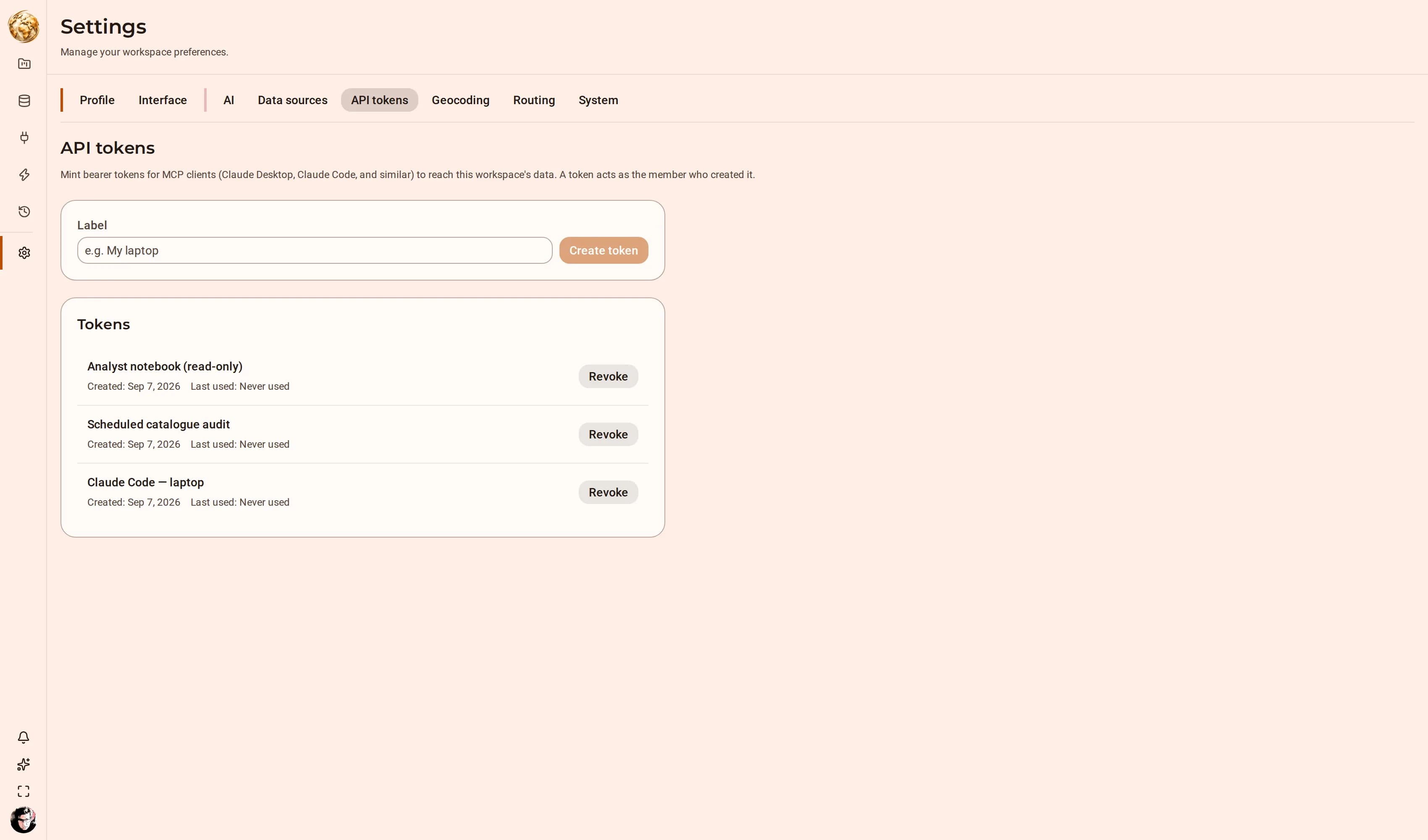
Reviewing a catalogue is exactly the kind of tedious, mechanical reading a person does badly and an agent does well: open each profile, check whether a CRS was inferred, note the findings.
The assistant works the same API under the same tenancy model, proposes before it acts, and shows every call it made. An external agent gets the same reach through MCP, and its transcript can be mirrored back into the app so the team sees the work.
How it runs
Ask
Ask the assistant which datasets cannot be placed on a map.
AssistantWatch the trace
Watch the tool calls resolve, including the ones that return nothing.
Plan-firstRead the cards
Get the answer with the catalogue’s own cards inline, not a paraphrase.
MCPMirror
Mirror an external agent’s session in if the work happened elsewhere.
Conversation mirroring
An agent auditing the catalogue, mirrored live
DjiniousMapKeep exploring
Related use cases
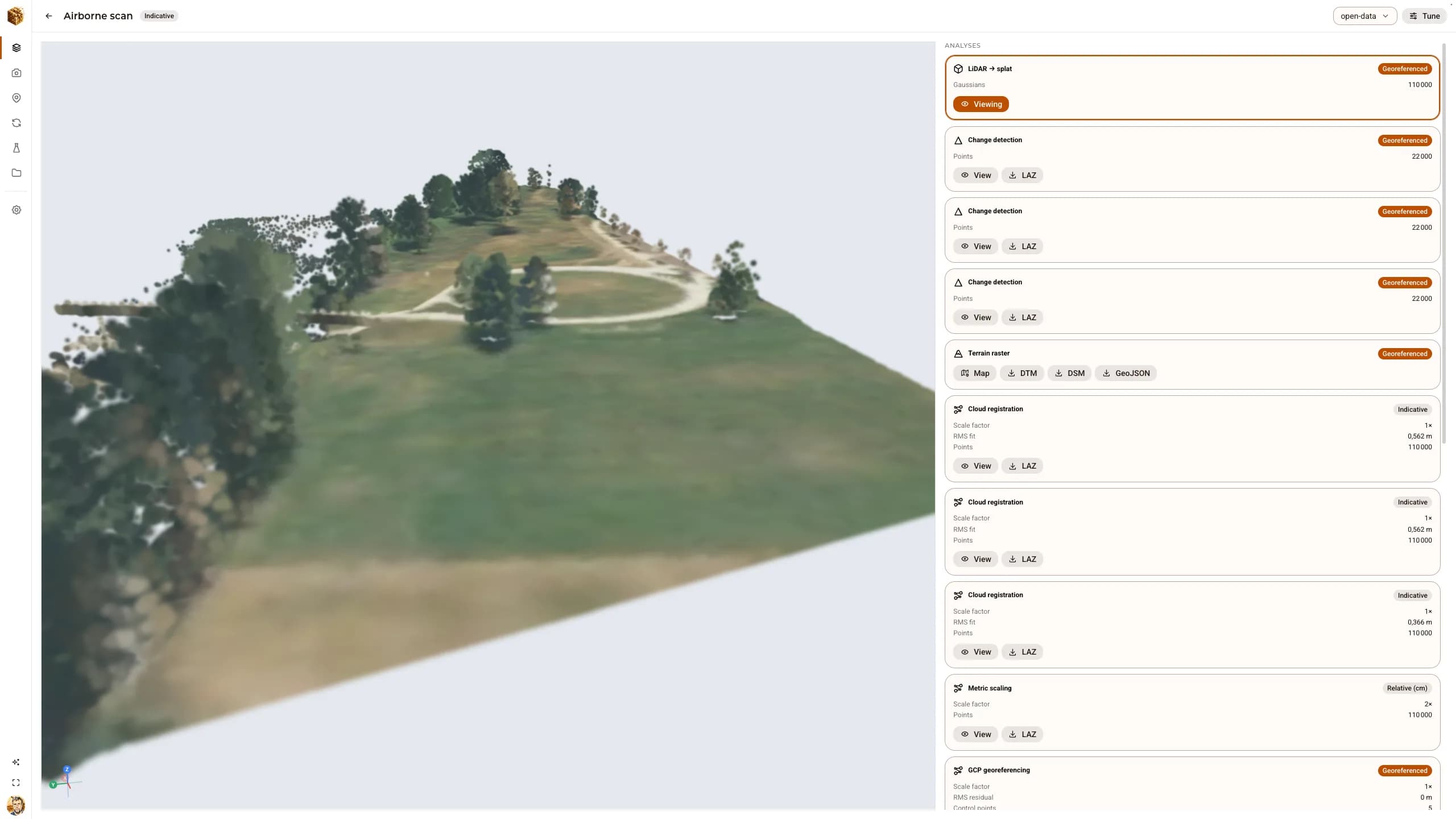 Reality captureOpen data in, graded replicas out: airborne LiDAR, real photographs and a laser scanDjiniousWorld was validated end to end on public datasets — the Autzen airborne LiDAR cloud, the Middlebury temple photographs and the ETH3D “pipes” scene — every step driven through the API, every result carrying the accuracy grade it earned.
 DjiniousWorldProperty · DVF and cadastreProperty and land valueReconcile transaction records against cadastral boundaries and publish the result as a layer the whole team reads the same way.DjiniousMap
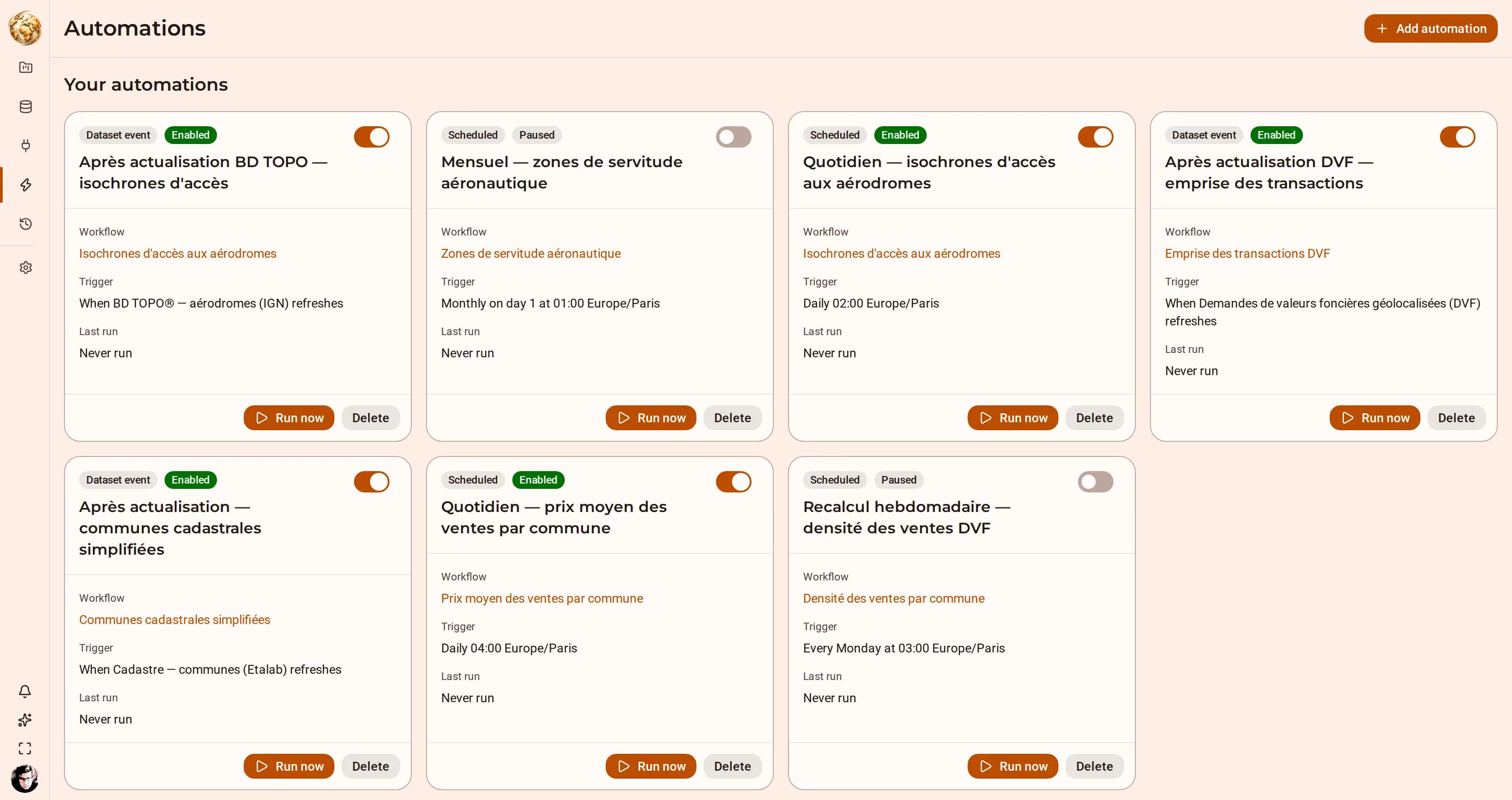 Territory · isochrones and routingAccess and service coverageAnswer “what is within twenty minutes of here” for every site in a layer, and keep the answer current as the source moves.DjiniousMap