 Djinious


Nuclear reactor
A reactor's neutronics from first principles — six-group point kinetics with Doppler feedback and xenon-135: the prompt jump, the prompt-critical cliff, self-limiting power excursions, the post-shutdown iodine pit, load-follow, and SCRAM.
 DjiniousLab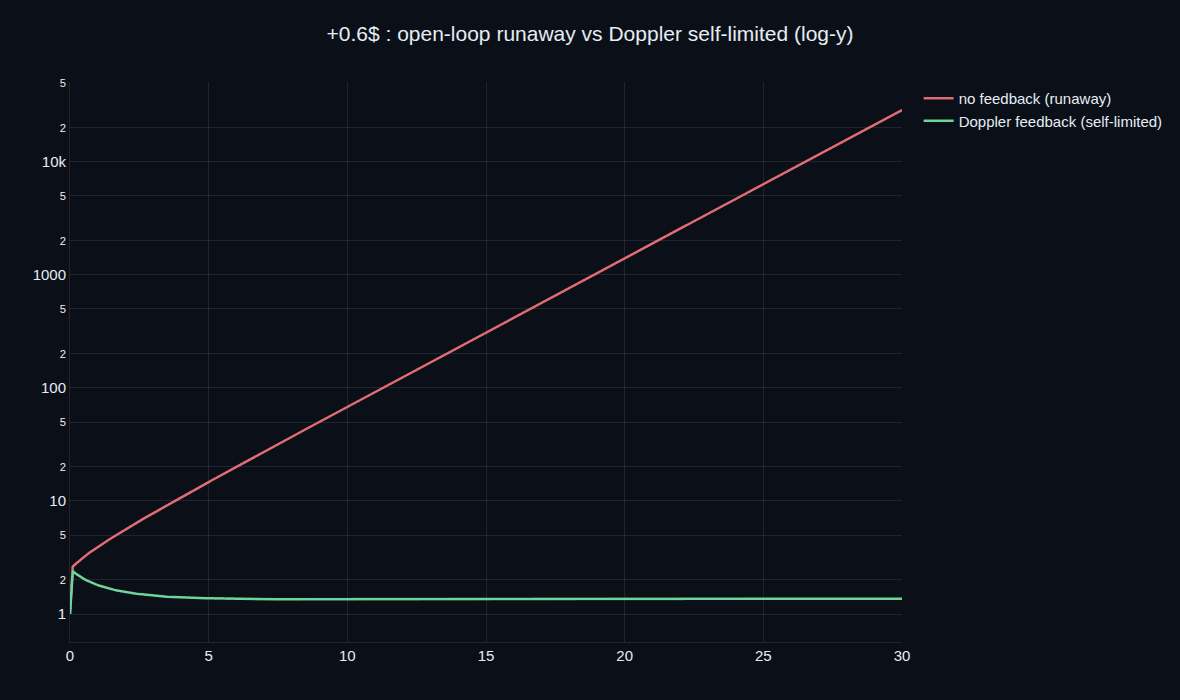
- delayed-neutron kinetics
- 6 groupsdelayed-neutron kinetics
- Doppler-limited (vs 28 830× runaway)
- 2.4×Doppler-limited (vs 28 830× runaway)
- xenon pit, 8 h post-shutdown
- −4459 pcmxenon pit, 8 h post-shutdown
- period at +0.2 $ rod worth
- 37 speriod at +0.2 $ rod worth
- decay heat (1 s → 1 h)
- 6 % → 1 %decay heat (1 s → 1 h)
- design notebooks
- 10design notebooks
Why a reactor is controllable — and why it stops itself.
A nuclear reactor lives on a knife-edge: the neutron population can double in a fraction of a second, yet operators steer it by hand. Two things make that possible — the delayed neutrons that slow the response to human time scales, and the temperature feedback that makes the core fight its own power rise. This program models both, from six-group point kinetics up through Doppler self-limiting, the xenon poison that can lock a reactor out of restart, load-follow control, and emergency shutdown.
Delayed neutrons buy the time.
If a reactor ran on prompt neutrons alone, a small reactivity insertion would blow the power up in milliseconds — uncontrollable. But a fraction of a percent of neutrons emerge seconds to minutes later, from decaying fission products, and those delayed neutrons set the pace: insert a little reactivity and the power climbs on a period of tens of seconds, slow enough to steer. The model captures the prompt jump (a +0.5 dollar step leaps power to 2.07×, matching theory), the inhour relation between reactivity and period, and the cliff at one dollar where the delayed neutrons stop mattering and the reactor goes prompt-critical.
DjiniousLab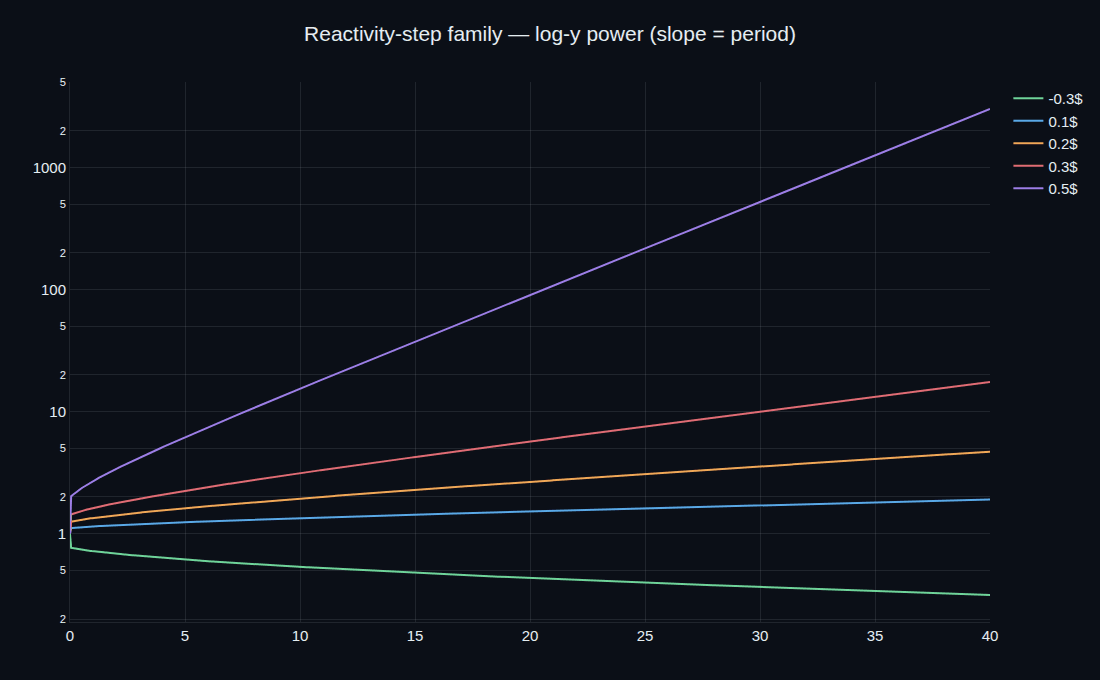 DjiniousLab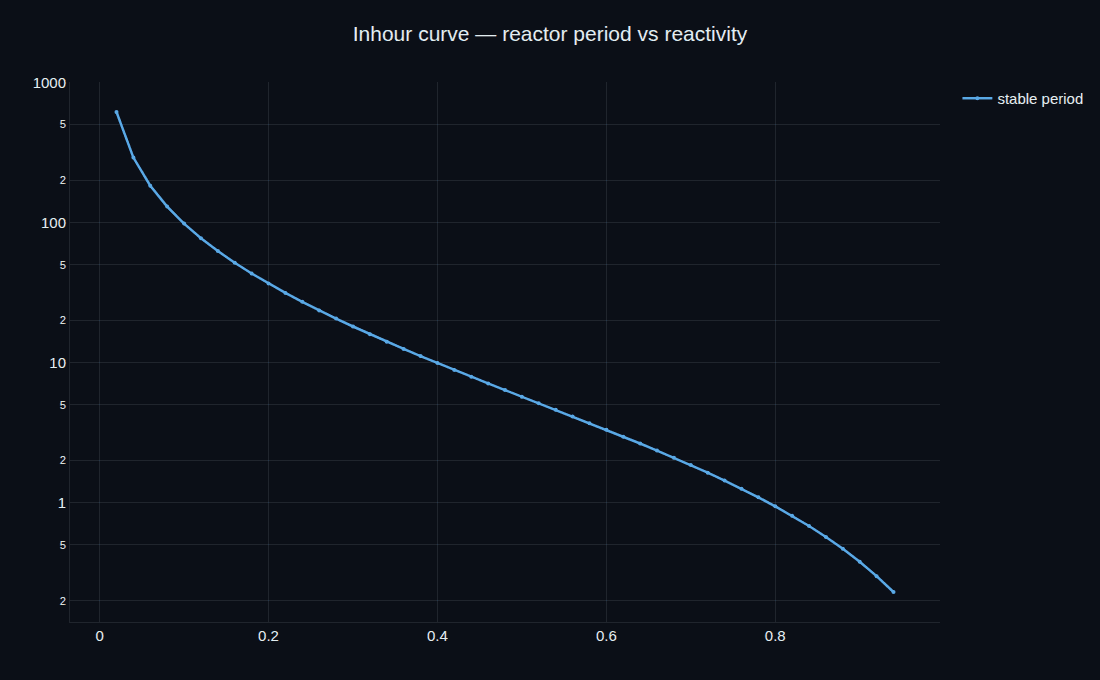
The core that fights its own power rise.
Reactivity isn't fixed — it depends on temperature. As fuel heats, the Doppler broadening of absorption resonances captures more neutrons, pushing reactivity down. That negative feedback is what makes a power excursion self-limit instead of running away. The model shows it starkly: a +0.6 dollar insertion that explodes to nearly thirty-thousand times power with no feedback instead peaks at 2.4× and settles, once Doppler is in the loop. It's the same physics that makes a well-designed reactor inherently stable.
DjiniousLabDjiniousLab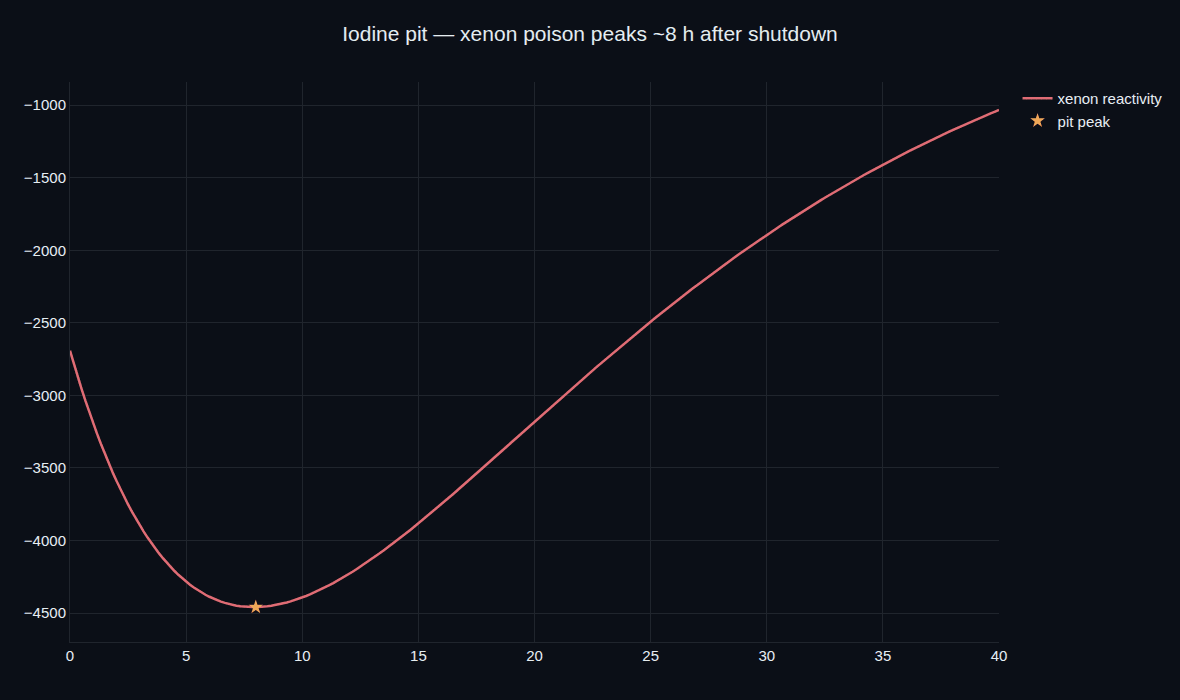 DjiniousLab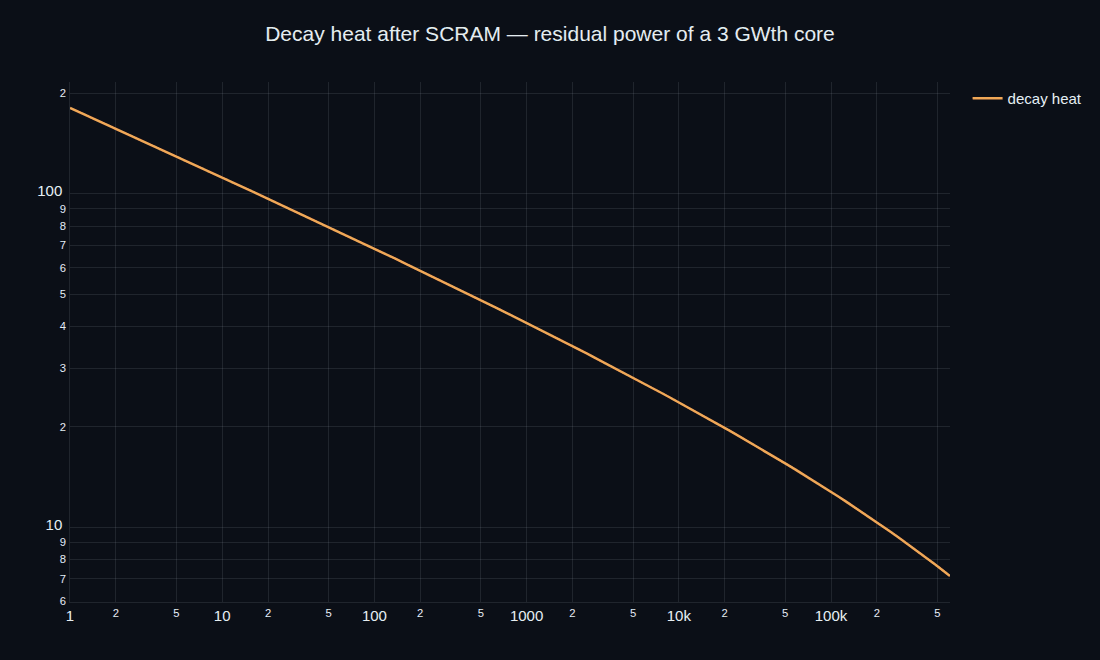
Every number is one you can re-run.
The sign-off notebook re-derives each requirement from the same point-kinetics model the program builds.
Result
- Prompt jump (+0.5 $ step): 2.07×
- Doppler-limited excursion: 2.4× peak
- Xenon iodine-pit: −4459 pcm @ 8 h
- Load-follow tracking error: 2.4 %
- Requirements verified: 6 / 6
Requirement
- Prompt jump (+0.5 $ step): theory 2.0
- Doppler-limited excursion: bounded, not runaway
- Xenon iodine-pit: post-shutdown
- Load-follow tracking error: 100→60→100 %
- Requirements verified: PASS
0-D neutronics, a teaching & controls model.
The reactor is 0-D point kinetics — the neutron population as a single number, with no spatial flux shape, so there are no spatial xenon oscillation modes (a noted follow-up). Thermal feedback is lumped, the xenon is single-node, and the cross-sections are illustrative. This is a teaching and control-design model, not a licensing-grade neutron-transport code. It is exactly the fidelity that builds intuition and supports control logic — the prompt jump, the inhour relation, the safety feedbacks, the xenon transient, load-follow and SCRAM — on reproducible numbers, before a spatial diffusion or Monte-Carlo transport solver.
Keep exploring
Related use cases
 Grid-scale energySunnyGrid80 Solar-Storage PlantAn 80 MW photovoltaic plant with a 40 MW / 80 MWh battery energy-storage system and its grid substation, modelled in ELANG as an audited reference to UL 9540A and IEC 62443 — a system-of-systems where the interfaces carry as much of the design as the boxes.
 DjiniousEngineering
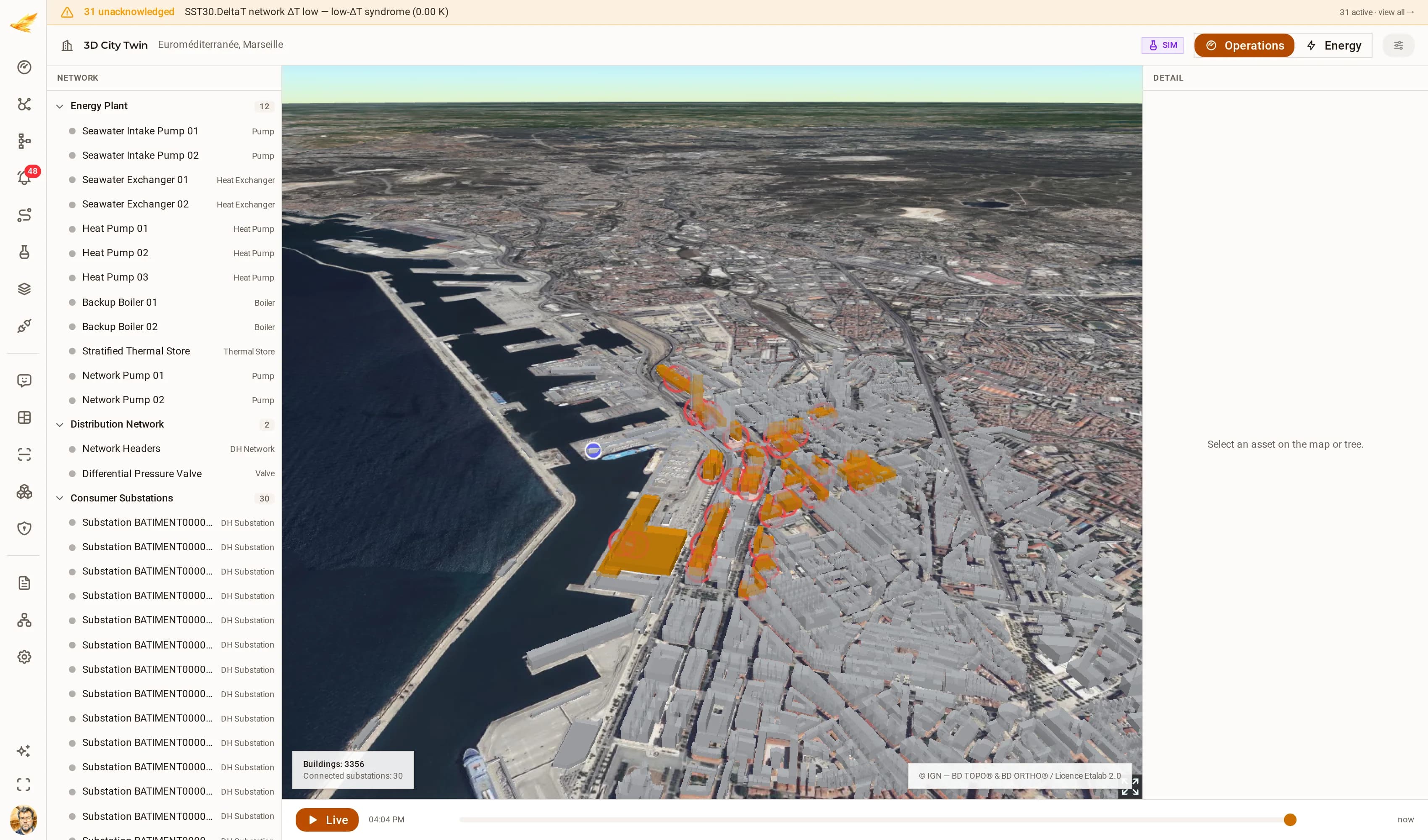 District energyEuroméditerranée District Energy NetworkA seawater-source district-heating network: two intake pumps and two seawater exchangers feeding three heat pumps, two backup boilers and a stratified thermal store, distributing through two network pumps and a differential-pressure valve to thirty consumer substations. The network is simulated; the city under it is not — every substation sits on its real IGN BD TOPO® building footprint in the Euroméditerranée quarter. It is a demonstration network on open data, not any operator's plant.
 DjiniousCC
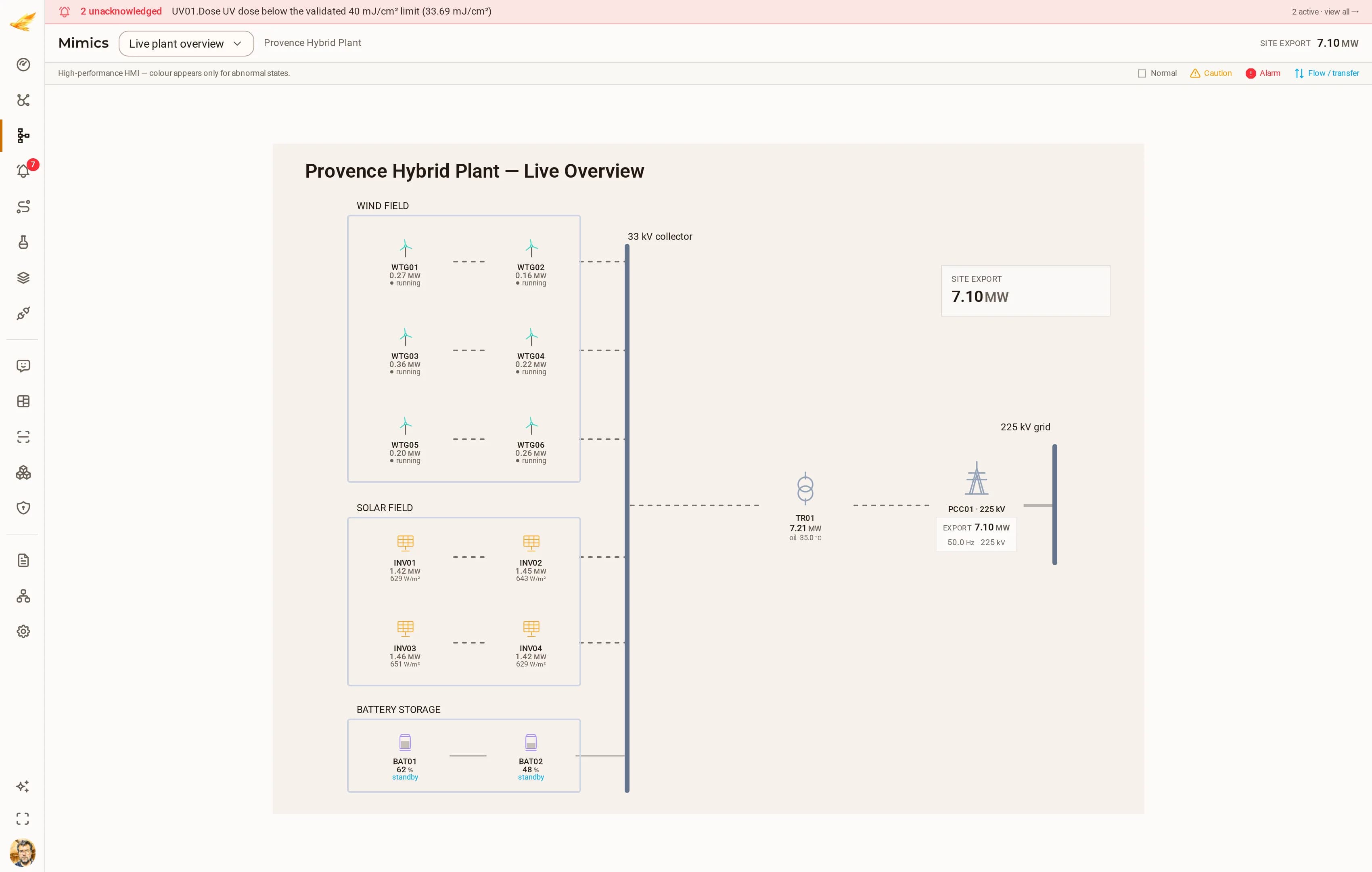 Renewable generationProvence Hybrid PlantA 120 MW hybrid plant: six wind turbines, four PV inverter blocks, two battery racks, the main 33/225 kV transformer, the grid connection point and a meteorological mast.DjiniousCC