 Djinious


People operations
A fortnight of small tasks with a start date, and three months of check-ins — none of it holding a process open between its moments.
 DjiniousWorkflow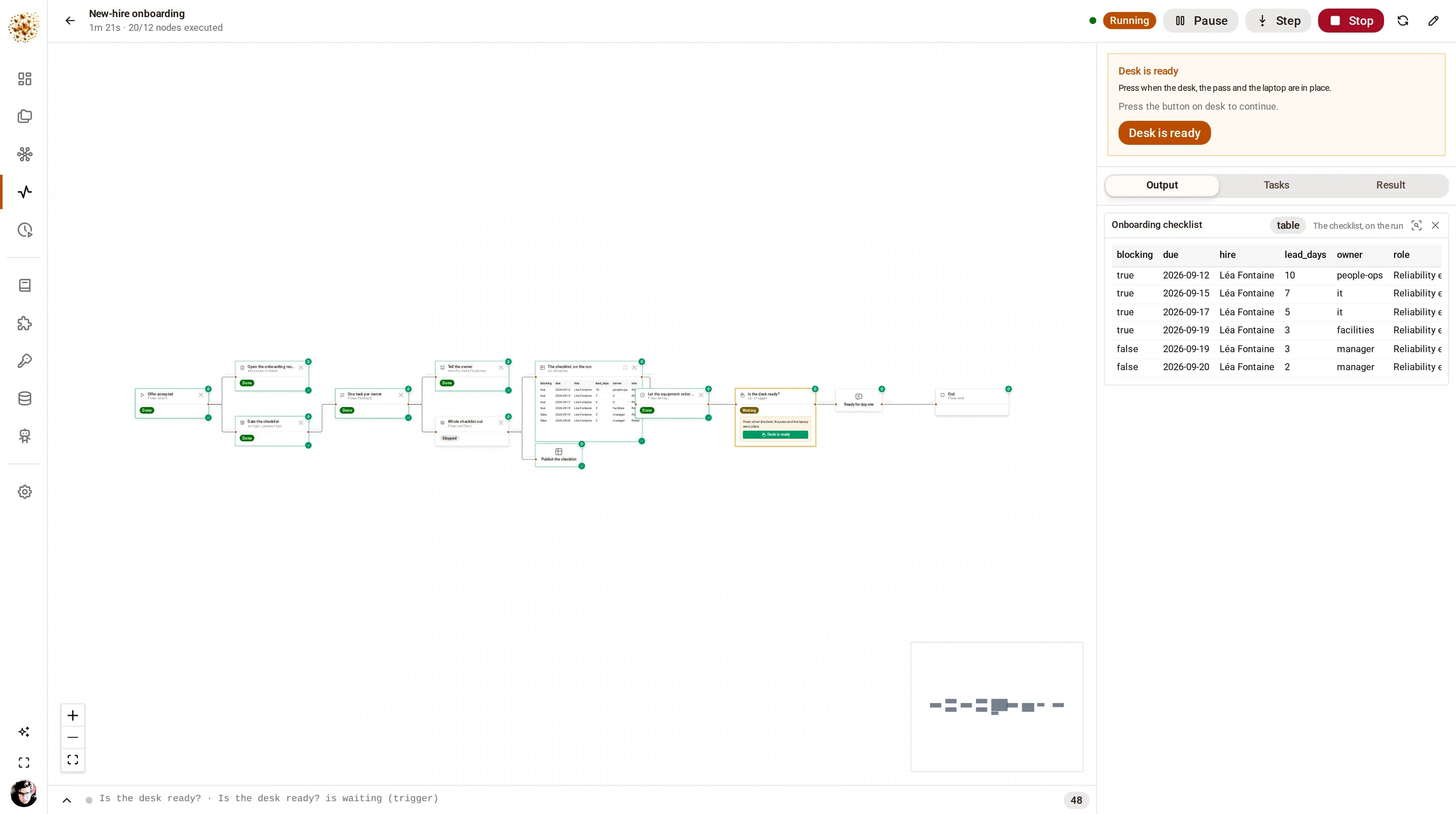
Delays · timers · a button on the node
Onboarding is mostly waiting, and most automations of it fire everything on day one because holding a process open for eleven days is expensive. Here it is not: a delay is an event with a future time on it, a repeating check is a timer row, and a run parked on a button costs one row.
The probation graph is a single run that spans three months, wakes three times to prompt the manager, and ends itself after the last one. Its period is the only thing a deployment changes.
How the graphs run
Six checklist items fanned out to their owners
Each dated back from the start date.
A delay while the equipment order settles
An event with a time on it, not a worker holding still.
A button on the node for ‘the desk is ready’
Because that answer needs no reason attached.
One run, three check-ins, ninety days
Armed as a timer row that survives every restart.
On the canvas
flow:delay · flow:interval · ui:trigger · entities:create · views:*
It ships with the product
This project ships with DjiniousWorkflow. One command seeds it, another runs every graph in it, and the captures here came out of those runs.
Where a graph leans on a fixture rather than a live system, it reads the fixture where your deployment would read a database — swap the node at the top and the rest of the graph does not change. The engine work — the fan-out, the gather, the approval, the publish — is the product’s own.
Keep exploring
Related use cases
 DjiniousDataMaster dataOne customer view from four systems that disagreeCluster the records that describe the same organization, and keep the ones you are not sure about out of the merge.DjiniousDataSite monitoringCounting what a camera sees, not what it detectsObject detection over photos, footage and live streams, materialised as metrics you can alert on.DjiniousData