 Djinious
ISO 10218
Carried as a standard the recipe honours for this class.
The platform
Each application does one part of the work — and hands its evidence to the next. Use them together, or one at a time.
Platform overviewSee how the loop runs DjiniousEngineeringOrchestration
 DjiniousLabModelling & simulation
 DjiniousWorkshopSystem integration
 DjiniousSafeCertifiable code
 DjiniousWorld3D replicas
 DjiniousMapAgent GIS
 DjiniousCCOperations & SCADA
 DjiniousDataKnowledge base
 DjiniousWorkflowAgent automation
A six-axis robotic work cell modelled end to end in ELANG as an audited reference — roughly a thousand lines carrying a functional-safety design to ISO 13849-1 Performance Level d, with every safeguard traced to the hazard it mitigates.
 DjiniousEngineering
On a machine that can injure, the hard part is not drawing the guarding — it is proving that every hazard has a safeguard, every safeguard a means of detection, a responsible actor and a lifecycle gate.
The Kronos model is the reference for that closure: the WHY pillar’s hazards and safeguards are wired to the HOW pillar’s tests and the WHO/WHEN pillar’s gates.
Driven by the production machine / manipulator recipe.
Carried as a standard the recipe honours for this class.
The functional-safety design the reference model carries.
Carried as a standard the recipe honours for this class.
Model a work cell whose functional-safety case is complete and traceable, to ISO 13849-1 PL d, with the safety chain checkable rather than asserted.
Frame the cell’s capabilities and the environment it operates in.
Enumerate hazards and the safeguards that mitigate them.
Tie each safeguard to a detection means, a responsible actor and a gate.
WFR-9Allocate the safety functions onto components and interfaces.
Close the verification matrix and reach L2 conformance.
Before test, the safety case and the models have to line up.
The digital replica correlates with the analytical models.
Abort criteria and safety cases are agreed.
Every hazard has a safeguard with an assigned verification.
Test procedures exist for every safety function.
ELANG’s well-formedness rules refuse to call the model complete while an obligation lacks an implementation, a test, an actor or a gate.
Keep exploring
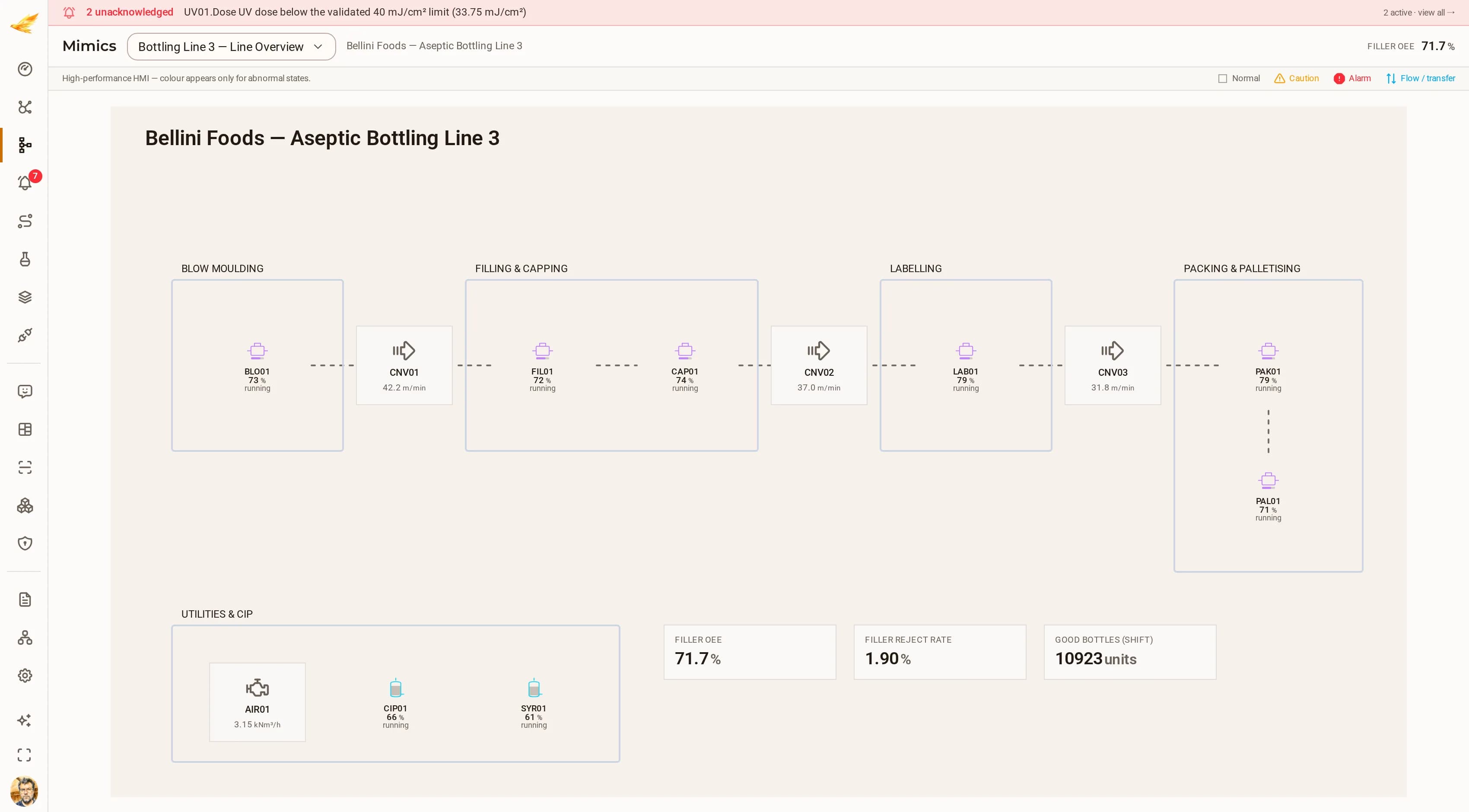 Food & beverage manufacturingBellini Foods — Aseptic Bottling Line 3A 24 000 bottles/hour aseptic PET line: blow moulding, aseptic filling, capping, labelling, case packing and palletising, with live OEE on every machine and its own utilities and CIP block.
 DjiniousCC
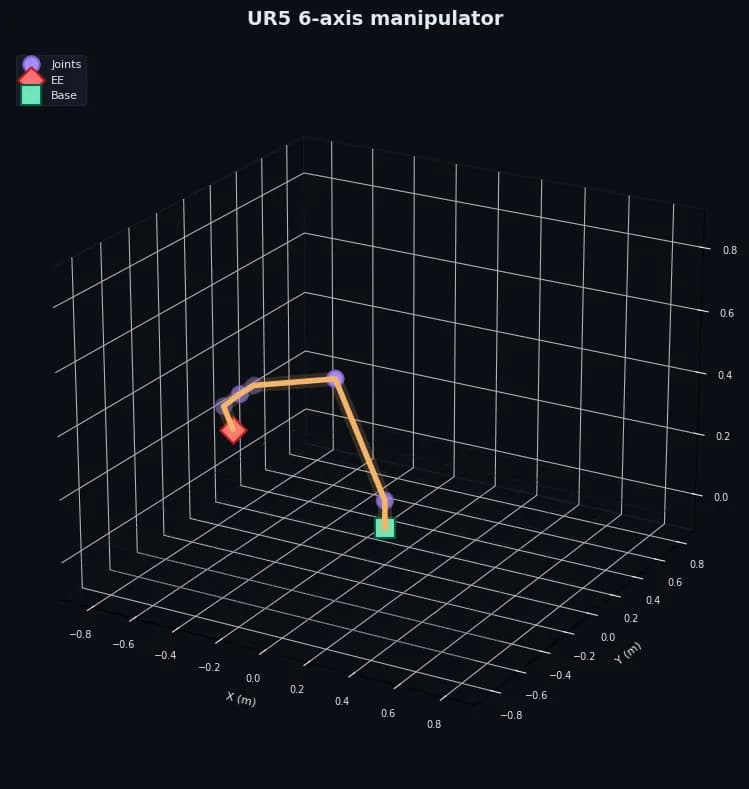 Industrial roboticsUR5 6-axis manipulatorA spatial 6-DoF UR5 arm as one multibody model — closed-form inverse kinematics driving a Cartesian end-effector path through per-joint PD control with gravity feedforward.
 DjiniousLab
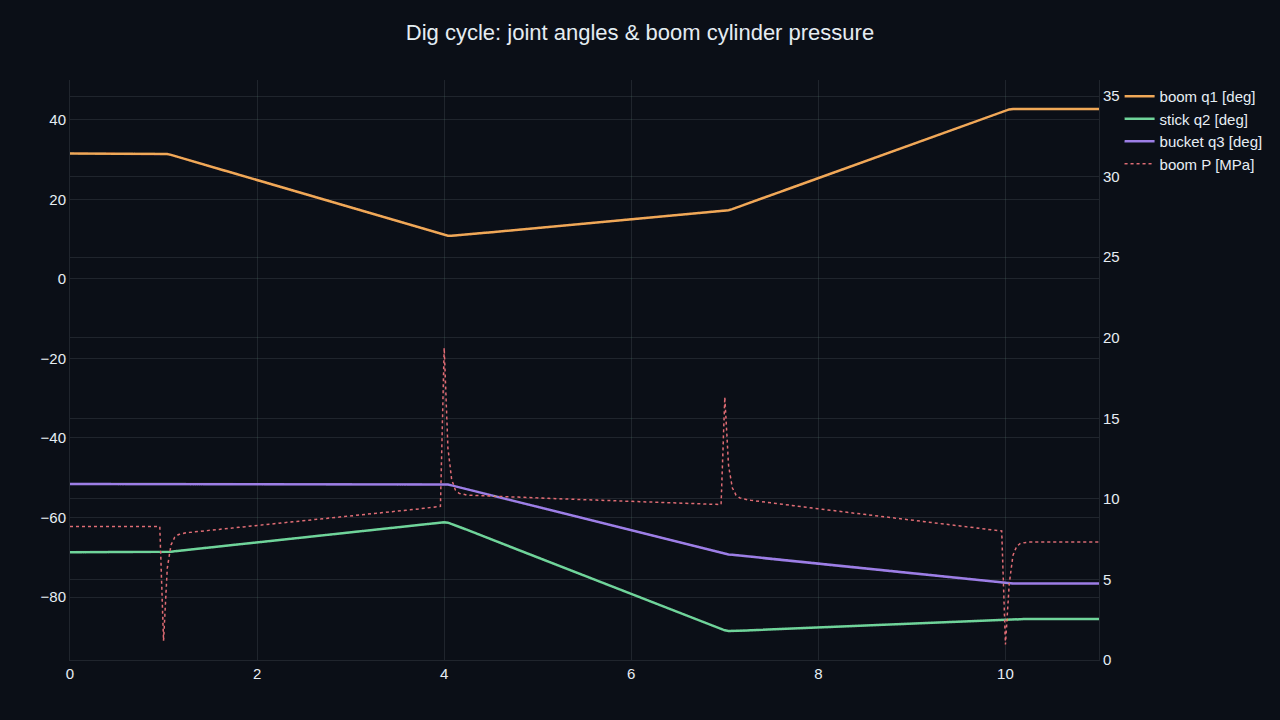 Heavy machineryHydraulic excavatorA 20-tonne excavator as one multi-physics model — a planar boom/stick/bucket linkage driven by hydraulic cylinders off a load-sensing pump, from kinematics and workspace through a coupled dig cycle to breakout force and cycle energy.DjiniousLab