 Djinious


One customer view from four systems that disagree
Cluster the records that describe the same organization, and keep the ones you are not sure about out of the merge.
Four systems each hold a version of the same company, with different identifiers, spellings and addresses. Resolution blocks the candidates, scores them pairwise and clusters what clears the line.
What does not clear it stays a candidate for a human, and the analyst’s decision is honoured on every subsequent run rather than re-litigated.
The scores, and the line
- shared identifier
- 1.0shared identifier
- exact normalised name
- 0.85exact normalised nameat or above it, merged automatically
- fuzzy name
- 0.7fuzzy namestays a candidate for an analyst
How it runs
Ingest
Ingest each system through its own connector, keeping its identifiers.
ConnectorsResolve
Run resolution: blocking, pairwise scoring, union-find clustering.
Deterministic matchingDecide
Review the candidates that fell between 0.7 and 0.85 and record a decision.
Analyst decisionsRelate
Materialize edges between the clusters, each carrying the objects it was derived from.
Graph materialization
Keep exploring
Related use cases
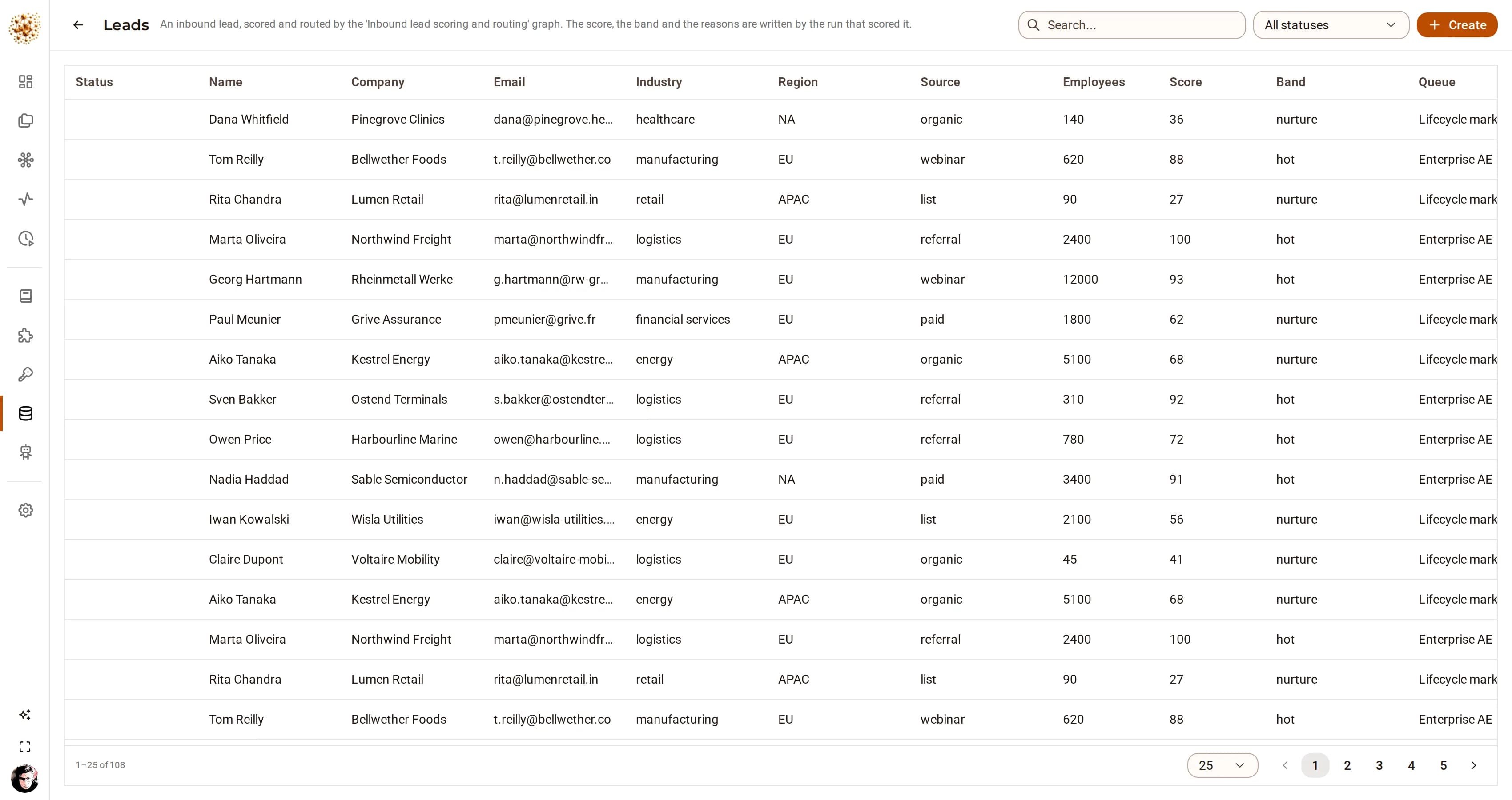
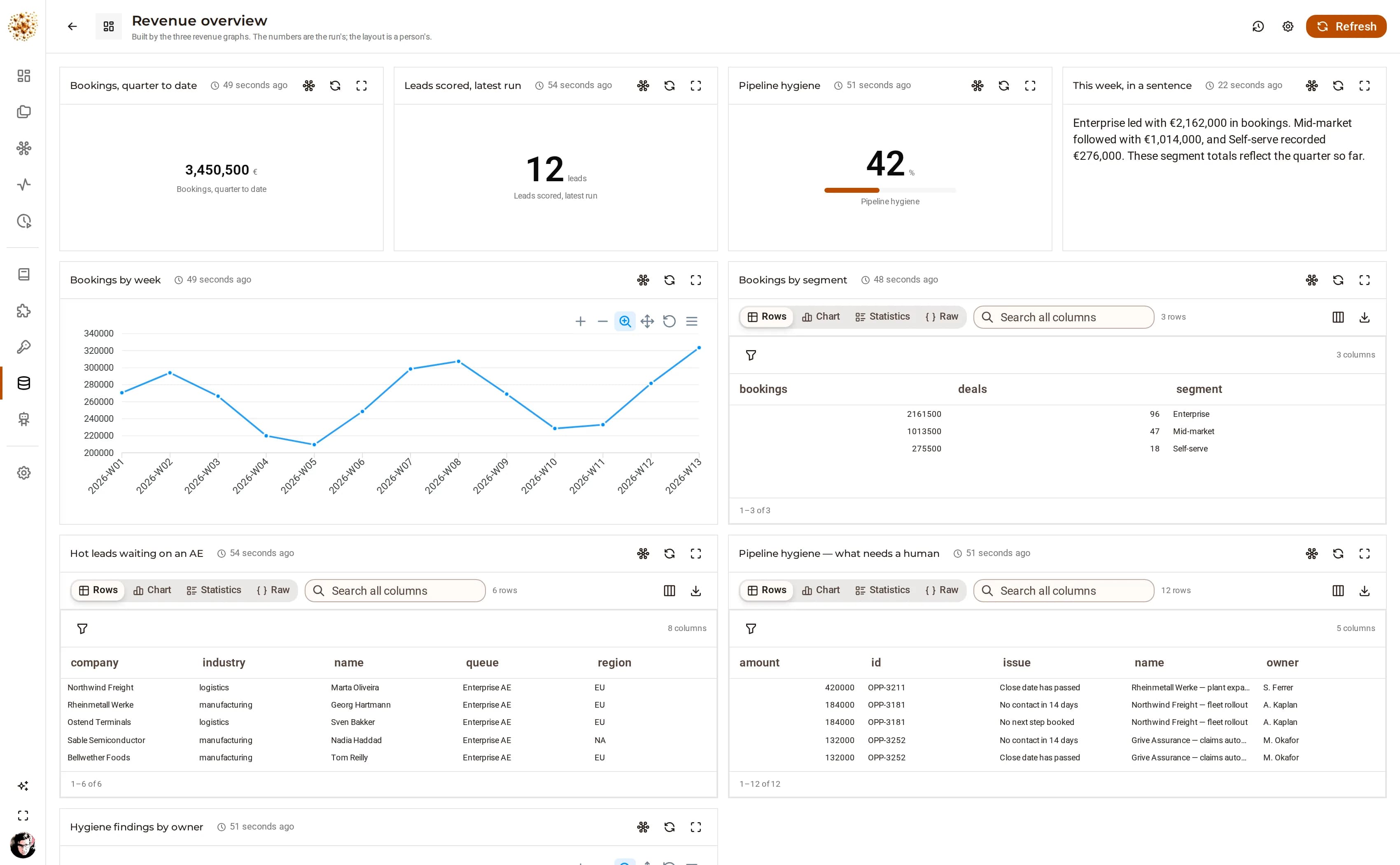 Revenue operationsRevenue operationsInbound leads scored and routed in seconds, the pipeline swept every night, and a revenue page that rebuilds itself before the Monday meeting.
 DjiniousWorkflow
 Customer supportCustomer supportA model reads every ticket, rules do the routing, the clock is watched every quarter hour, and Friday’s digest writes itself.DjiniousWorkflow
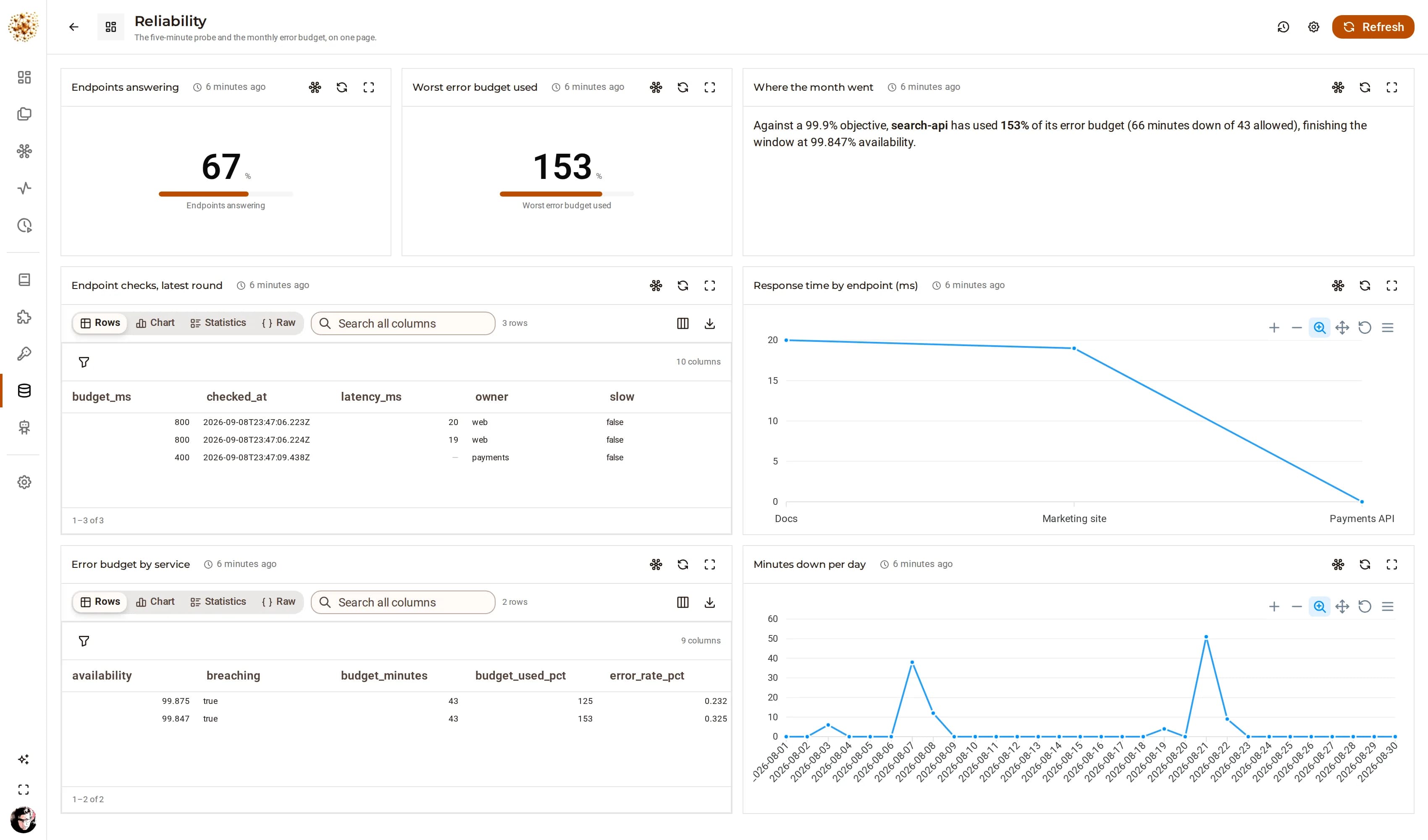 Site reliabilitySite reliabilityEndpoints probed in parallel, incidents opened by the failure itself, and nothing reaching a public status page without a person approving the words.DjiniousWorkflow