 Djinious
MCA MGN 664
Carried as a standard the recipe honours for this class.
The platform
Each application does one part of the work — and hands its evidence to the next. Use them together, or one at a time.
Platform overviewSee how the loop runs DjiniousEngineeringOrchestration
 DjiniousLabModelling & simulation
 DjiniousWorkshopSystem integration
 DjiniousSafeCertifiable code
 DjiniousWorld3D replicas
 DjiniousMapAgent GIS
 DjiniousCCOperations & SCADA
 DjiniousDataKnowledge base
 DjiniousWorkflowAgent automation
An autonomous underwater vehicle surveying the export-cable corridor of the Dogger Bank offshore wind farm. The bundled demo ledger: forty items seeded across all eleven lifecycle stages, from the mission brief to the deployment procedure.
 DjiniousEngineering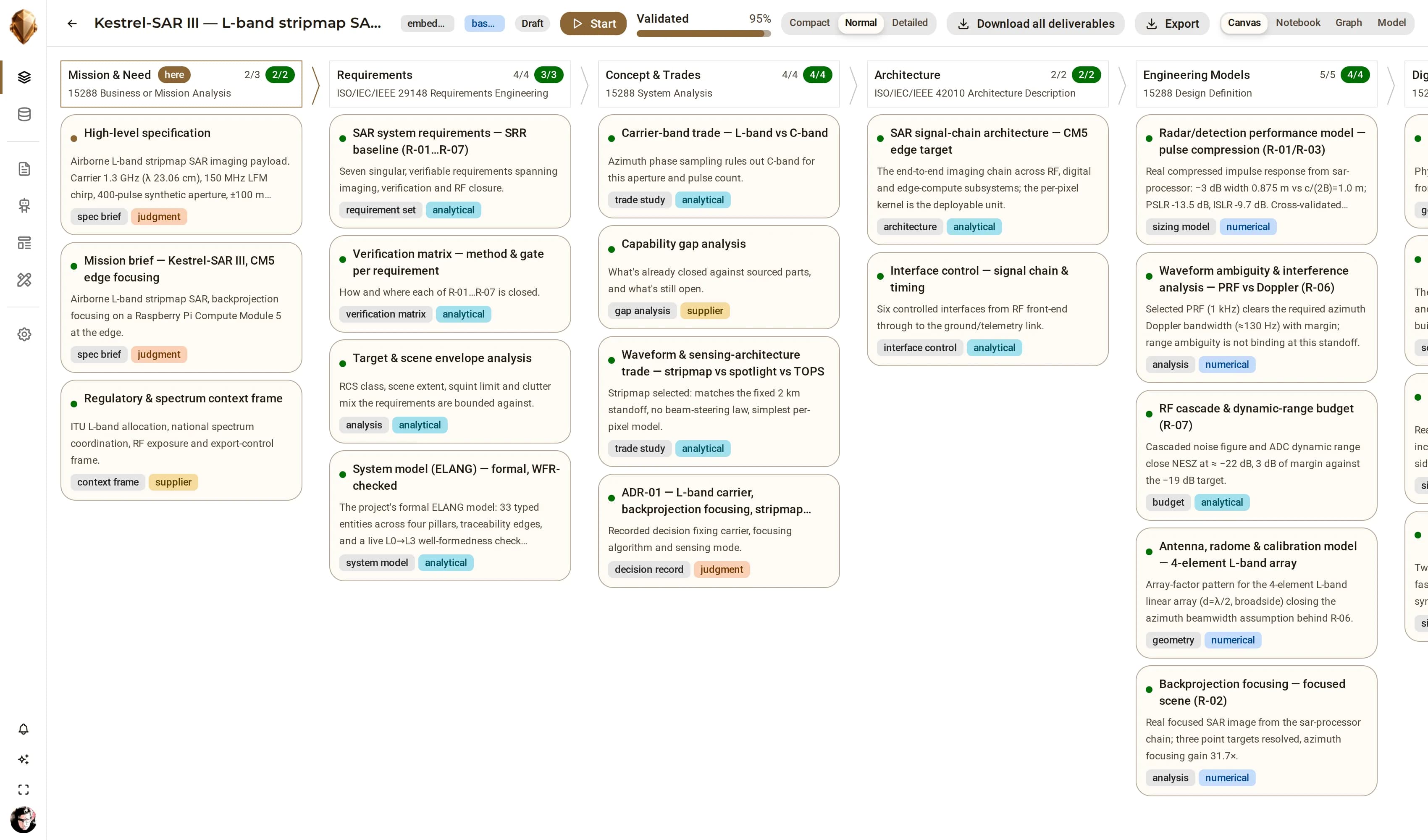
The mission brief is exact: autonomous survey of a 12 km export-cable corridor on Dogger Bank to 300 m depth, ≥ 8 h endurance, ≤ 0.5 m bathymetry resolution, one-dive coverage.
Endurance, resolution and coverage pull against each other; the vehicle has to close all three at once, and every choice that gets it there has to be traceable back to that brief and forward to a test that proves it.
Driven by the surface / subsea vehicle recipe — ISO 3691-4, COLREGs / IMO MASS Code.
Carried as a standard the recipe honours for this class.
Carried as a standard the recipe honours for this class.
Carried as a standard the recipe honours for this class.
Carried as a standard the recipe honours for this class.
Carry the mission need to a released Technical Data Package: derive verifiable requirements, trade three hull architectures, converge the energy and hydrodynamic budgets, prove the models against a digital replica, then freeze the baseline.
Frame the mission need and derive singular, verifiable requirements (endurance, resolution, coverage).
Trade three architectures — Torpedo AUV, Open-frame hover, Hybrid glider-hover — scored on endurance 0.35, manoeuvre 0.30, payload 0.20, cost 0.15.
Record the decision: adopt the hybrid glider-hover configuration.
Converge the sizing loop — a 12.6 kWh battery pack against the ≥ 8 h endurance budget.
Close verification, freeze the baseline, and emit the Technical Data Package.
The agent cannot pass PDR until a human has validated the items upstream of it and the platform’s criteria are met.
The sizing loop has converged.
Margins against every hard constraint are positive.
Every requirement traces to an architecture element that implements it.
A verification method is assigned to each requirement.
The gate is a ledger item the agent cannot walk past — it stops an autonomous run from designing on top of an unreviewed baseline.
The notebook view reads any ledger as a narrative of the thread — the same items, stage by stage, from mission need to the released package. It is shown here on the Kestrel-SAR III project.
DjiniousEngineering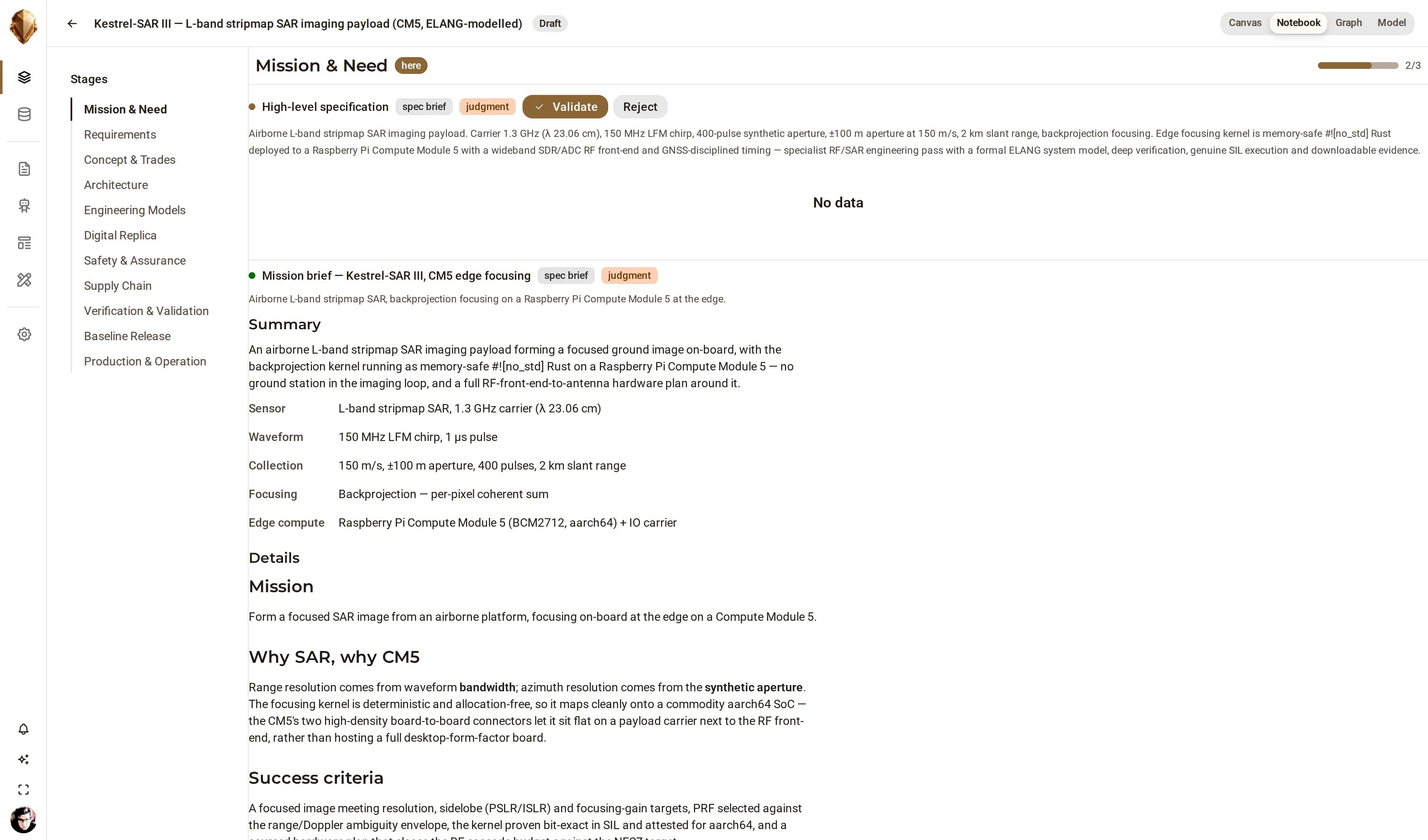
Keep exploring
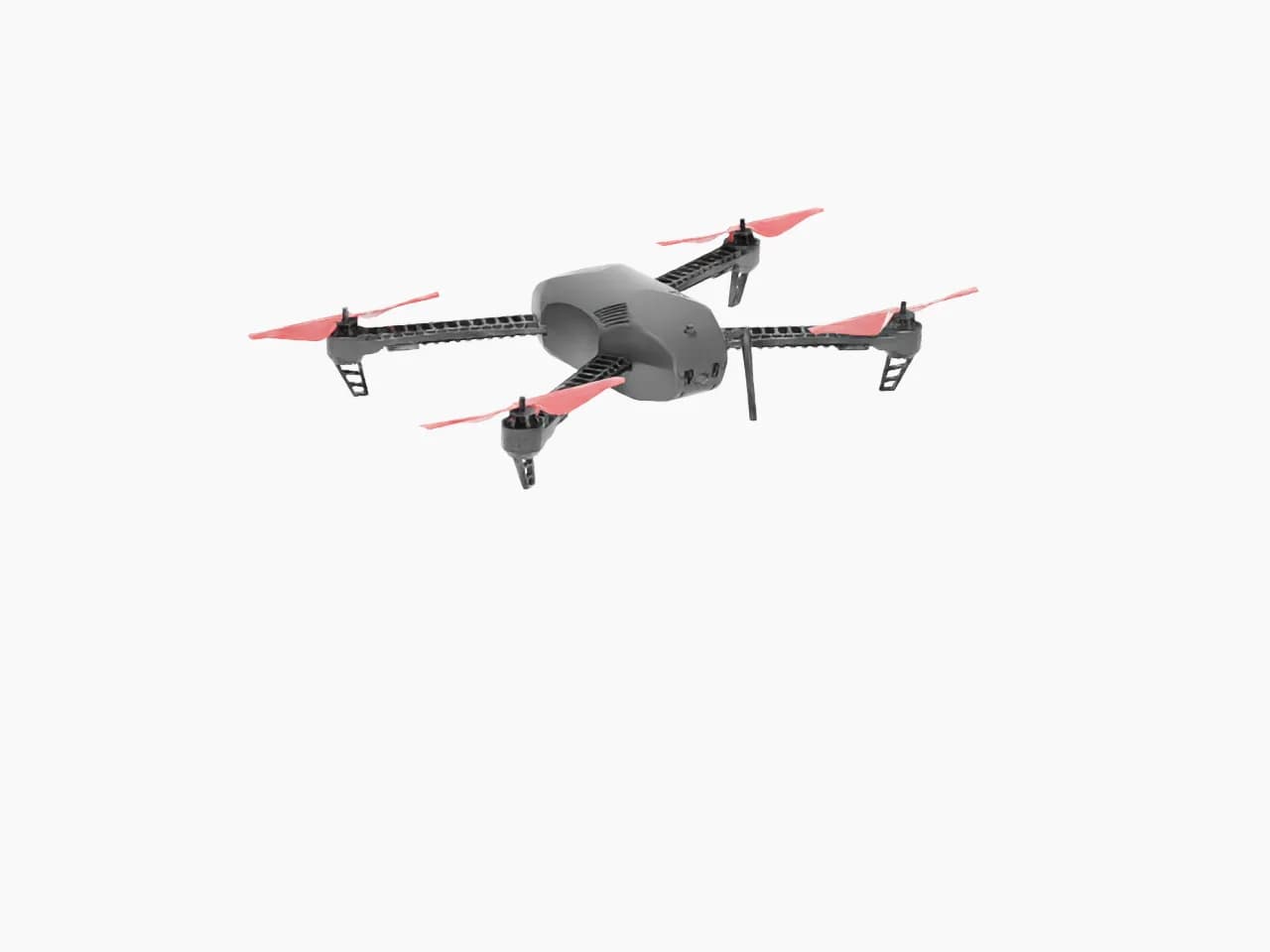 Drone systemsA quadcopter mission, flown before the drone existsA complete quadcopter wired from library parts into one co-simulation, its flight controller closing the loop around NVIDIA Isaac Sim rigid-body physics — and a real take-off, hover, climb, descent and landing recorded from that loop.
 DjiniousWorkshop
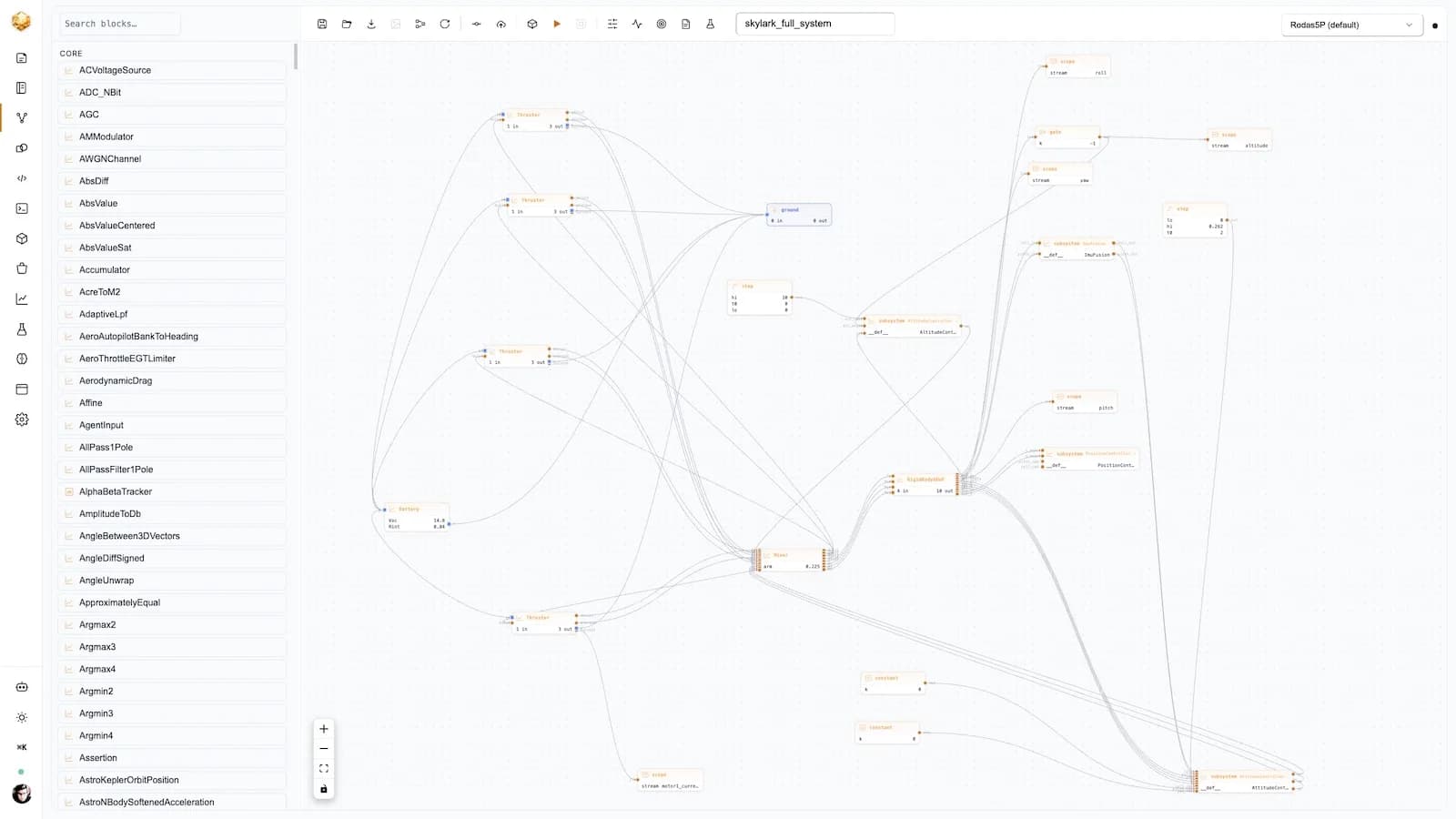 Aerial roboticsDjinborn T4 quadcopterA 450-class survey drone as one multibody composition — airframe, propulsion, sensors, and a cascaded autopilot flying a closed-loop 6-DoF mission.
 DjiniousLab
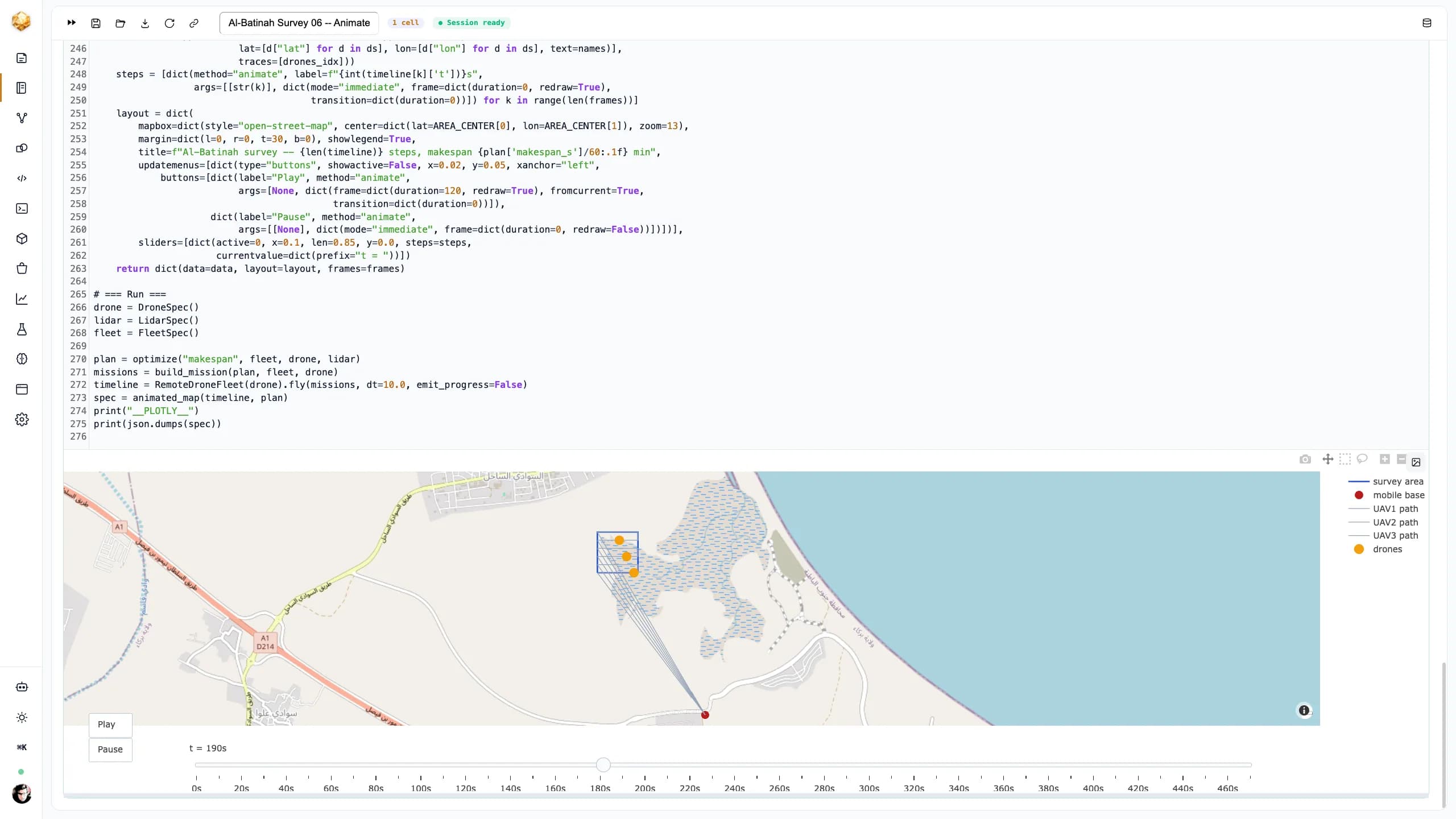 UAV surveyAl-Batinah UAV LiDAR surveyPlan and optimise a LiDAR drone-fleet survey of a 500 × 500 m site in Oman — tune the mission to your fleet, drone and sensor specs, then drive an optimal mission against a simulated UAV fleet on an animated map.DjiniousLab