 Djinious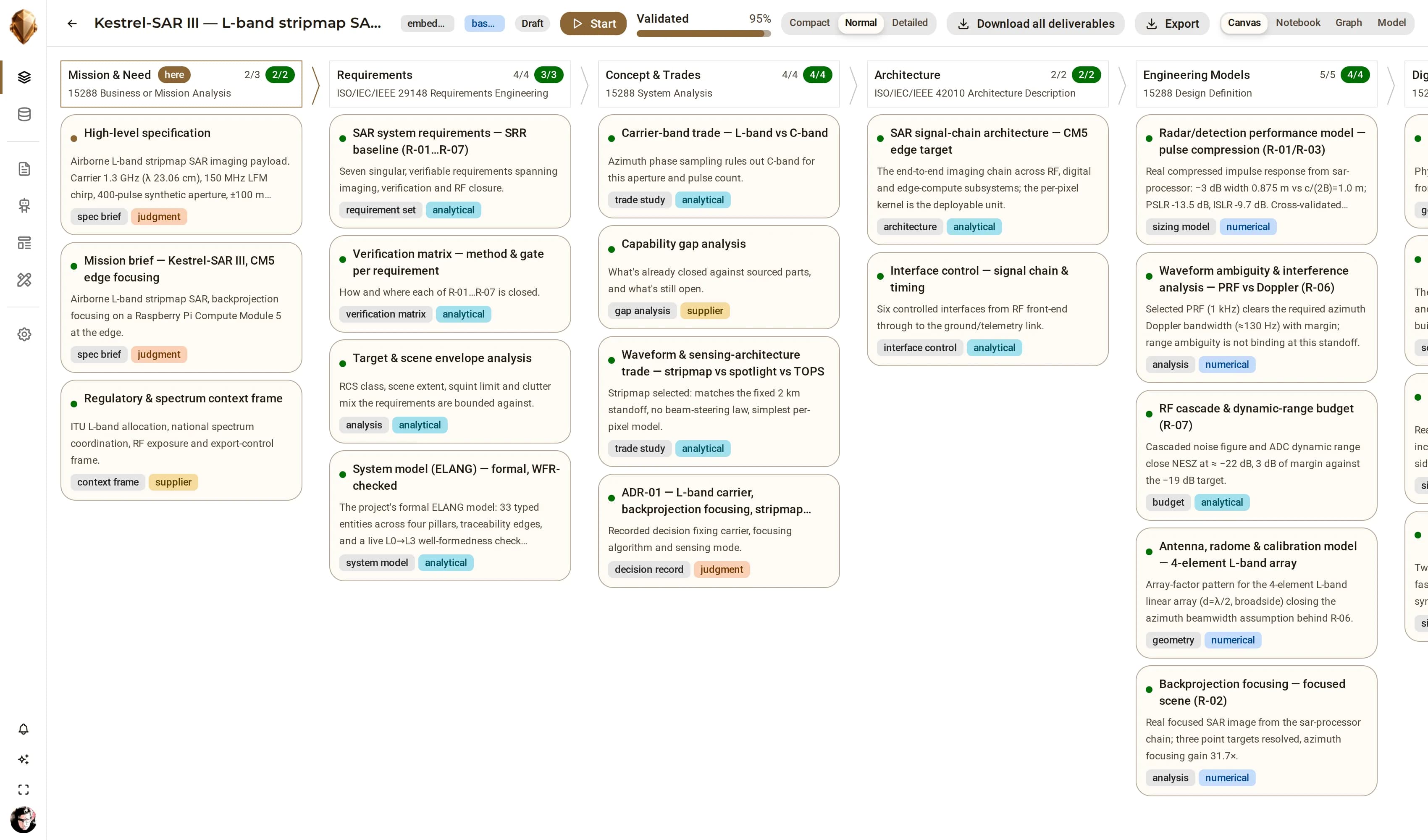
UL 9540A
Fire safety, carried as a tracked obligation.
The platform
Each application does one part of the work — and hands its evidence to the next. Use them together, or one at a time.
Platform overviewSee how the loop runs DjiniousEngineeringOrchestration
 DjiniousLabModelling & simulation
 DjiniousWorkshopSystem integration
 DjiniousSafeCertifiable code
 DjiniousWorld3D replicas
 DjiniousMapAgent GIS
 DjiniousCCOperations & SCADA
 DjiniousDataKnowledge base
 DjiniousWorkflowAgent automation
An 80 MW photovoltaic plant with a 40 MW / 80 MWh battery energy-storage system and its grid substation, modelled in ELANG as an audited reference to UL 9540A and IEC 62443 — a system-of-systems where the interfaces carry as much of the design as the boxes.
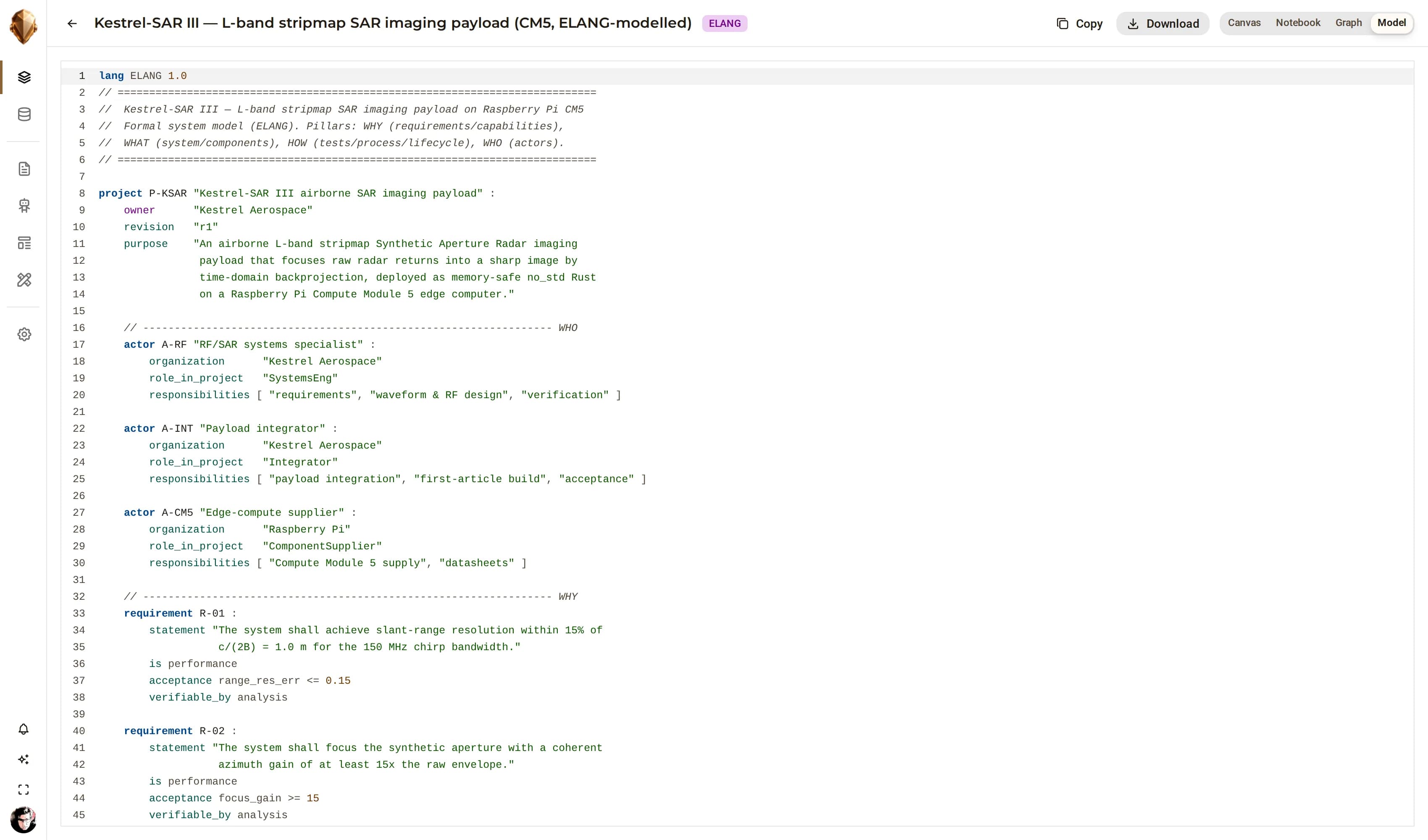
 DjiniousEngineering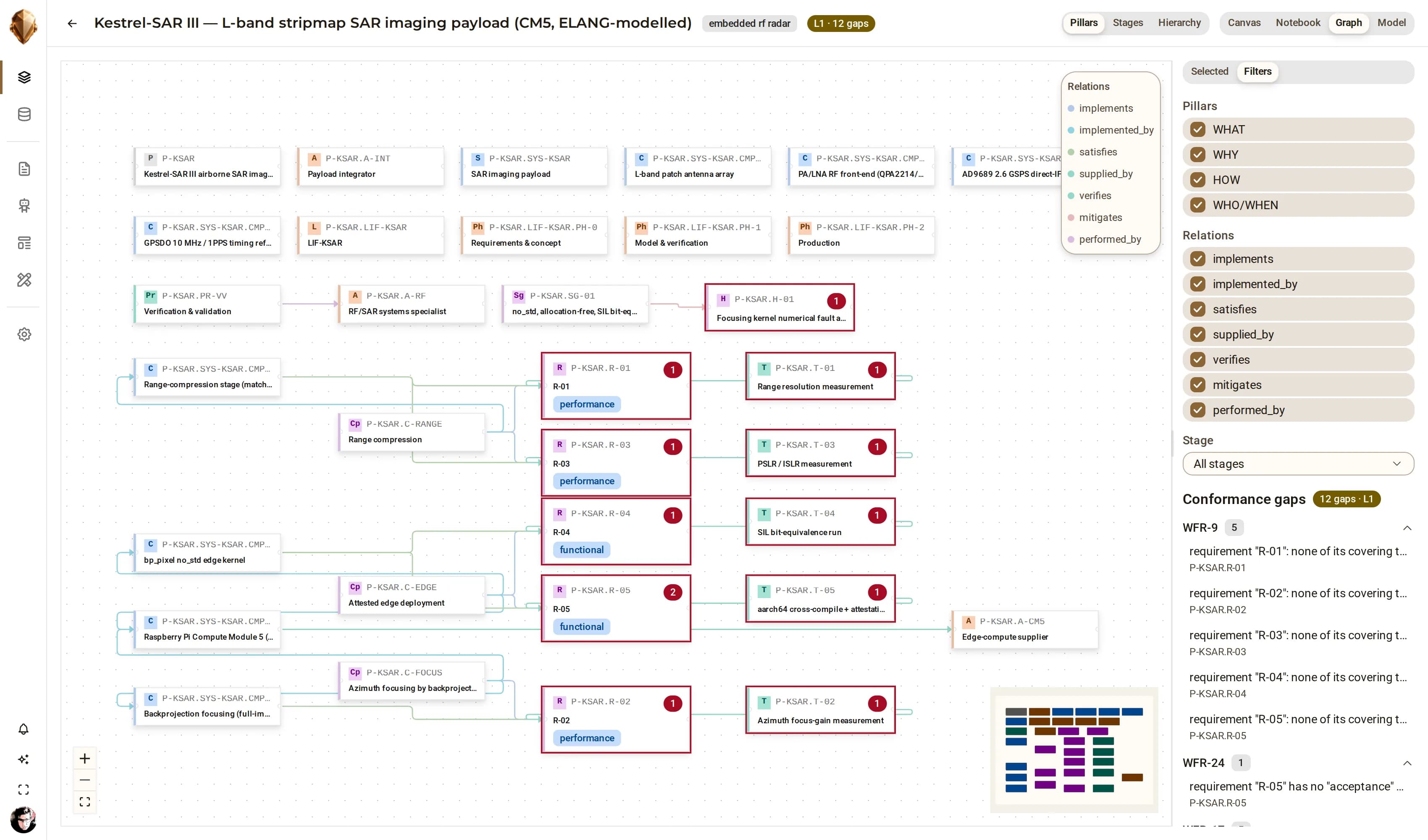
PV, storage and substation are three systems that only work as one, and the risk lives in the interfaces between them — electrical, thermal, data and control.
The SunnyGrid80 model is the reference for interface-heavy design: every connection typed and traced, fire-safety and cyber assurance carried as first-class obligations rather than appendices.
Driven by the generic system recipe (ISO/IEC/IEEE 15288) with electronics and cyber assurance.
Fire safety, carried as a tracked obligation.
Cyber assurance, carried as a tracked obligation.
The lifecycle the plant is taken through.
Model a grid-scale solar-plus-storage plant whose interfaces, fire-safety case and cyber-assurance obligations are all traced and checkable.
Frame the plant’s mission and grid-connection requirements.
Decompose into PV, BESS and substation systems with typed interfaces.
Carry fire-safety (UL 9540A) and cyber assurance (IEC 62443) as tracked obligations.
Allocate requirements across the sub-systems and their interfaces.
Close verification and reach production-ready conformance.
The design baseline and its supply have to be real before build.
Geometry, BOM and software baseline are released.
Every part has a qualified source and a lead time.
Every interface is controlled by an interface-control item.
Open risks are within tolerance.
Change any released item and everything downstream of it goes stale — the baseline cannot silently drift out from under a passed gate.
Keep exploring
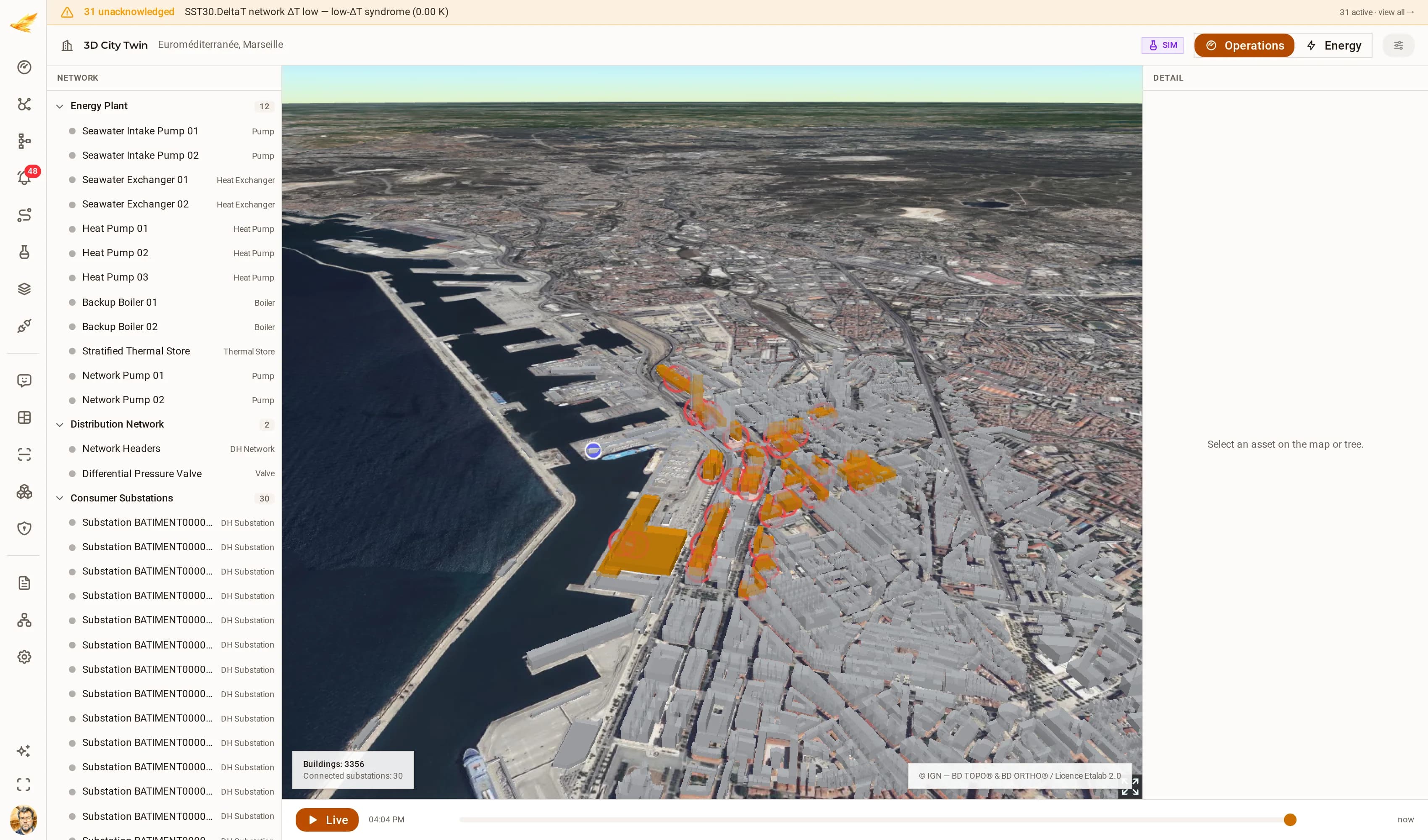 District energyEuroméditerranée District Energy NetworkA seawater-source district-heating network: two intake pumps and two seawater exchangers feeding three heat pumps, two backup boilers and a stratified thermal store, distributing through two network pumps and a differential-pressure valve to thirty consumer substations. The network is simulated; the city under it is not — every substation sits on its real IGN BD TOPO® building footprint in the Euroméditerranée quarter. It is a demonstration network on open data, not any operator's plant.
 DjiniousCC
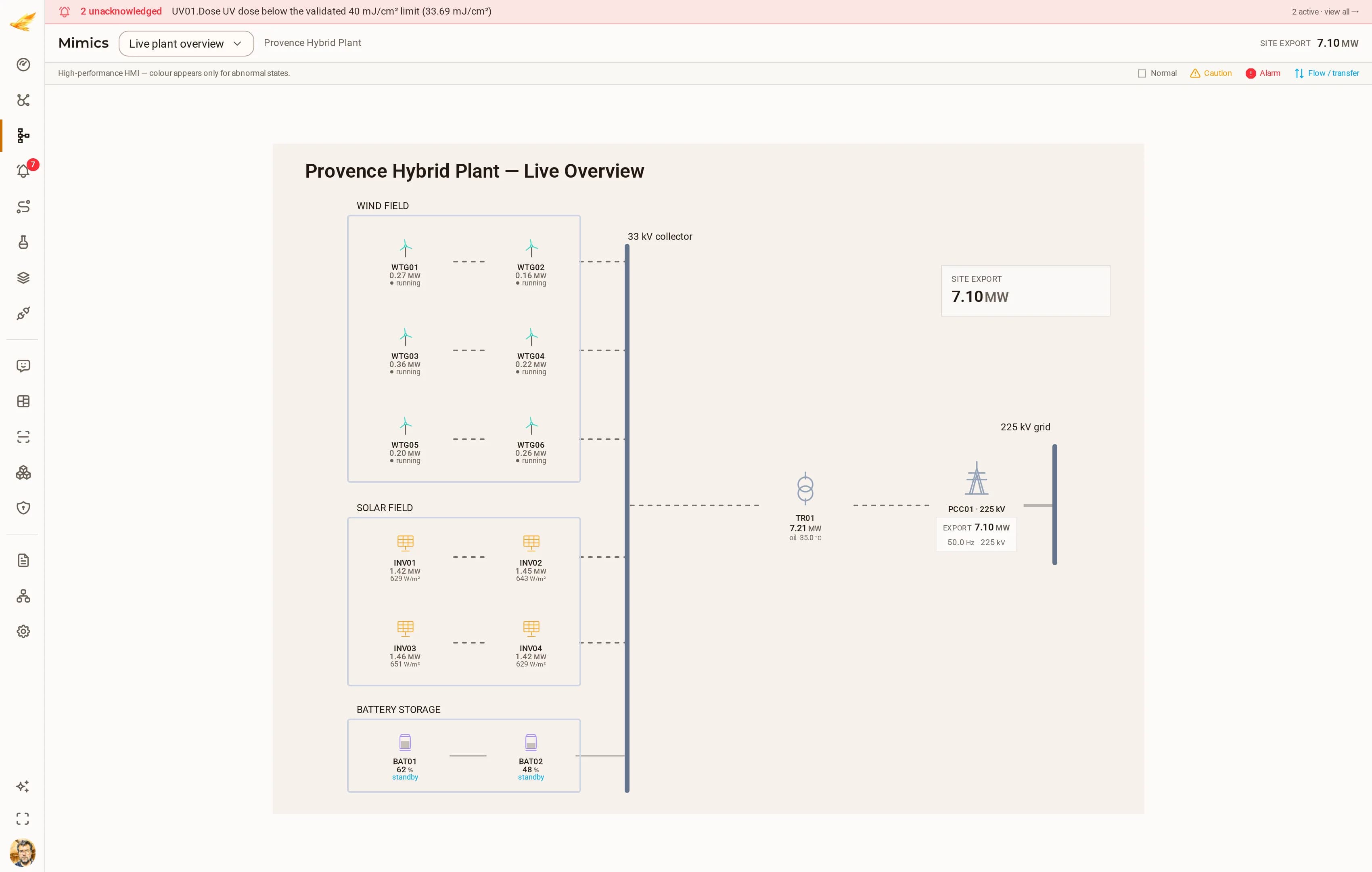 Renewable generationProvence Hybrid PlantA 120 MW hybrid plant: six wind turbines, four PV inverter blocks, two battery racks, the main 33/225 kV transformer, the grid connection point and a meteorological mast.DjiniousCC
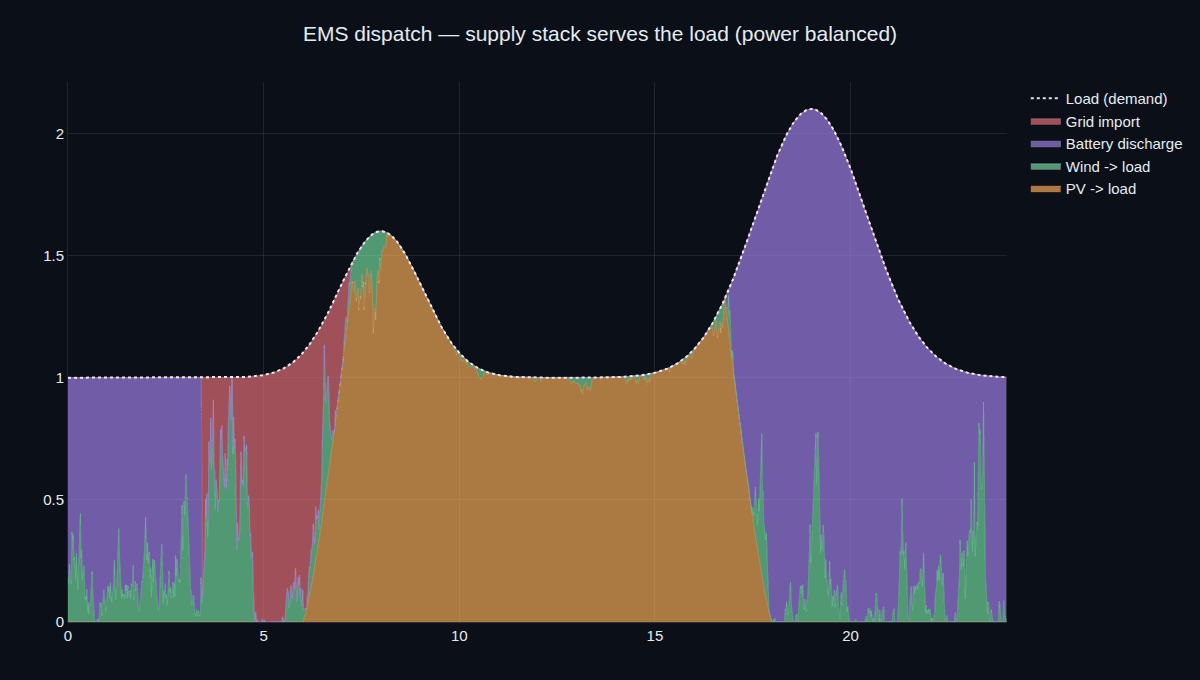 MicrogridsMicrogridSolar PV + wind + battery + grid-tie serving a load as one system under an energy-management controller — composed on a DC bus and run over a day: dispatch, self-sufficiency, peak-shaving, sizing, and islanded stability.
 DjiniousLab