 Djinious
NASA SE Handbook Rev.2
Carried as a standard the recipe honours for this class.
The platform
Each application does one part of the work — and hands its evidence to the next. Use them together, or one at a time.
Platform overviewSee how the loop runs DjiniousEngineeringOrchestration
 DjiniousLabModelling & simulation
 DjiniousWorkshopSystem integration
 DjiniousSafeCertifiable code
 DjiniousWorld3D replicas
 DjiniousMapAgent GIS
 DjiniousCCOperations & SCADA
 DjiniousDataKnowledge base
 DjiniousWorkflowAgent automation
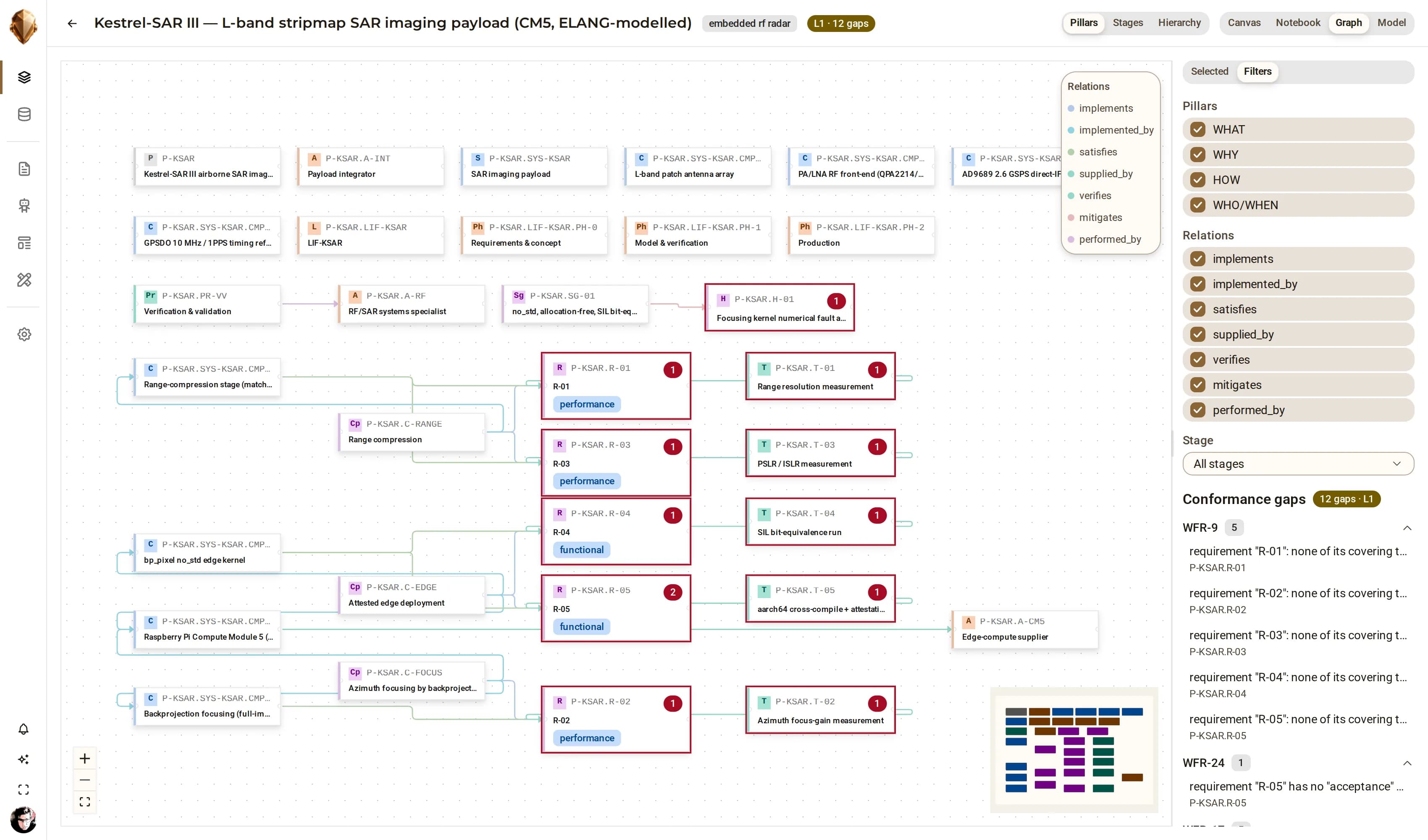
A fixed-wing survey UAV, seeded as a worked example: eight requirements, six components, four suppliers and four verifications, wired into a traceability graph, with a real ELANG system_model and an inline Technical Data Package.
 DjiniousEngineering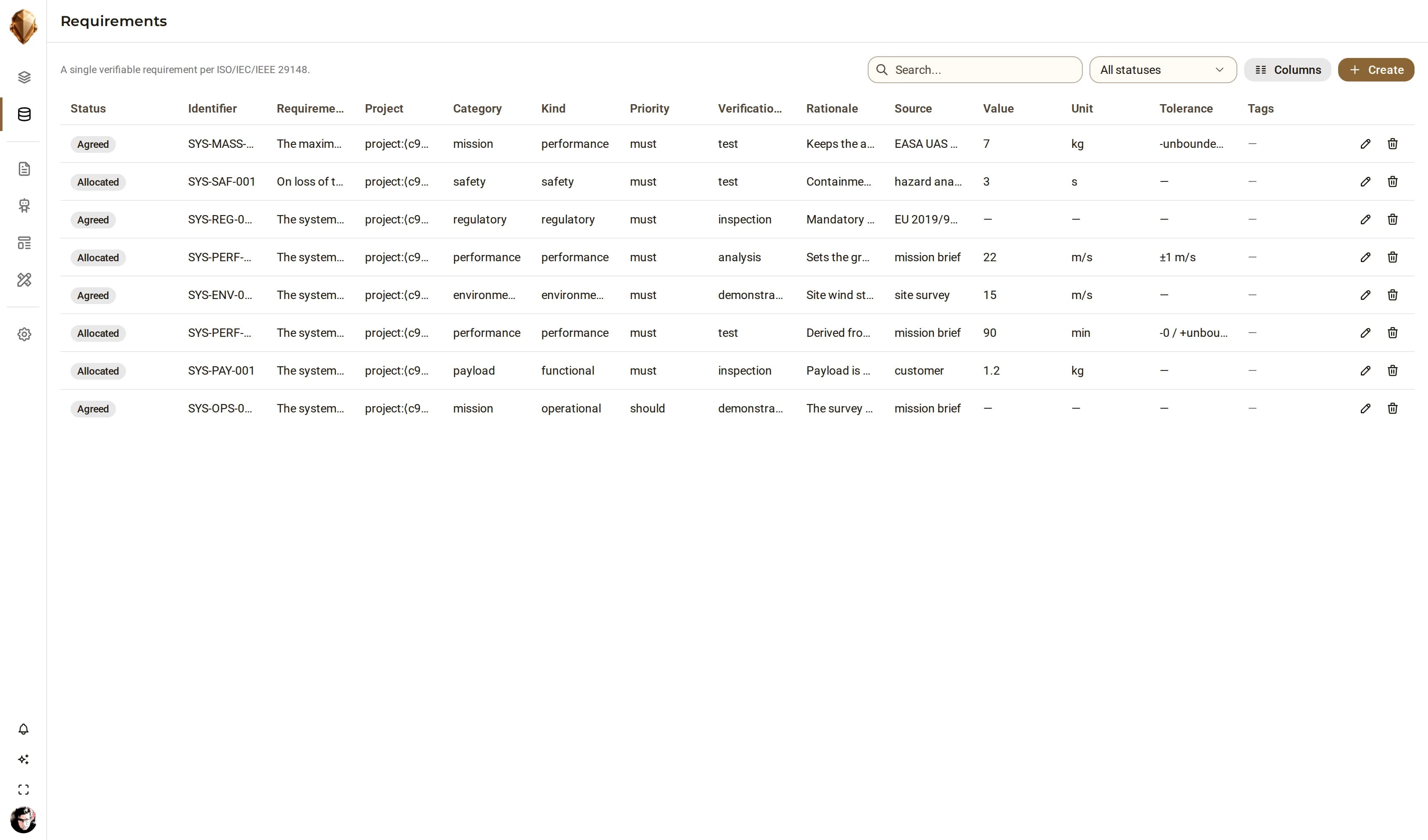
Kestrel-1 exists to show the whole chain closed on a small system: eight requirements derived from the need, allocated onto six components, sourced from four suppliers, and each closed by one of four verification activities.
It is the example to read when you want to see needs → requirements → components → suppliers → verification as actual graph edges rather than a diagram of one.
Driven by the UAV recipe over the baseline lifecycle.
Carried as a standard the recipe honours for this class.
Carried as a standard the recipe honours for this class.
Take a survey UAV from need to a released baseline and Technical Data Package, with a verification activity standing behind every requirement.
Derive eight singular requirements from the mission need.
Allocate each requirement onto a component in the architecture.
Source the six components from four qualified suppliers.
Close every requirement with a verification activity of sufficient evidence class.
Author the ELANG system_model and freeze the Technical Data Package.
The first gate: the requirement baseline has to hold before any design proceeds.
Every requirement is singular and verifiable.
A verification method is assigned to each requirement.
The initial hazard list exists.
Every requirement derives from a stated need.
Nothing closes a requirement on JUDGMENT when its verification method demands MEASURED — the evidence class is enforced, not advisory.
DjiniousEngineering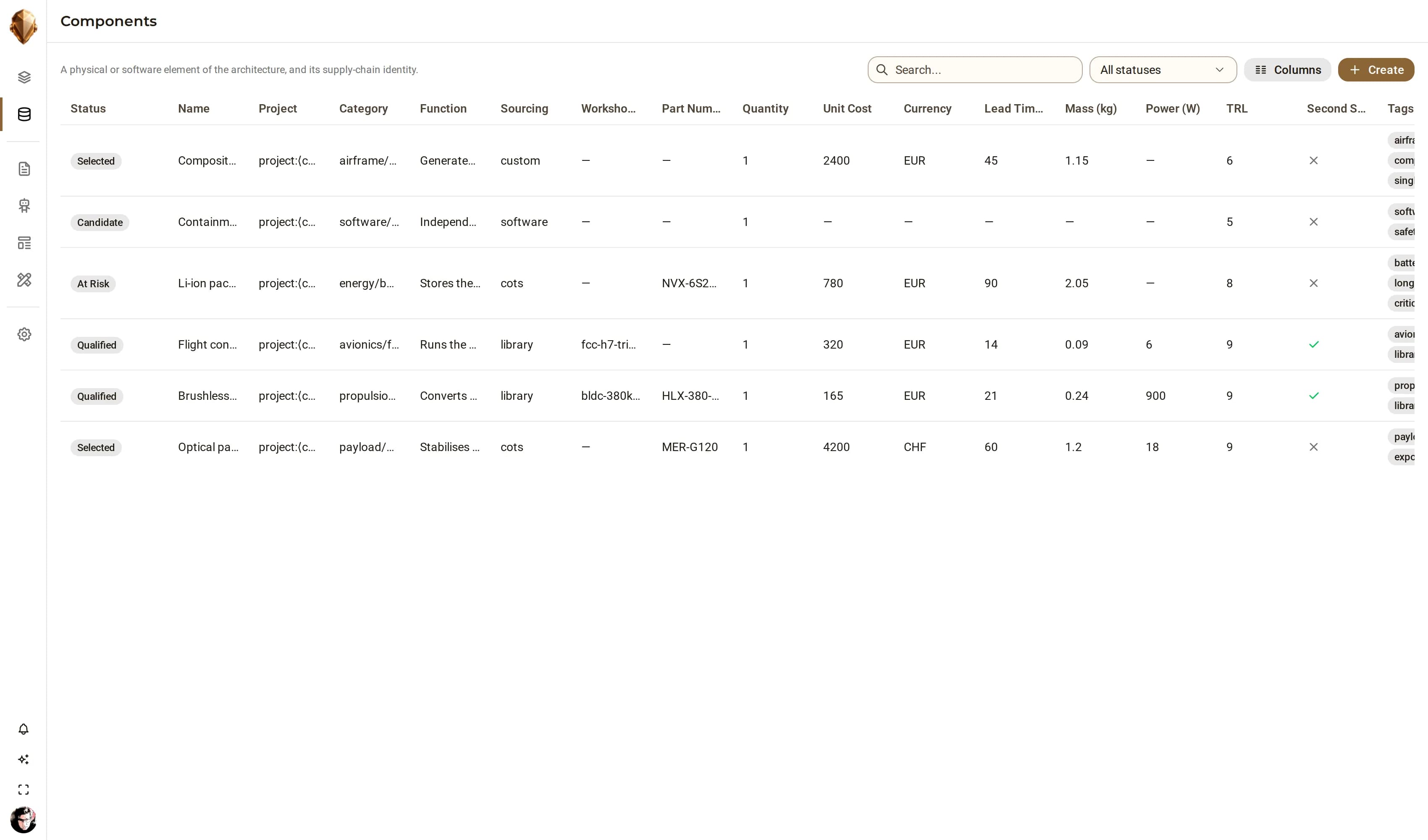 DjiniousEngineering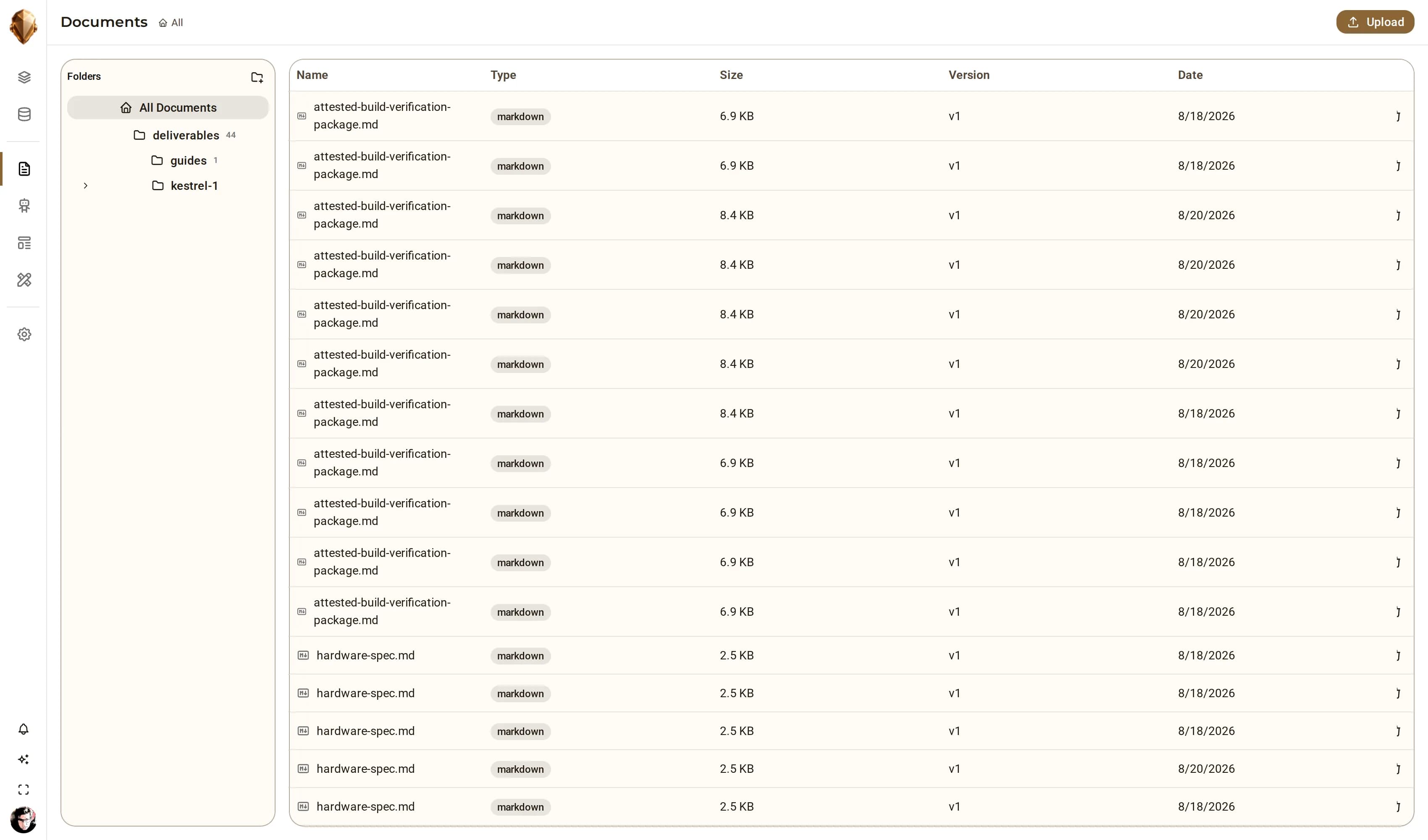
Keep exploring
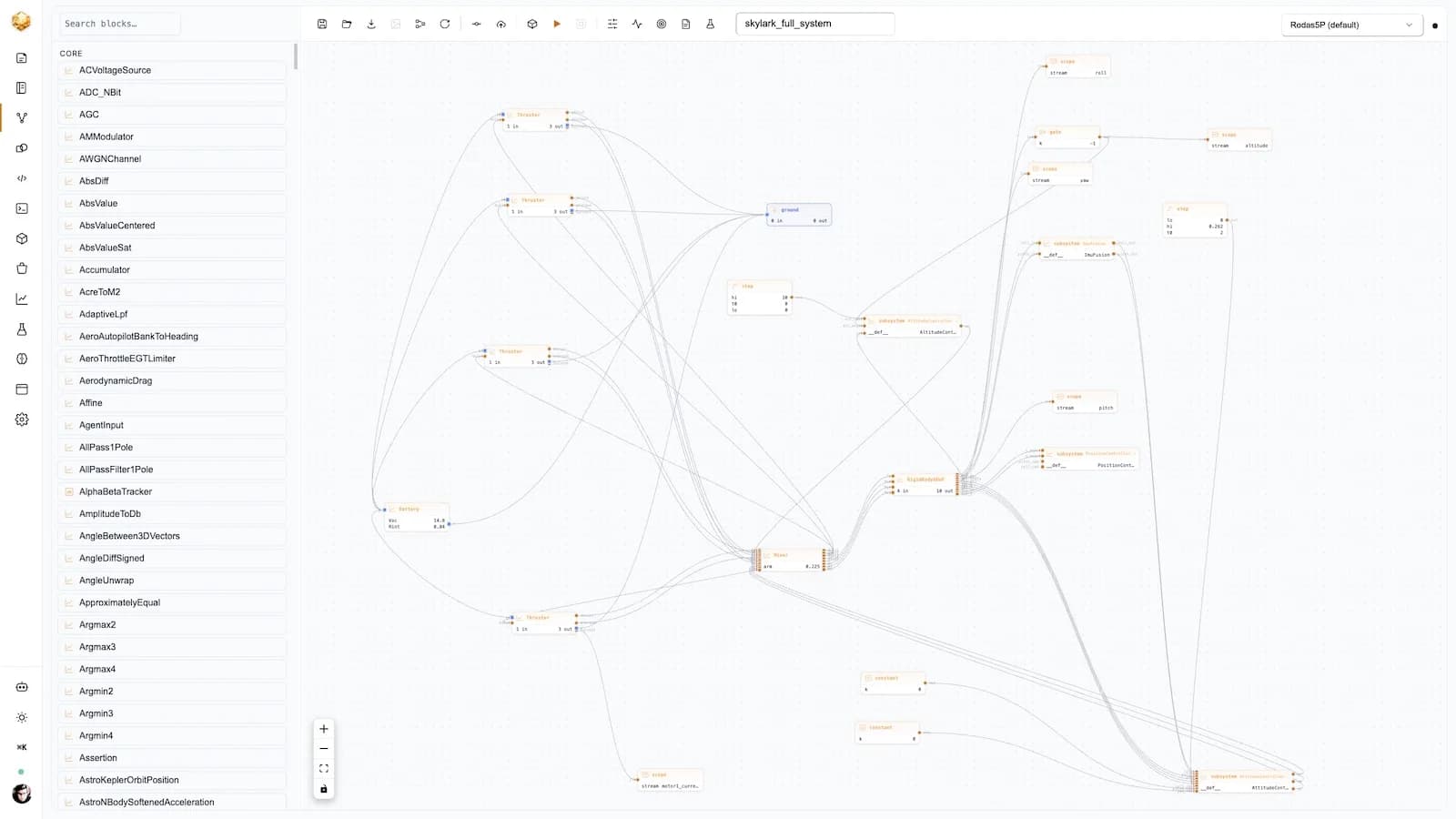
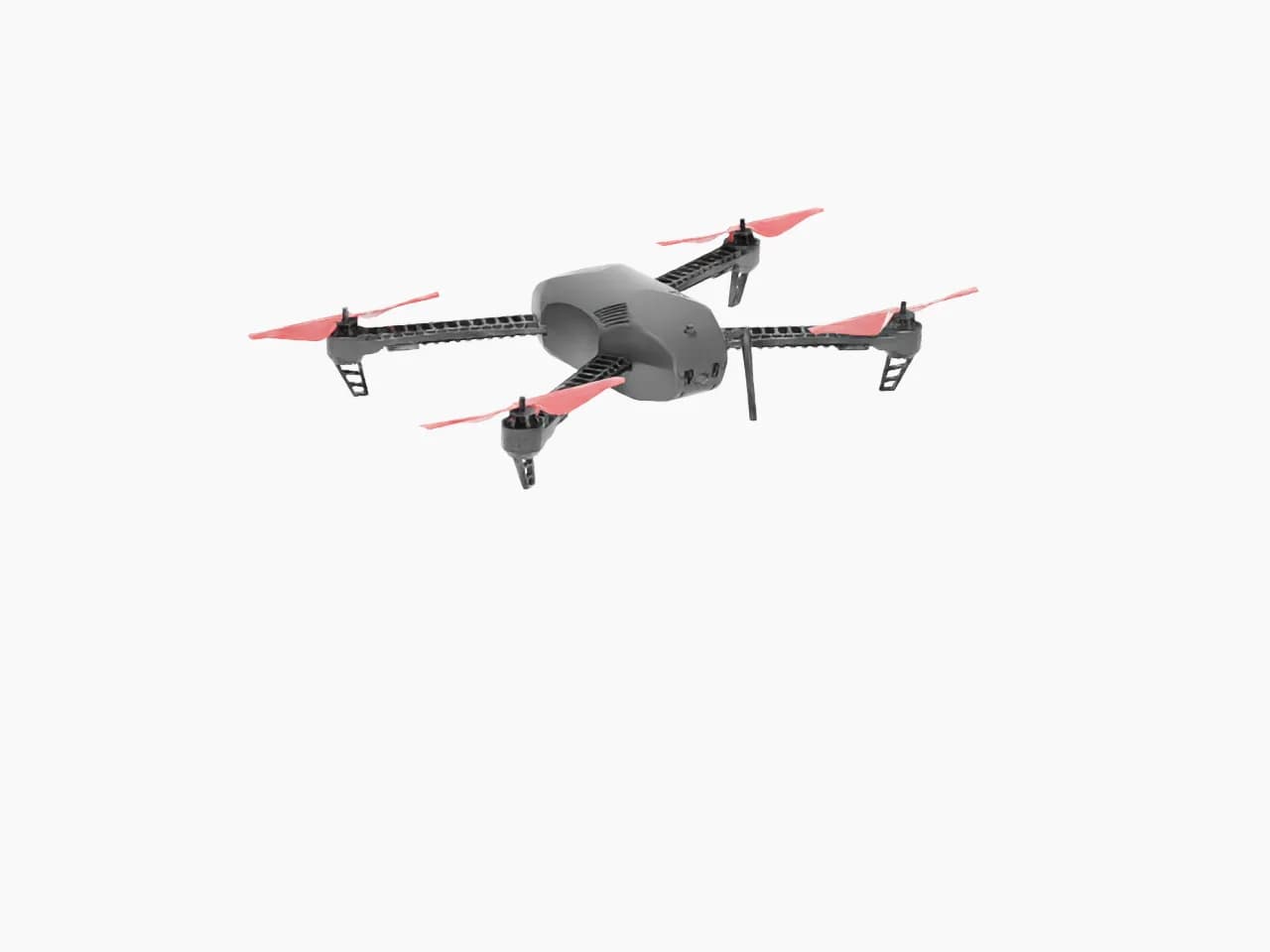 Drone systemsA quadcopter mission, flown before the drone existsA complete quadcopter wired from library parts into one co-simulation, its flight controller closing the loop around NVIDIA Isaac Sim rigid-body physics — and a real take-off, hover, climb, descent and landing recorded from that loop.
 DjiniousWorkshop
 Aerial roboticsDjinborn T4 quadcopterA 450-class survey drone as one multibody composition — airframe, propulsion, sensors, and a cascaded autopilot flying a closed-loop 6-DoF mission.
 DjiniousLab
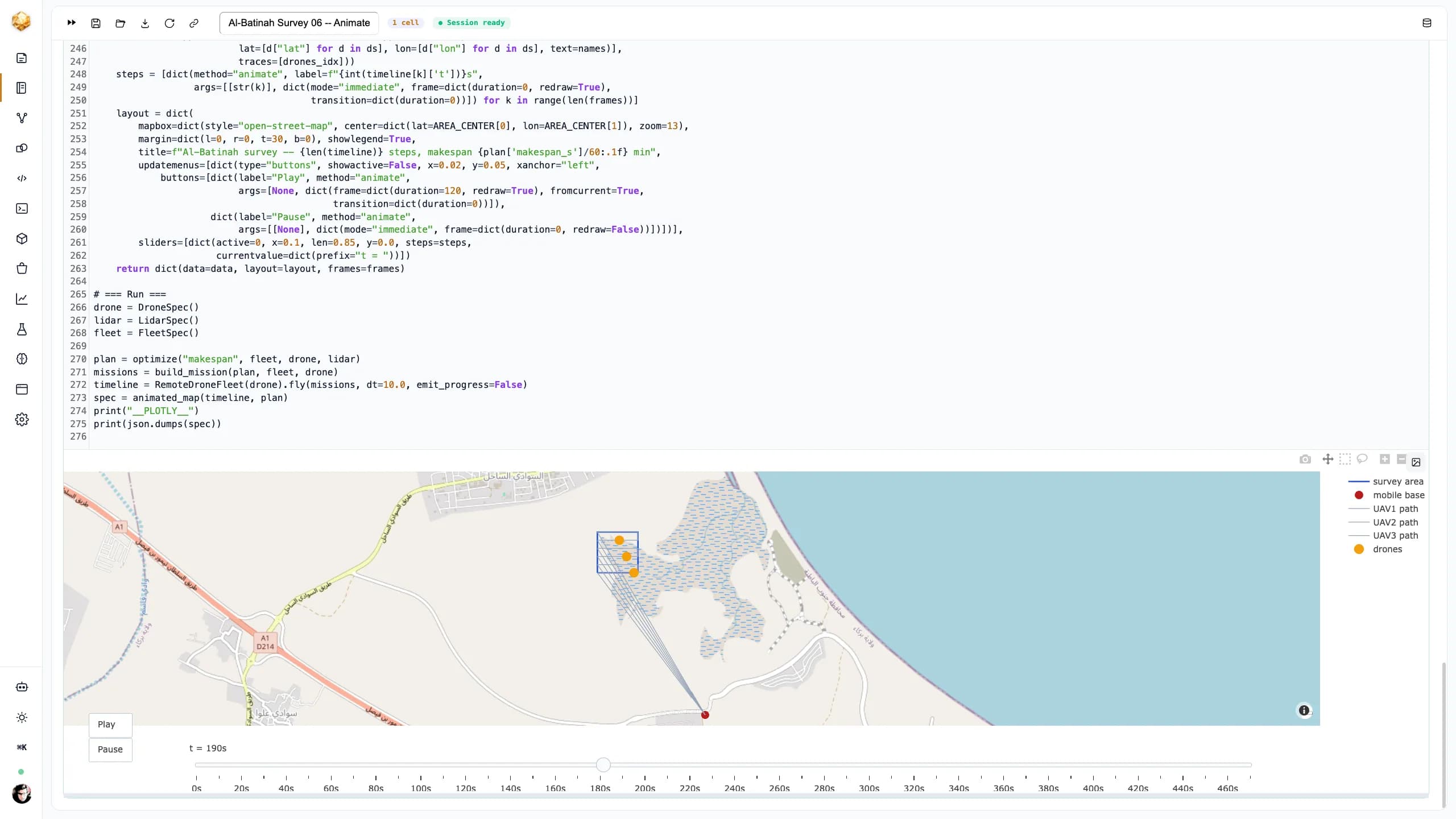 UAV surveyAl-Batinah UAV LiDAR surveyPlan and optimise a LiDAR drone-fleet survey of a 500 × 500 m site in Oman — tune the mission to your fleet, drone and sensor specs, then drive an optimal mission against a simulated UAV fleet on an animated map.DjiniousLab